11-Day Iceland Adventure
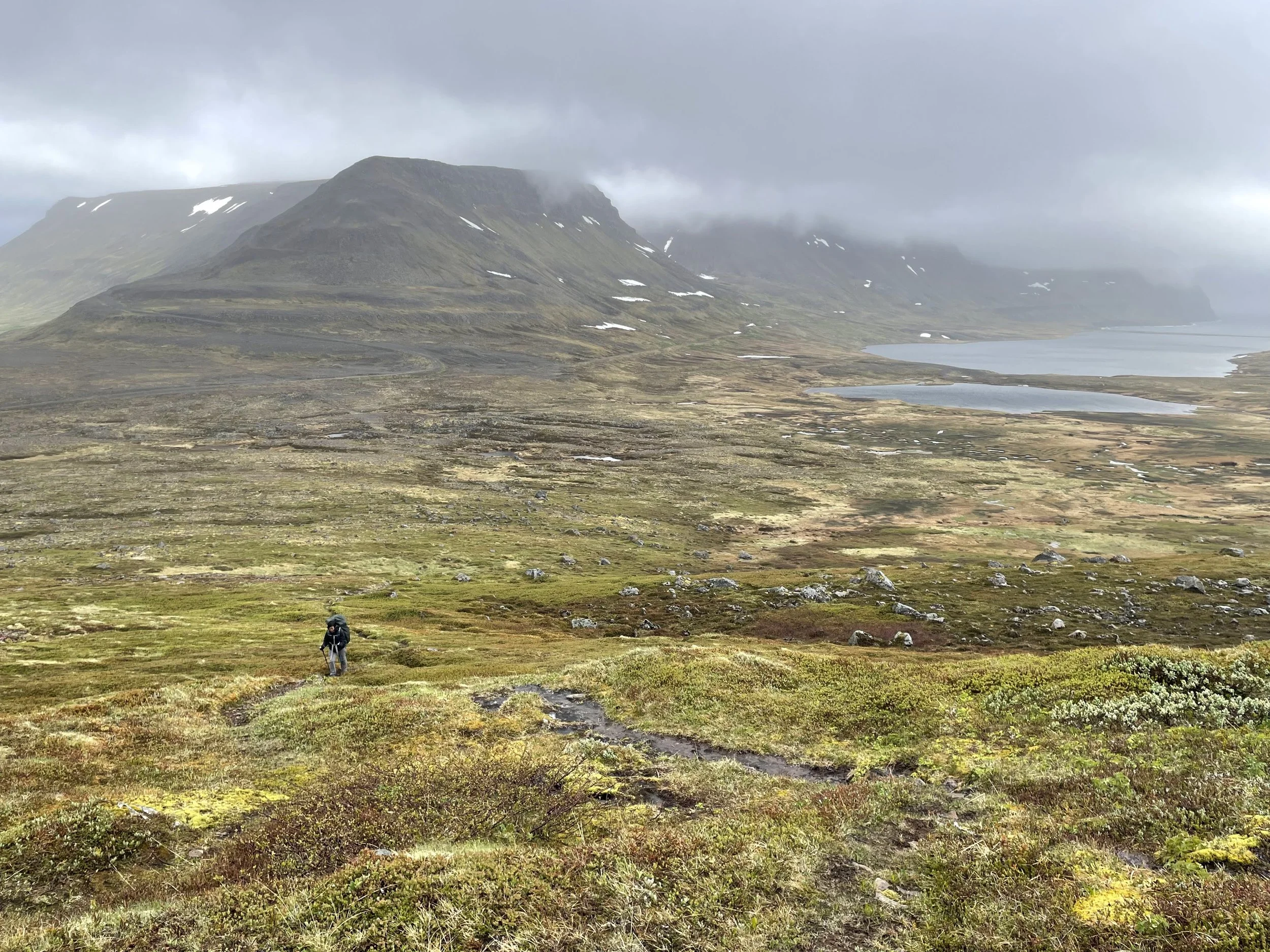
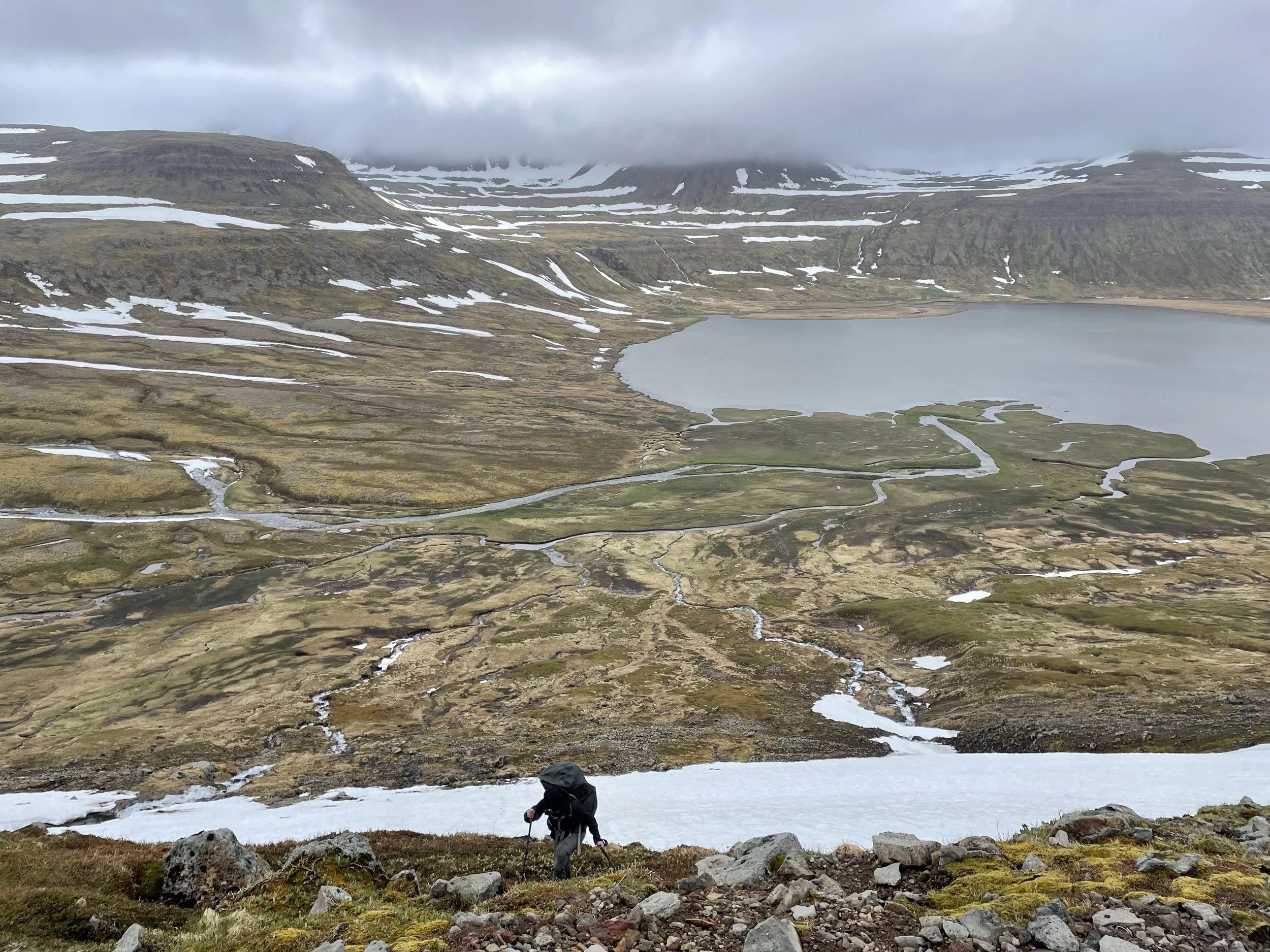
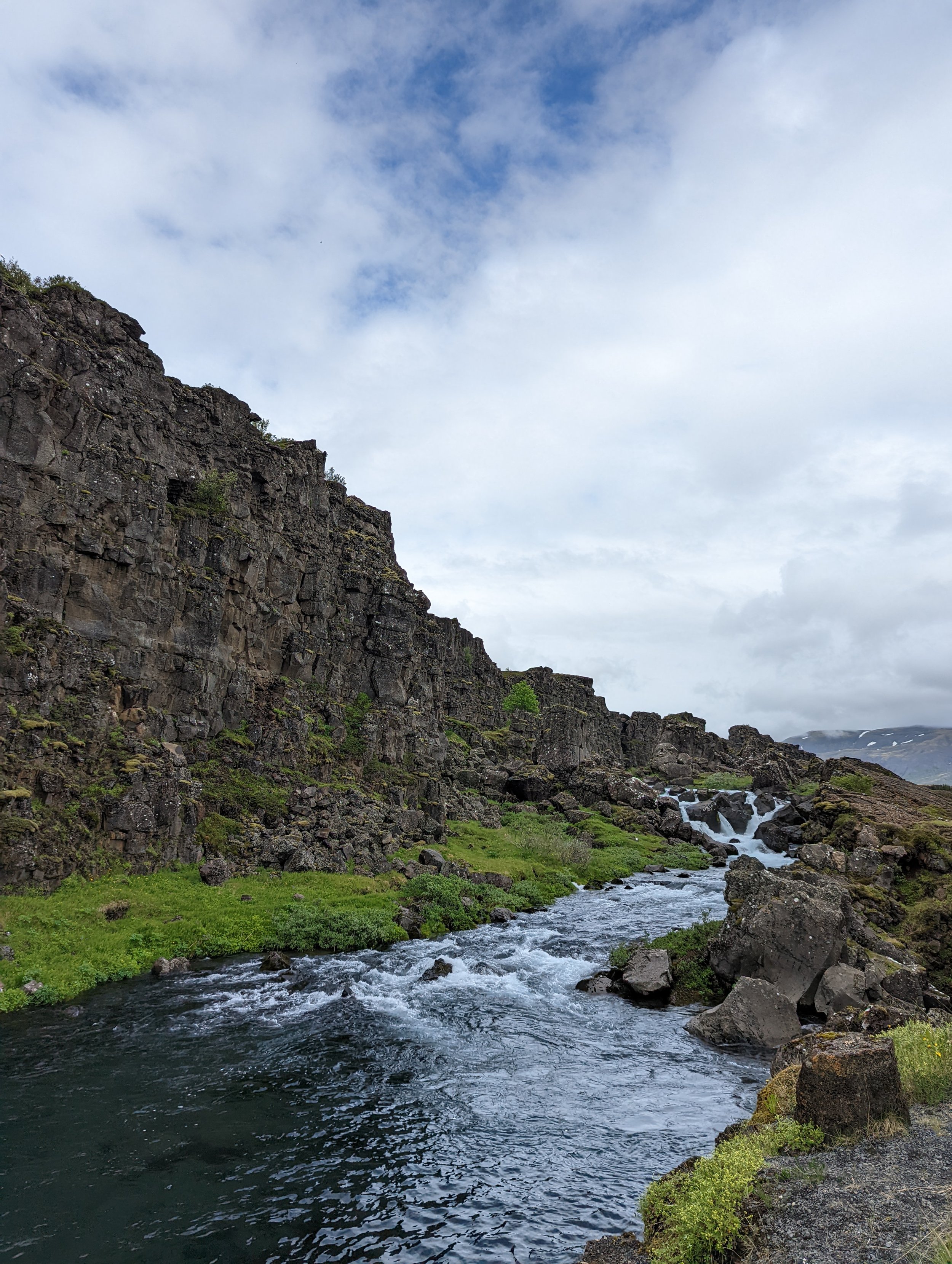
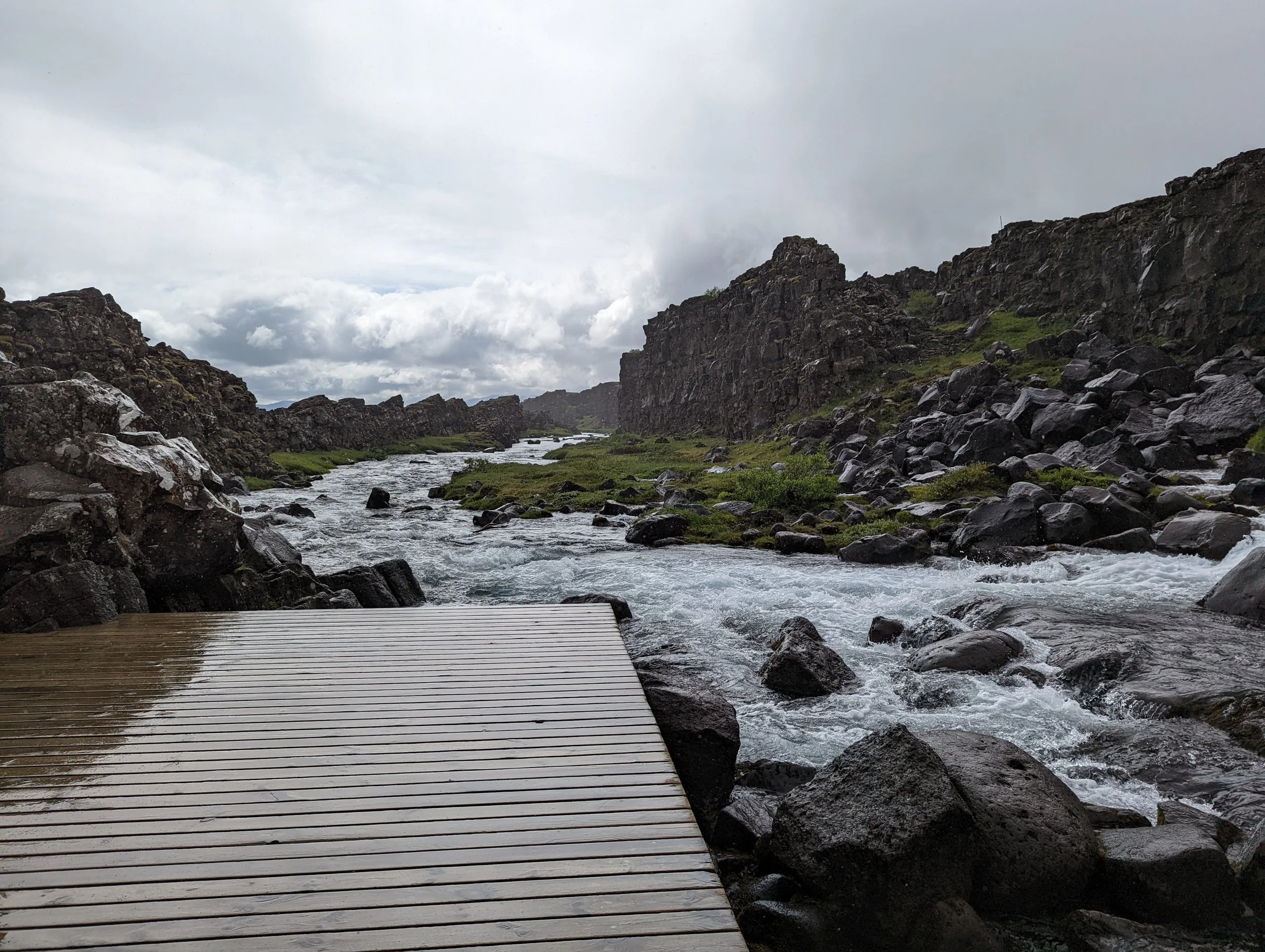
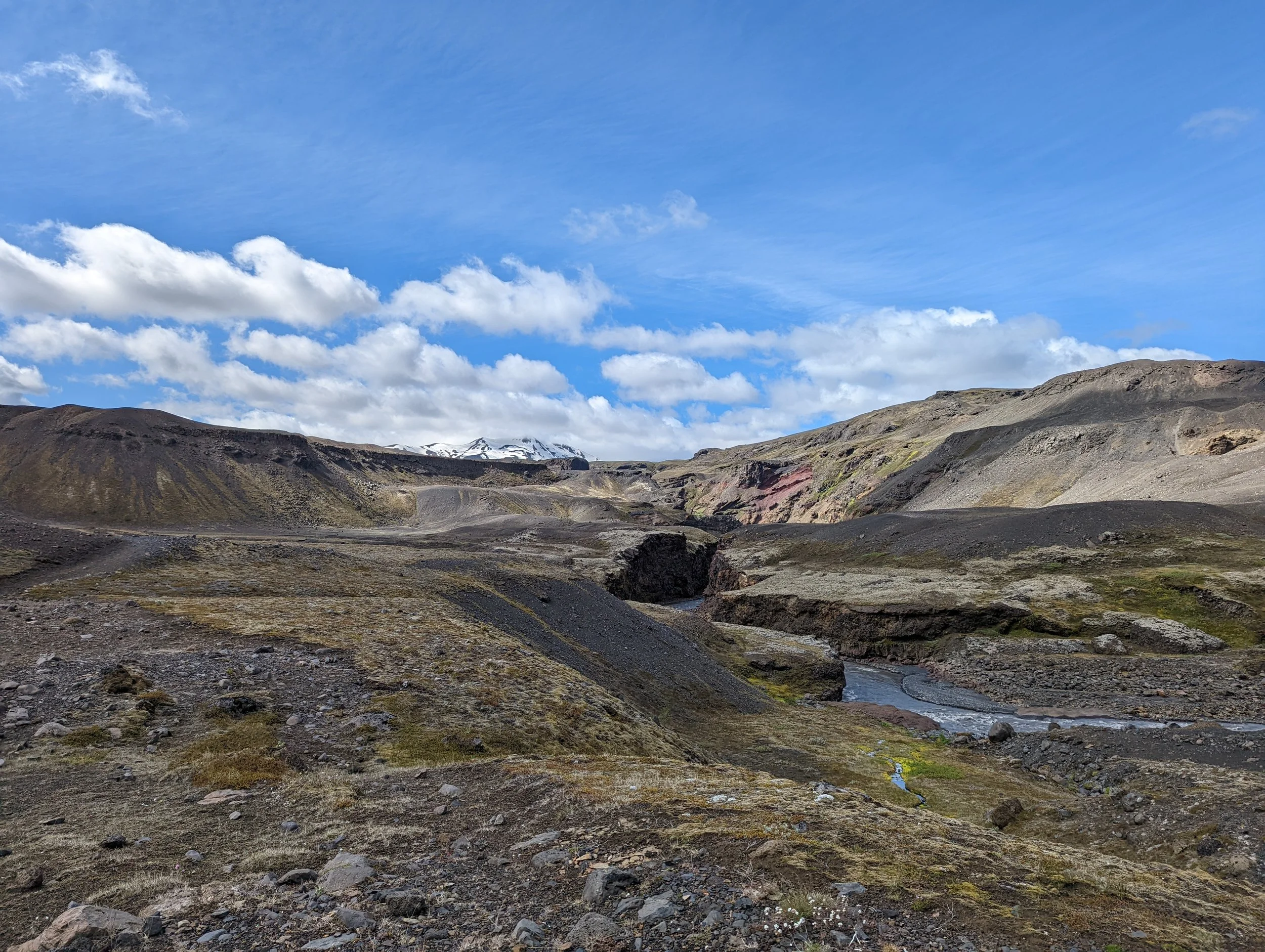
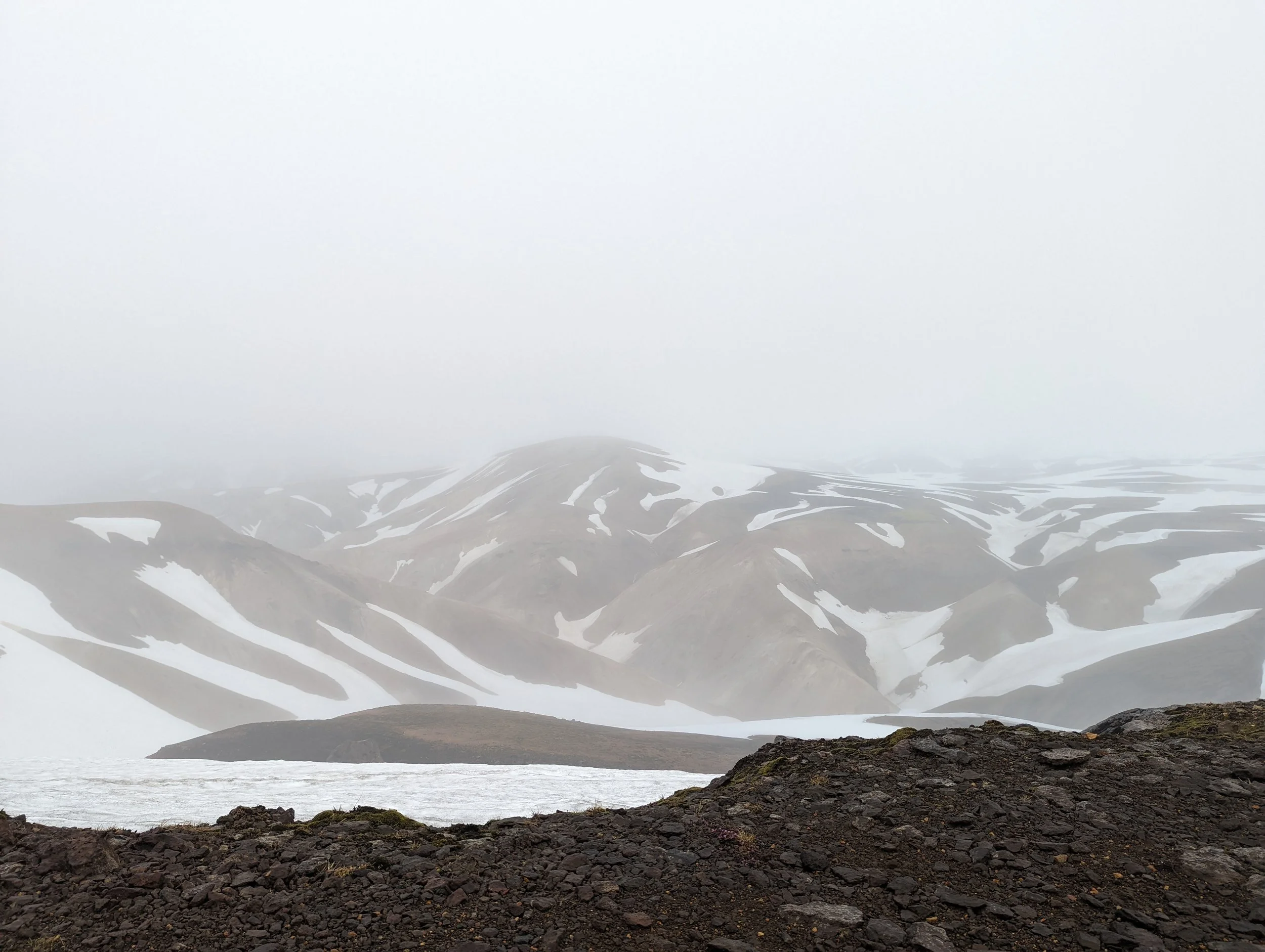
No hotels. Overnight backpacking and day hikes (optional scuba).
"Disclaimer: This post contains affiliate links. If you click a link and make a purchase, I may receive a small commission at no extra cost to you. I only recommend gear I actually use and trust."
Itinerary Overview
The trip was from Jun 9 - Jun 20 - relatively early season. Based on the trail conditions, I would recommend a visit in July or August.
Make sure you check your country’s passport expiration requirements to visit Iceland! If you have a US passport, your passport must be valid until 3 months after your planned departure date (6 months recommended).
| Day | Region | Highlights | Lodging |
|---|---|---|---|
| 1 | Reykjavik + Ísafjörður | Reykjavik + Ísafjörður | Tunguskógur Campground |
| 2 - 4 | Ísafjörður | Hornstrandir Nature Reserve | Saebol Campsite, Fljotavik Campsite, Tunguskógur Campground |
| 5 | Reykjavik | Reykjavik | Reykjavik Eco Campsite |
| 6 - 8 | Golden Circle | Þingvellir National Park, Silfra, Geysir Geothermal Area, Gullfoss Waterfall | Skjol Camping, Vík tjaldsvæði, Reykjavik Eco-Campsite |
| 9 - 11 | South Iceland | Laugavegur Trail | Hvangill, Hrafntinnusker, Reykjavik Eco-Campsite |
Budget
*2026 costs are estimates.
Flight and car rental prices can vary significantly based on demand - costs for car rental / gas can be shared if you travel with a group.
| Expense Item | 2022 Individual Cost | 2026 Individual Cost (Est.)* |
|---|---|---|
| International Flight (ATL to KEF Round-Trip) | $650.00 | $725.00 |
| Domestic Flight (RKV to IFJ) | $180.00 | $215.00 |
| Car Rental | $436.03 | $490.00 |
| Hornstrandir Backpacking Shuttle | $113.19 | $128.00 |
| Ferry to Hesteyri | $91.75 | $104.00 |
| Ferry to Ísafjörður | $100.93 | $114.00 |
| Camping Fees (Reykjavik, Skjol, etc.) | $77.48 | $88.00 |
| Laugavegur Trail Hut | $77.15 | $87.00 |
| Airport Transfers (KEF/BSI) | $54.93 | $62.00 |
| Luggage Storage & Lockers | $60.85 | $69.00 |
| Fuel / Gas Refills | $85.40 | $96.00 |
| Groceries & Dining Out | $84.18 | $96.00 |
| Parkings & National Park Fees | $7.41 | $9.00 |
| Total | $2,021.30 | $2,283.00 |
Packing List / Gear
1. The Big Three (Shelter & Sleep)
Iceland is notoriously windy and damp; your sleep system is your safety net.
Tent: Must be rated for high winds.
Sleeping Bag: Rated for at least 0°C (32°F) even in June.
If you run cold, I recommend investing in a Sleeping Bag Liner to add insulation; they can also be used on their own in warm temperatures
Sleeping Pad: Essential for insulation from the cold ground.
If you run cold, I recommend Self-Inflating Foam Sleeping Pads, because they provide more heat reflection than pure Self-Inflating Pads
Backpacking Pack: With a fitted Pack Rain Cover - 50L Osprey was sufficient for all the backpacks on this trip.
If you’re buying a backpack for the first time, ensure you get the proper sizing for your height.
If you plan to do longer backpacks in the future, consider a 65-70L pack - I purchased a larger pack for 5+ day trips.
Trash bags for lining: Use these inside your pack to ensure your sleeping bag stays bone-dry.
2. Clothing: The Layering System
The key to Iceland is "no cotton." Synthetic or wool layers are vital for moisture management.
Outer Layer: Rain Jacket (essential)
Mid-Layers: Fleece (x2) for insulation
Base Layers: Long Underwear (x2) and Leggings
Trekking Wear: Hiking Pants (x3), Shirts (x3)
Undergarments: Hiking Socks (x5), Underwear (x5), Sports Bra (x3)
Accessories: Warm Buff, Beanie, and a Sun Hat for the 24-hour daylight
3. Footwear
Hiking Boots: Broken in and waterproof.
Columbia Newton Ridge Plus - My first pair of hiking boots; relatively affordable and holds up great
Microspikes: Will help significantly if you run into ice / compacted snow
Cimkiz Crampons - Affordable option; can invest in more expensive ones if you plan to use extensively in the future
Crocs: These were essential for river crossings and letting feet breathe at the campsite.
4. The Backcountry Kitchen
Stove & Pot: Buy a gas cannister at your destination
Utensils
Water System: Camelbak (for on-the-go), Nalgene, and extra Water Storage.
Water Filter
Sawyer Squeeze + CNOC Bladder - HIGHLY recommend this combo. The CNOC is extremely easy to fill compared to other water storage bags. If you bring some string, you can hang the bag from a tree and attach a standard water bottle to the Sawyer to filter using gravity.
If you already have a Sawyer, I recommend the CNOC Bladder on its own
Food Storage: Food bag and various Ziploc/Plastic bags for trash and organization
5. Trail Food (10-Day Supply)
Main Meals: 10 Dinners, 10 Lunches, 10 Breakfasts
Breakfast: Grits, Oatmeal, Instant coffee mix, blocks of cheese (from local grocery)
Lunch: Tortillas, Peanut Butter, Tuna Packets, Condiment Packets
Dinner: Dehydrated Meals
Mountain House Chili Mac - My favorite meal; can add blocks of cheese for more flavor
Beef Stroganoff is also delicious
Backpacker’s Pantry Pad Thai with Chicken - The best price to calorie ratio and a favorite among my friends
Chana Masala and Kathmandu Curry are also great
Snacks: Dried Mango, Jerky, Granola Bars
6. Electronics & Navigation
Lighting: Headlamp
Energizer Headlamp - Super affordable; no need to get more expensive ones unless you want a rechargeable headlamp
Power: Outlet Converter, Battery Pack, Phone Charger, and a Car Charger
Kindle: For reading on the trail
Other: Garmin InReach for safety / emergency (subscription required)
HIGHLY recommend, especially if travelling alone. Enables you to check-in with your location with loved ones and contact emergency services in case of emergency.
7. Hygiene & Personal Care
Toiletries: Toothbrush, Toothpaste, Deodorant, Pads/Tampons, Sunscreen
Shower Kit: Quick-dry towel, Body wash, Shampoo, Face wash, Lotion
Trail Hygiene: Baby wipes, Toilet paper
Comfort: Eye Mask (essential for the Midnight Sun), Melatonin, and Bonine (if you get motion sickness)
Misc: Bathing suit (for the Reykjadalur thermal river)
8. Essentials & Hardware
Trekking Pole: Non-negotiable for the river crossings in Hornstrandir
Documents: Passport
Itinerary Details
Day 1: The Gateway to the Westfjords
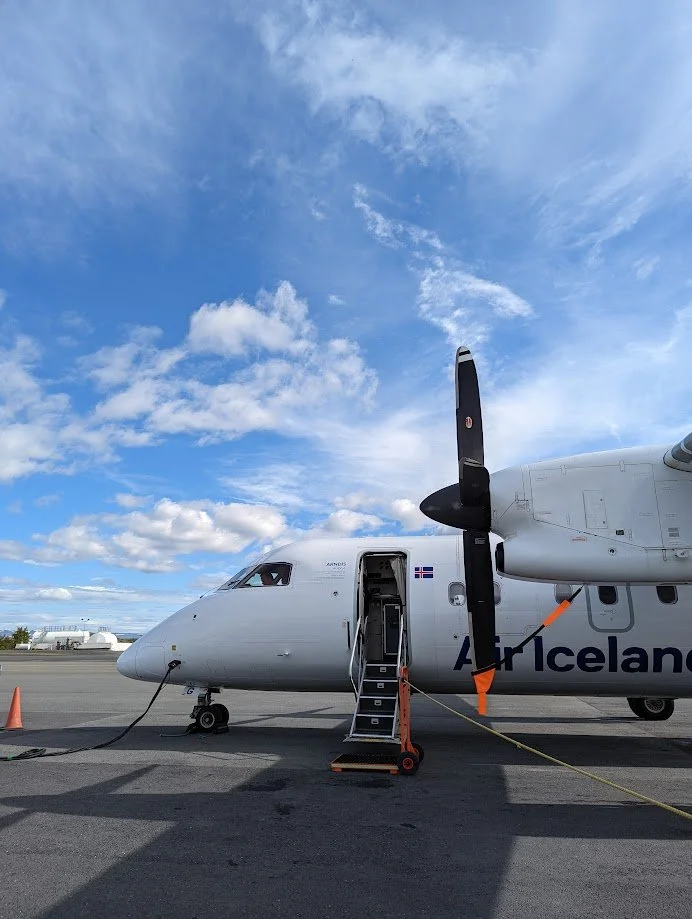
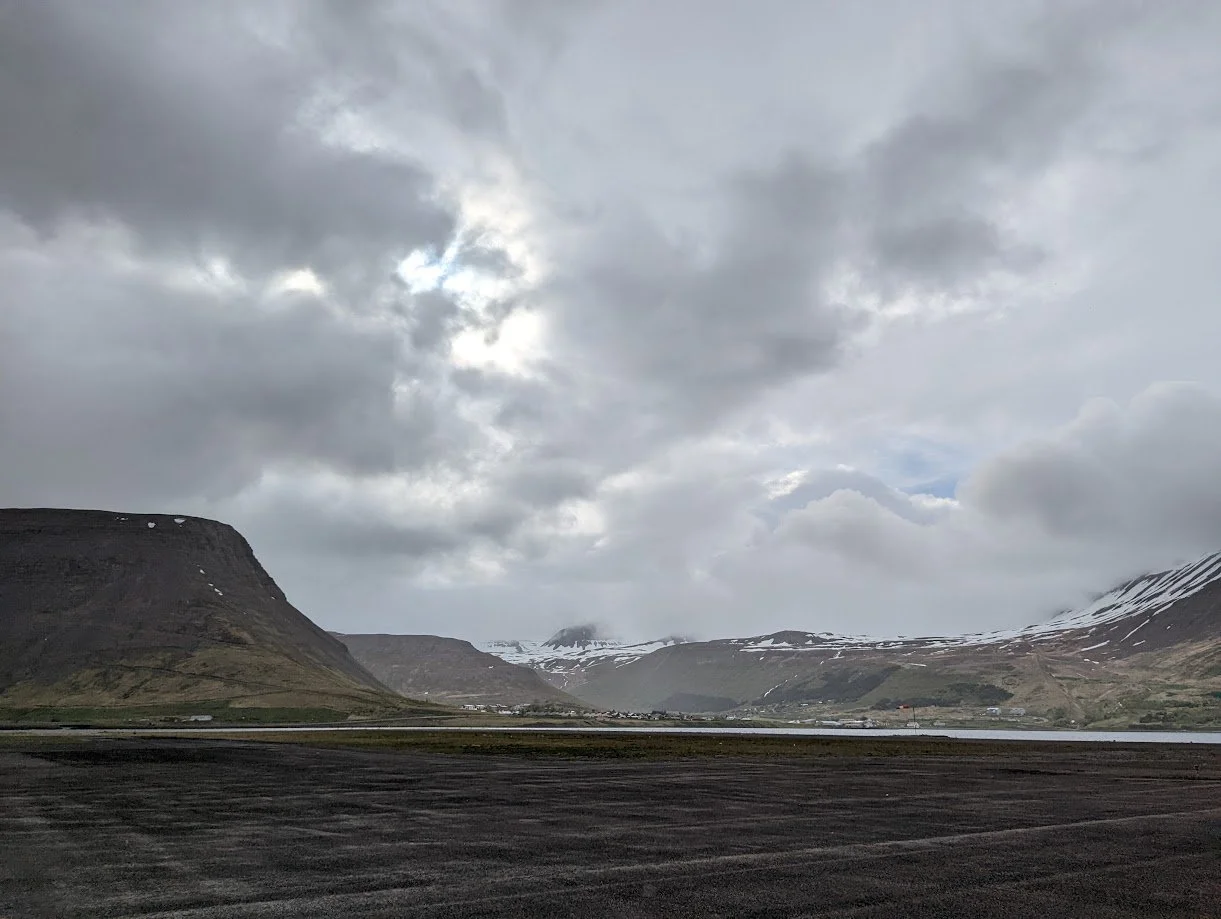
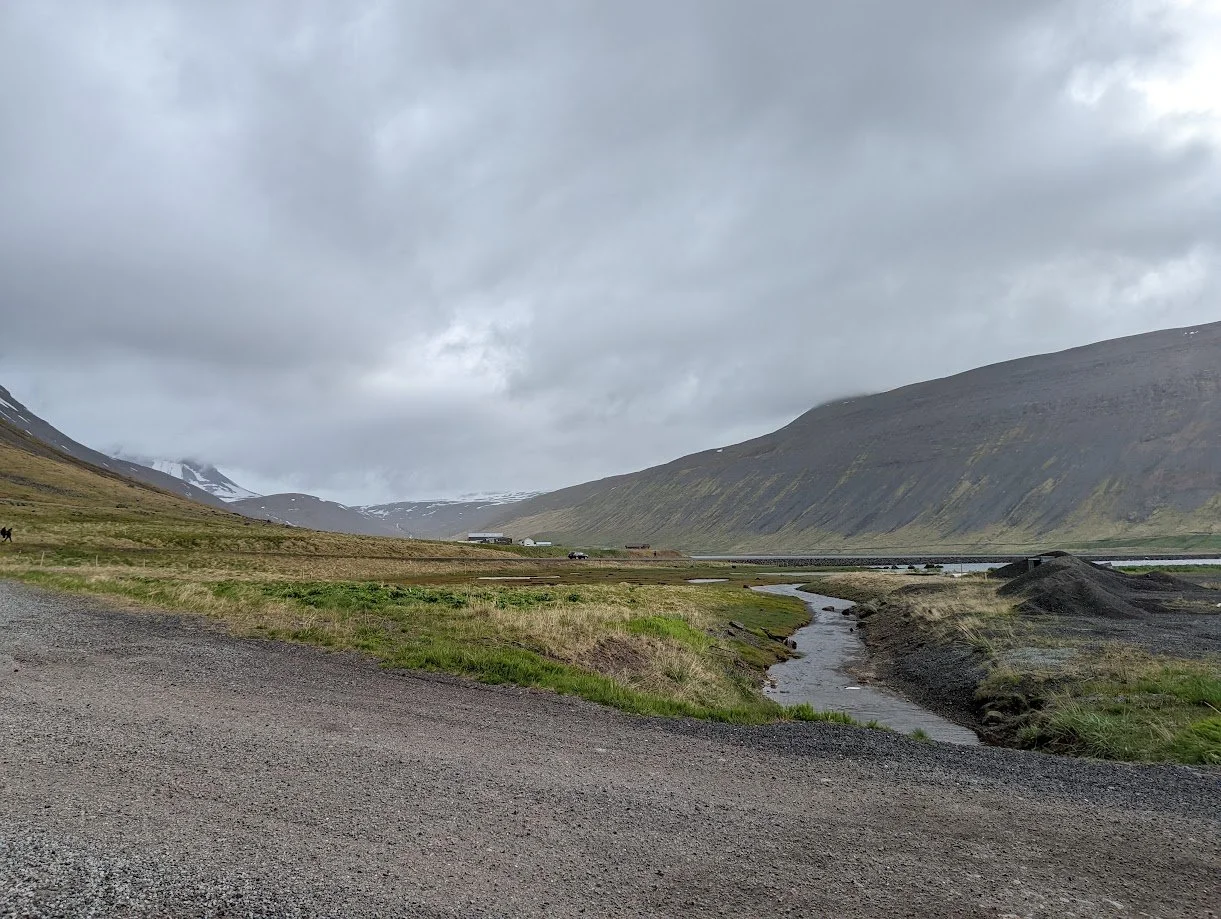
The journey begins with a transition from the bustling hub of Keflavík (KEF) to the quiet, dramatic landscapes of the north. After landing, utilize the luggage lockers at KEF or Reykjavík Domestic Airport (RKV) to cache any gear you won’t need for the trek. A quick Flybus transfer and a scenic flight with Icelandair will land you in Ísafjörður, the capital of the Westfjords.
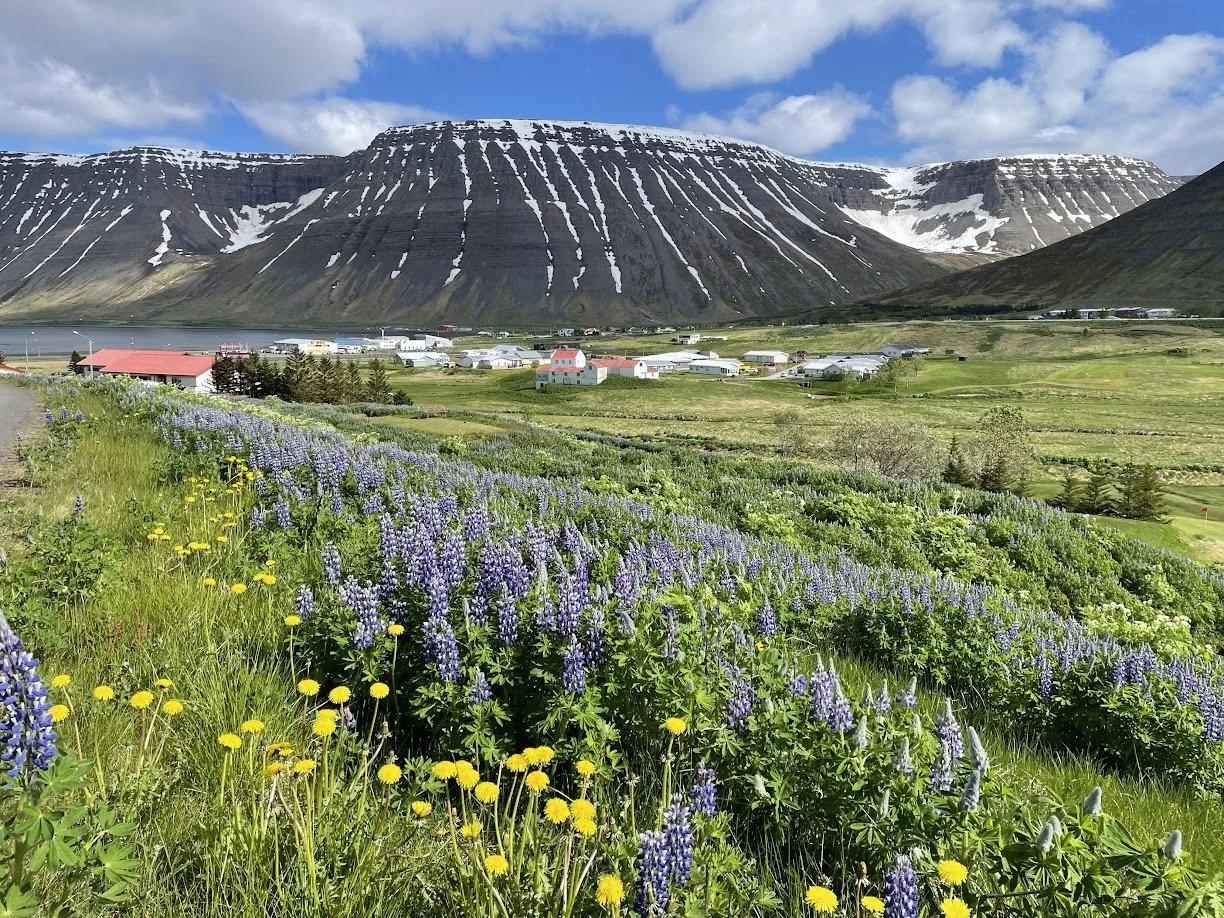
Upon arrival, it’s a scenic 3.8 km walk to the Tunguskógur Campground. Be sure to stop at the Bónus supermarket along the route to grab last-minute supplies.
Highlights of the Day:
Búnaðarfoss: If you have the energy, follow the short trail near the campsite to this stunning waterfall.
Tunguskógur Campground: Easily a top-tier site, offering clean facilities, a comfortable dining area, and a lush setting that makes for a perfect first night in Iceland.
Details:
Arrive at the Keflavik International Airport (KEF)
Get ready for the first backpack
Luggage lockers available at KEF and RKV (and other locations)
Store any extra luggage not required for the backpack
Take a bus to Reykjavik Domestic Airport (RKV)
Flybus
Take a flight from RKV to Isafjordur Airport (IFJ)
Icelandair
Walk to Tunguskógur Campground (3.8 km)
There is a supermarket (Bonus) along the way
Tunguskógur Campground
If you have time to explore, there’s a short trail to a small waterfall near the campsite - Búnaðarfoss
My favorite campground throughout our stay in Iceland
Day 2 - 4: Hesteyri to Kögur Loop in Hornstrandir, Westfjords
The trek from Hesteyri to Kögur is a journey into the Hornstrandir Nature Reserve, Iceland’s remote frontier. The loop traverses rugged mountain passes and dramatic coastal cliffs where the Arctic Circle meets the North Atlantic.
Quick Facts:
Distance: 33+ mi (according to AllTrails) - budget 42 mi to be safe
Mile estimates in sections below are based on AllTrails distance with a safety net
Recommended Duration: 3-5 days
Terrain: Tundra, steep ridgelines, rocky shorelines, and multiple water crossings.
Wildlife: Prime territory for sighting Arctic foxes.
Weather: Weather can be unpredictable, so be prepared - we had periods of rain / hail / severe fog in June
Trail Condition: Not well-marked; map / compass / GPS required
Trail drawn on AllTrails here
If you are traveling in June, I highly recommend microspikes - there is ice / snowpack at higher elevations
If you want to do a one-way trail in Hornstrandir, there are ferries that can pick you up at a different location. Try exploring the existing trails on AllTrails for ideas.
Day 2 - Into the Wild (10 mi)
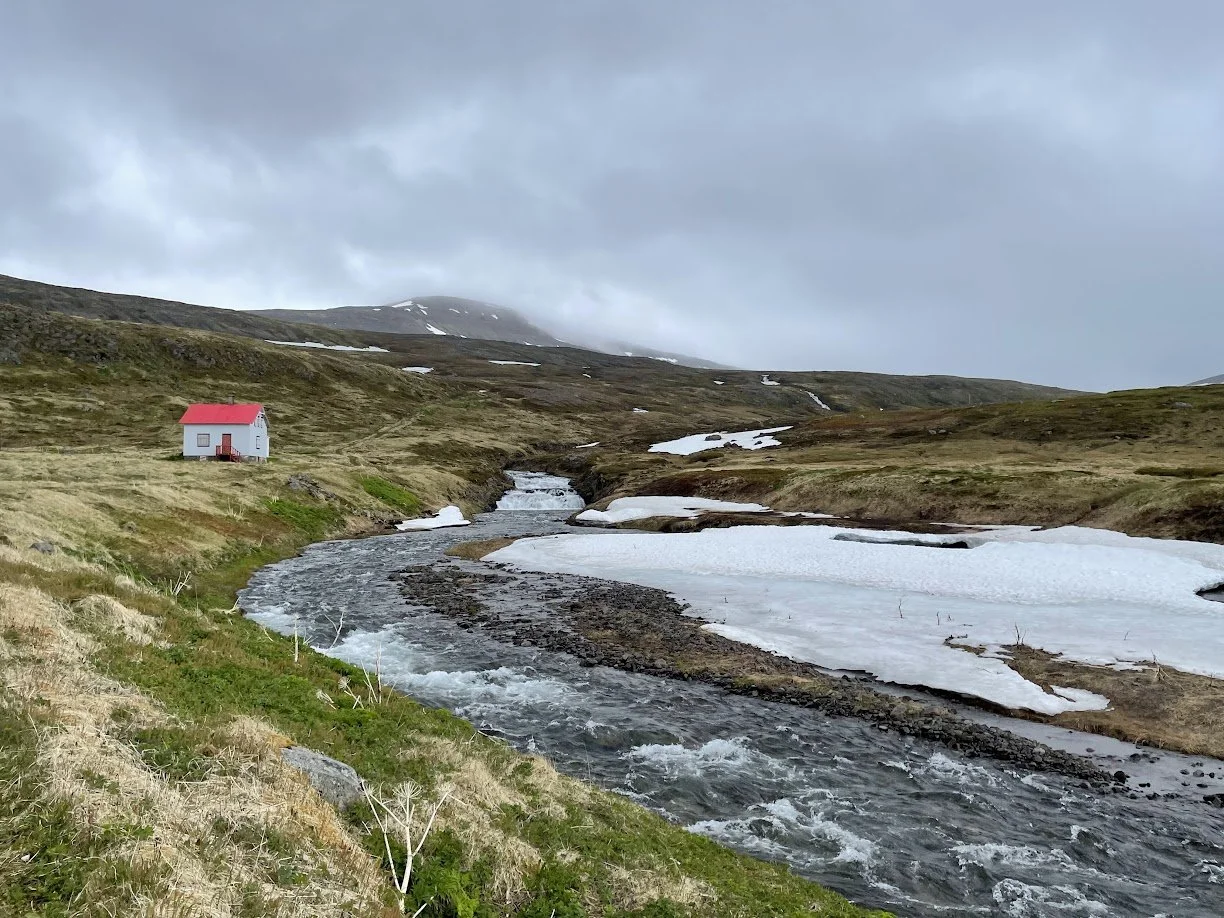
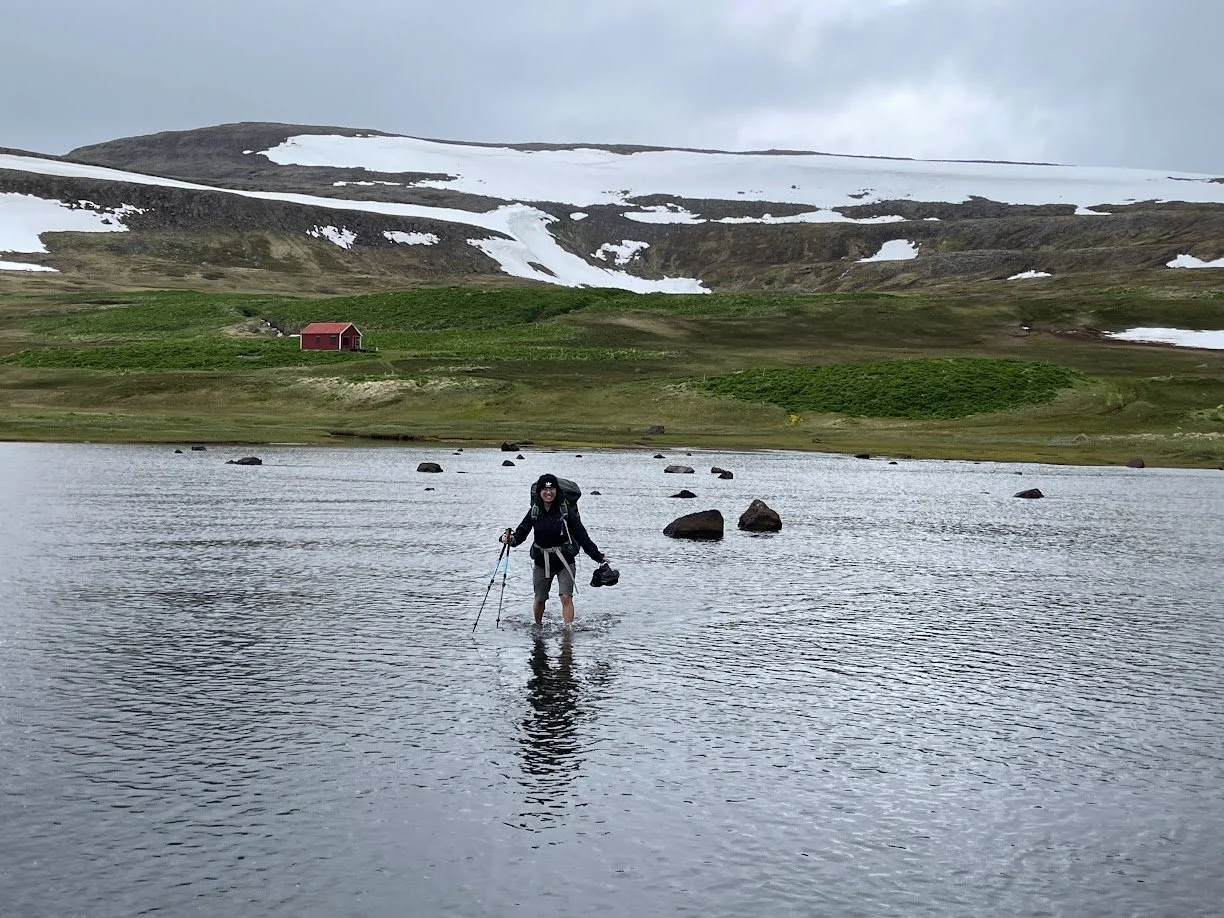
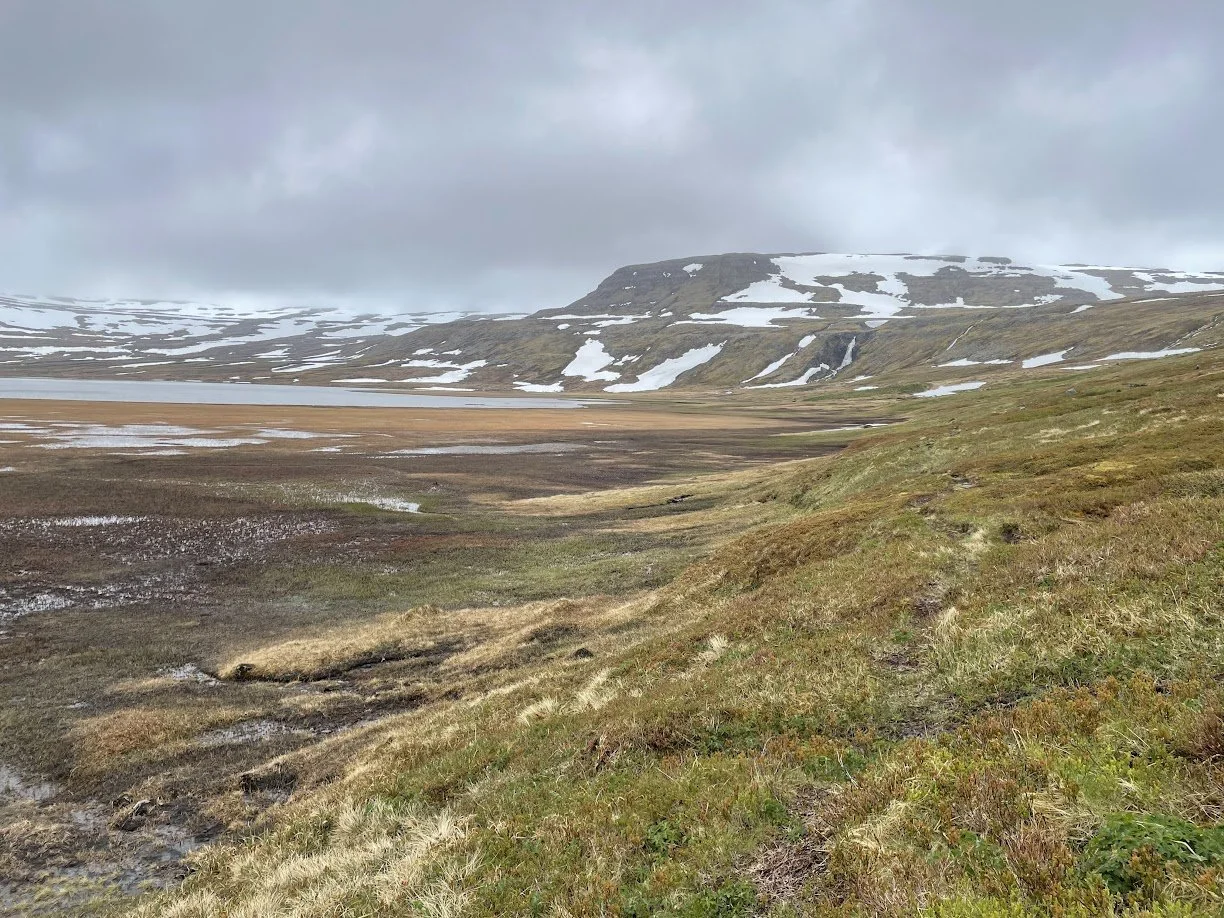
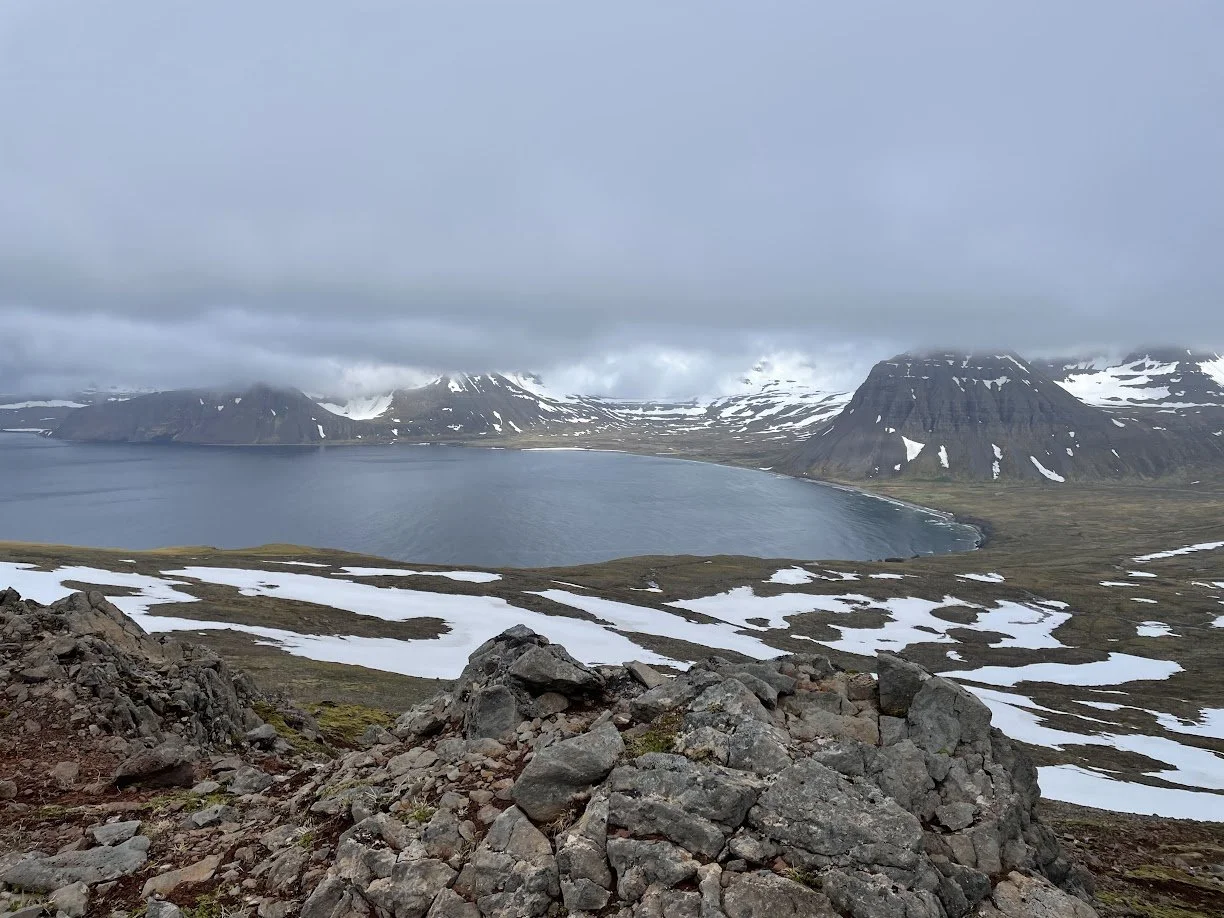
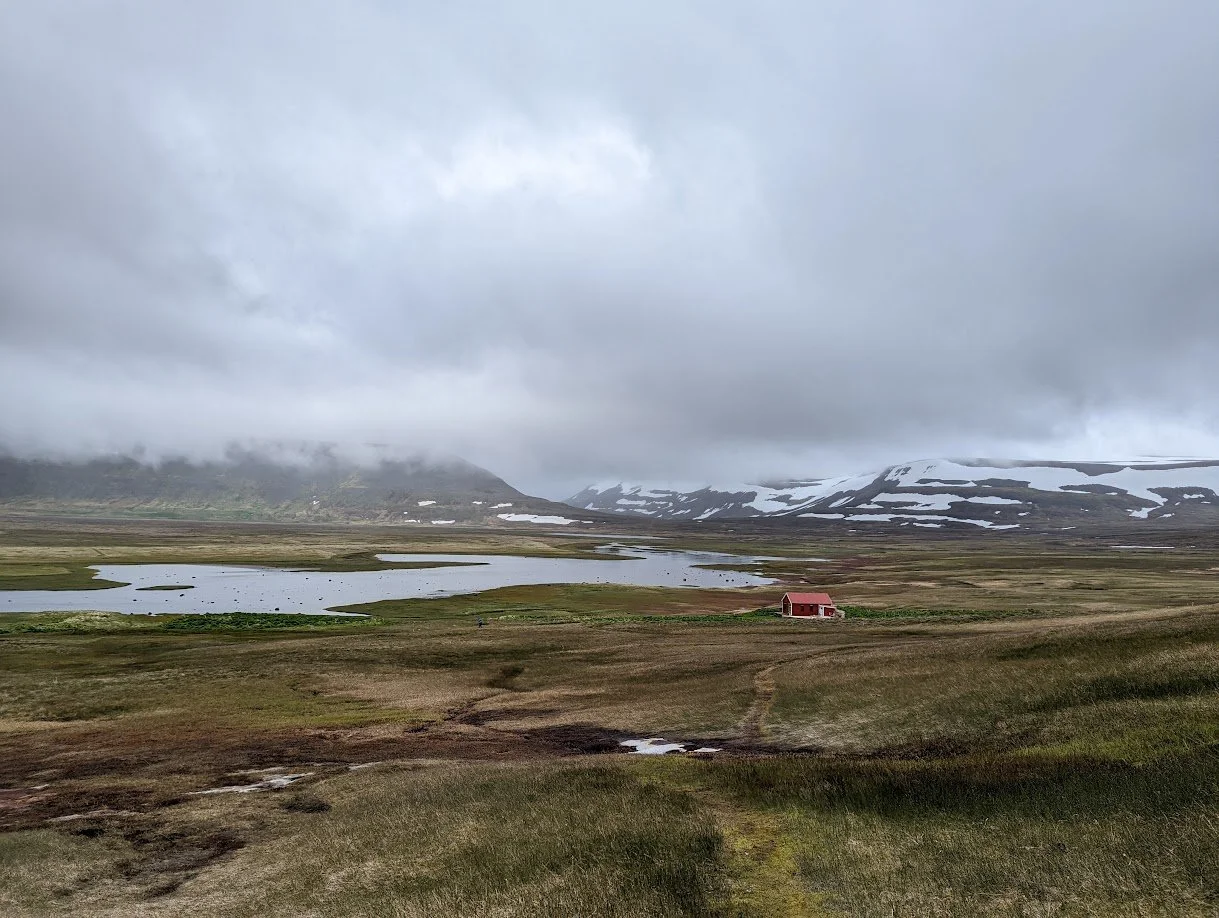
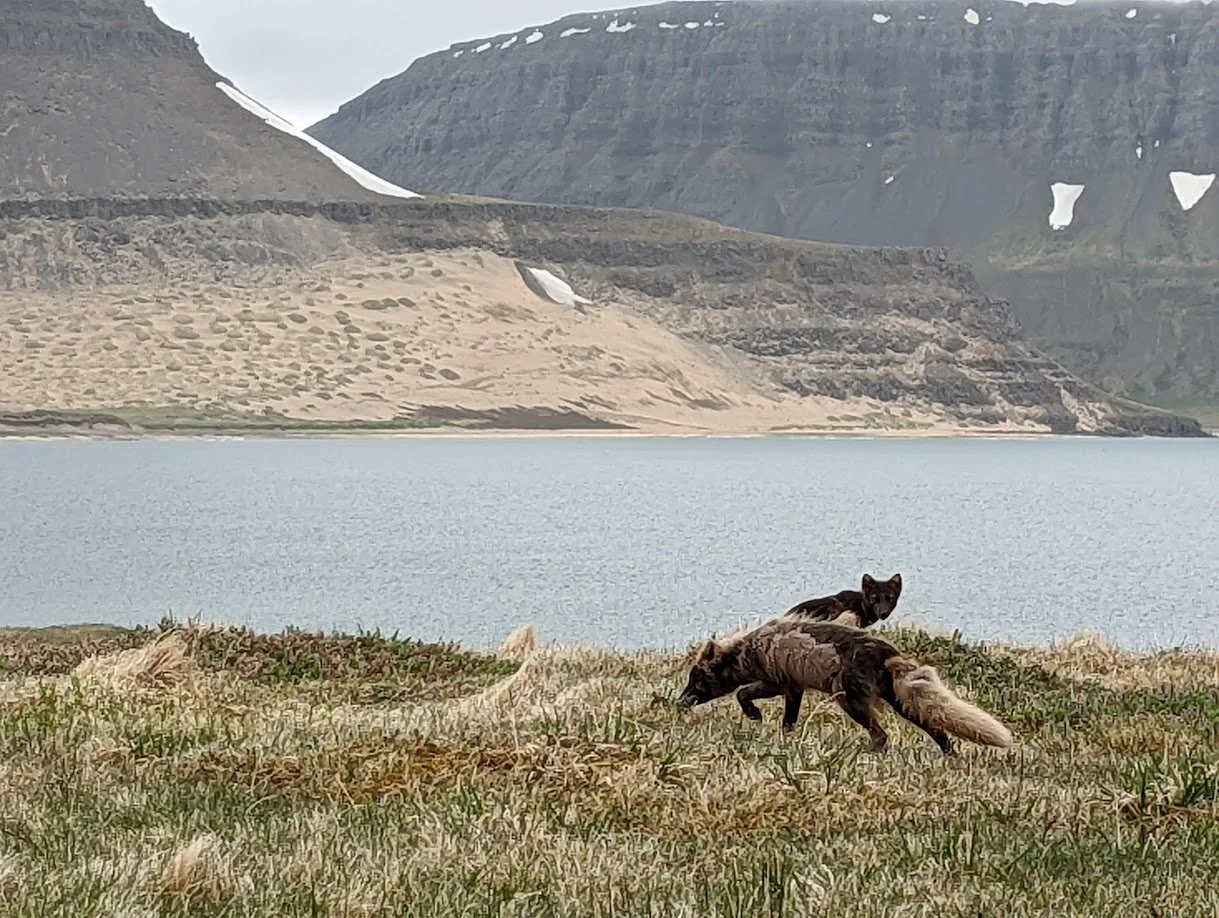
The real adventure begins today as you leave the comforts of Ísafjörður behind for the absolute isolation of Hornstrandir. The journey starts with a 4.7 km walk from Tunguskógur Campground down to the town docks. From there, you’ll board a ferry bound for Hesteyri.
Keep your camera ready on the water - humpback whales are frequently spotted breaking the surface in these fjords.
Once you make landfall in Hesteyri, the trek kicks off with a 10-mile hike to the Sæból Campsite. This stretch is your first true taste of the reserve’s rugged character:
Terrain: Expect consistent wet ground and several river crossings - waterproof boots (or Crocs) and trekking poles are essential.
Wildlife: Don't be surprised if you're greeted by Arctic foxes; we had two curious visitors join us at our campsite.
Details:
Walk to the docks (4.7 km)
Take a ferry to Hesteyri in Hornstrandir Nature Reserve
Operators: West Tours, Borea
Watch out for humpback whales while on the ferry!
Hike to Sæból Campsite (10 mi)
Be prepared for river crossings and wet terrain!
Day 3 - Adapting to the Elements (16 mi)
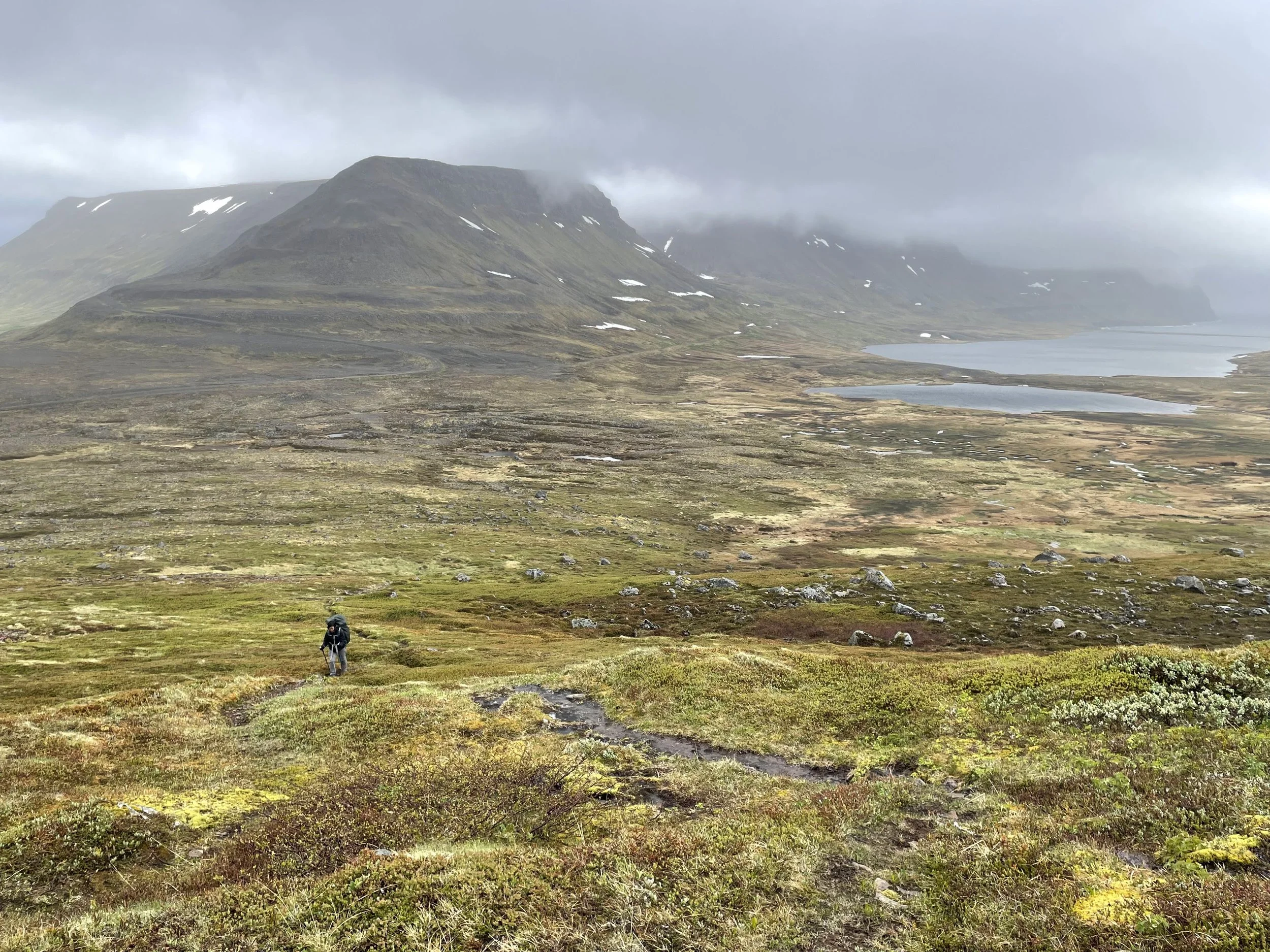
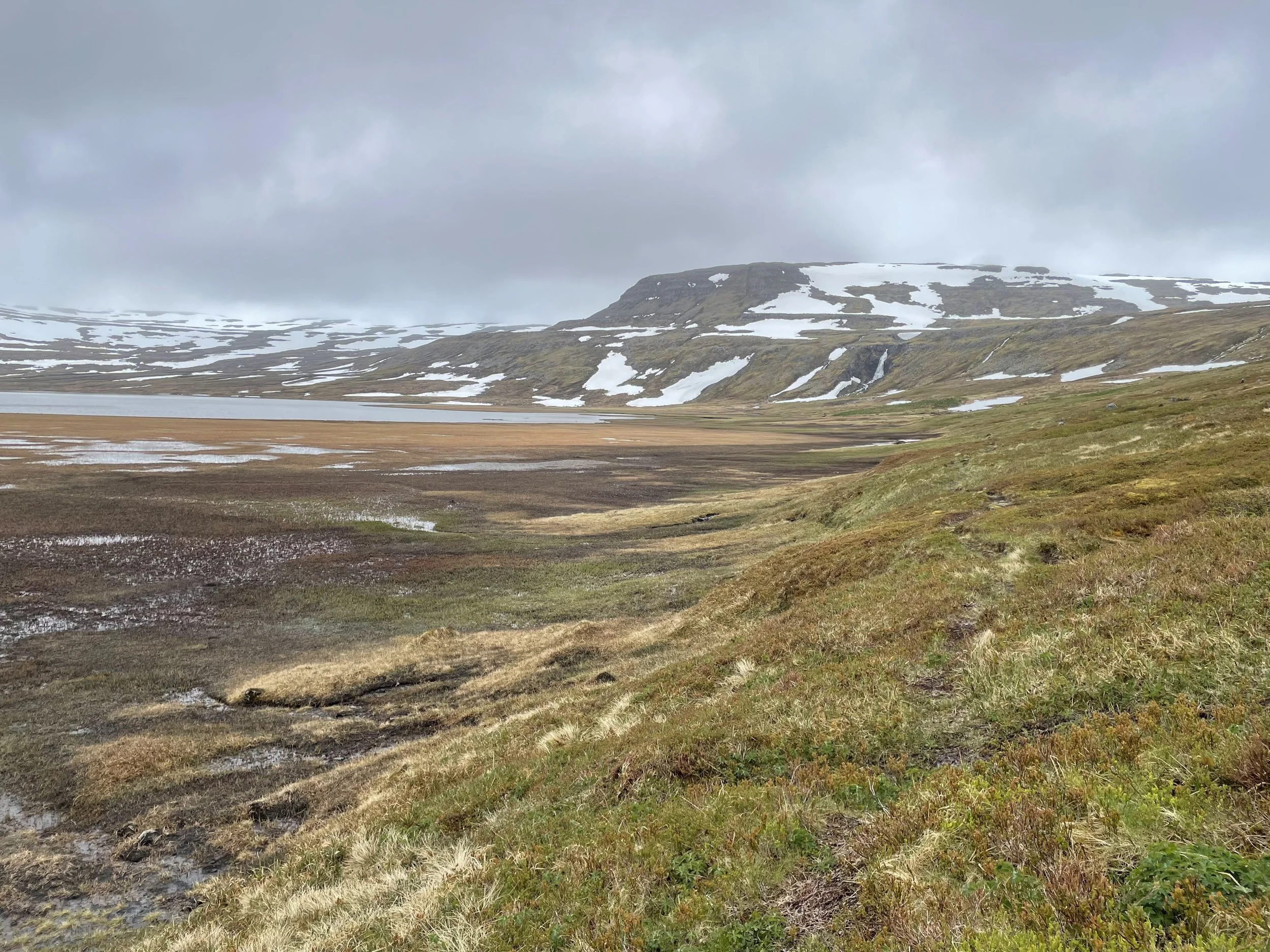
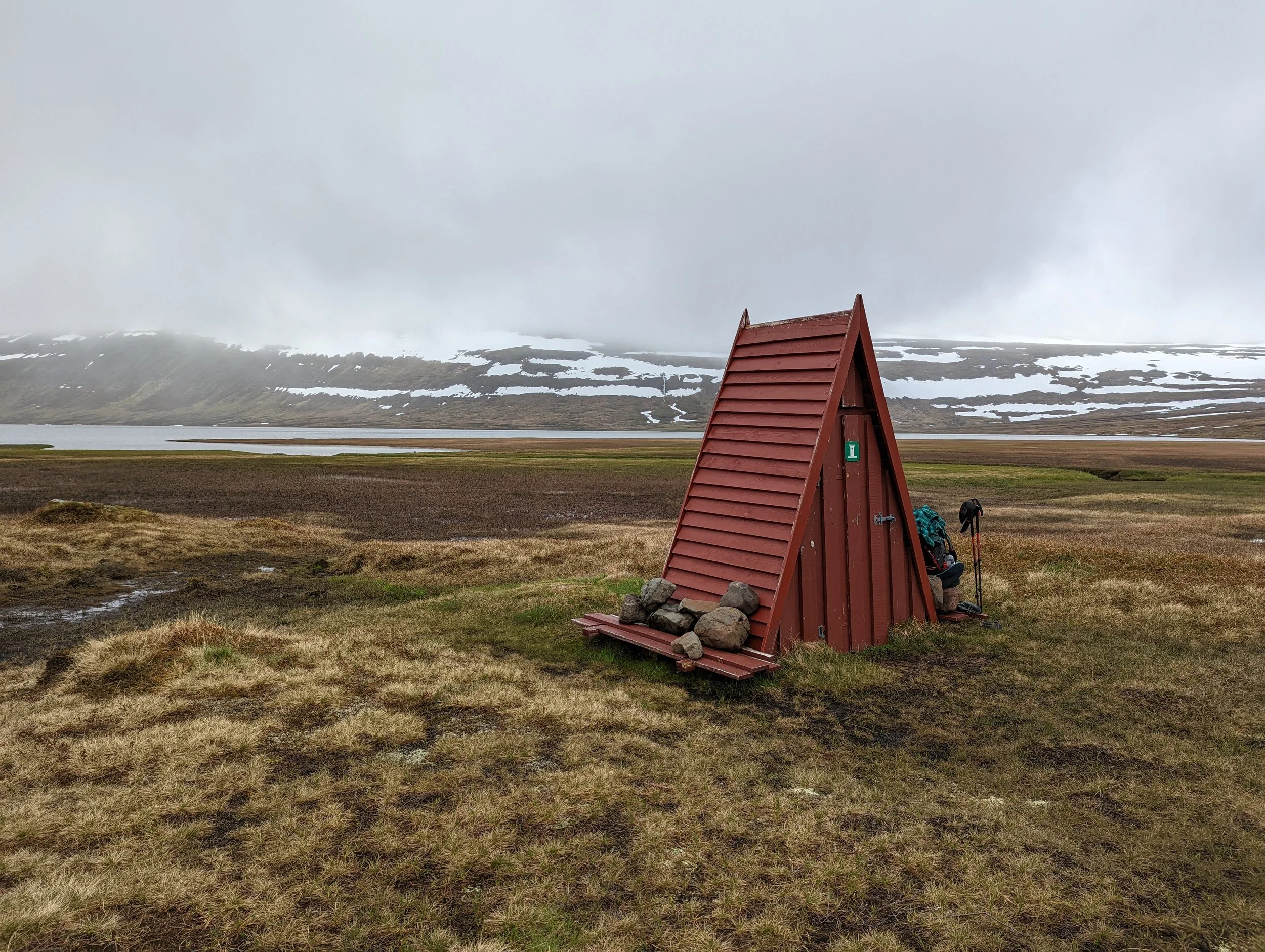
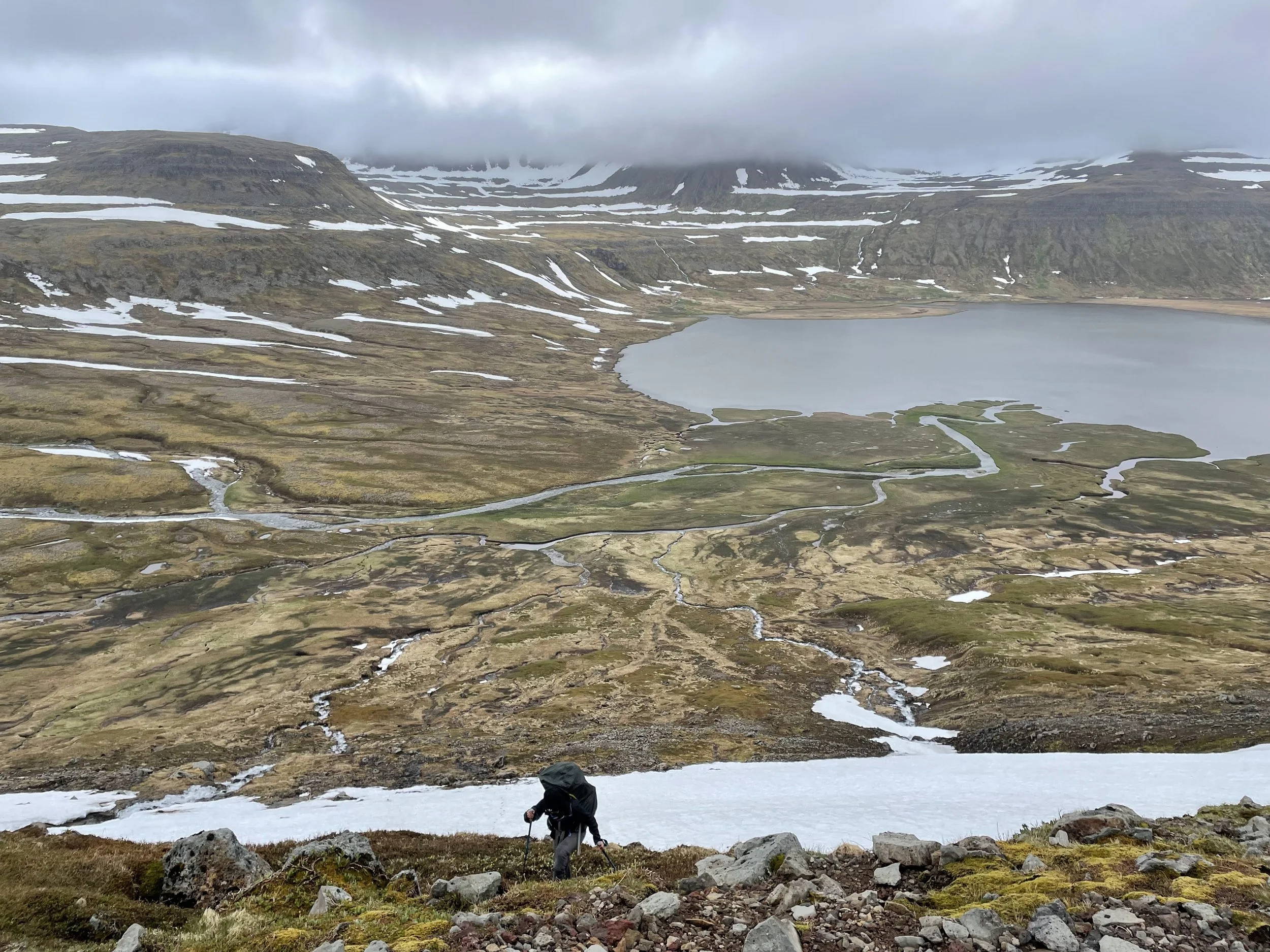
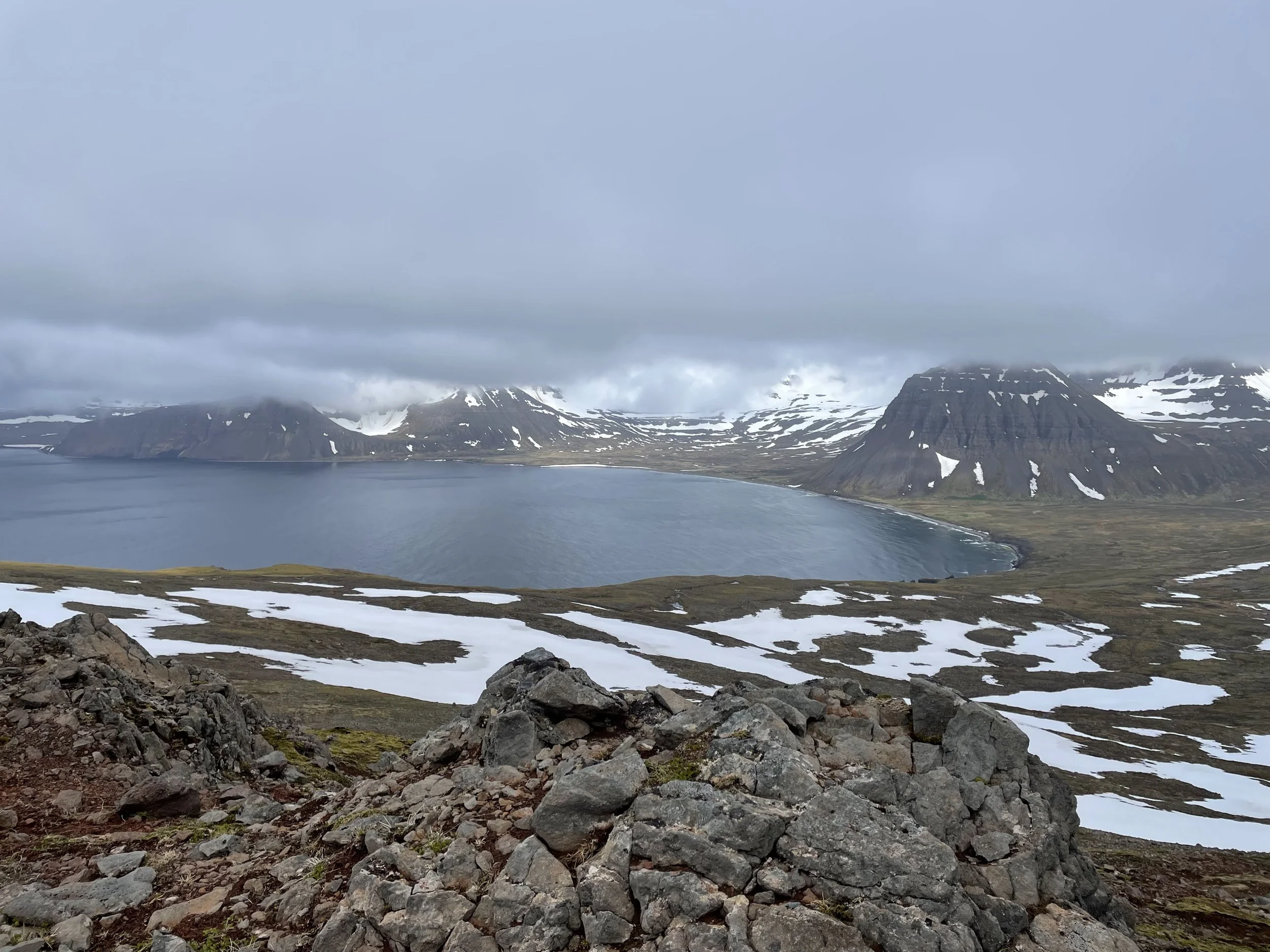
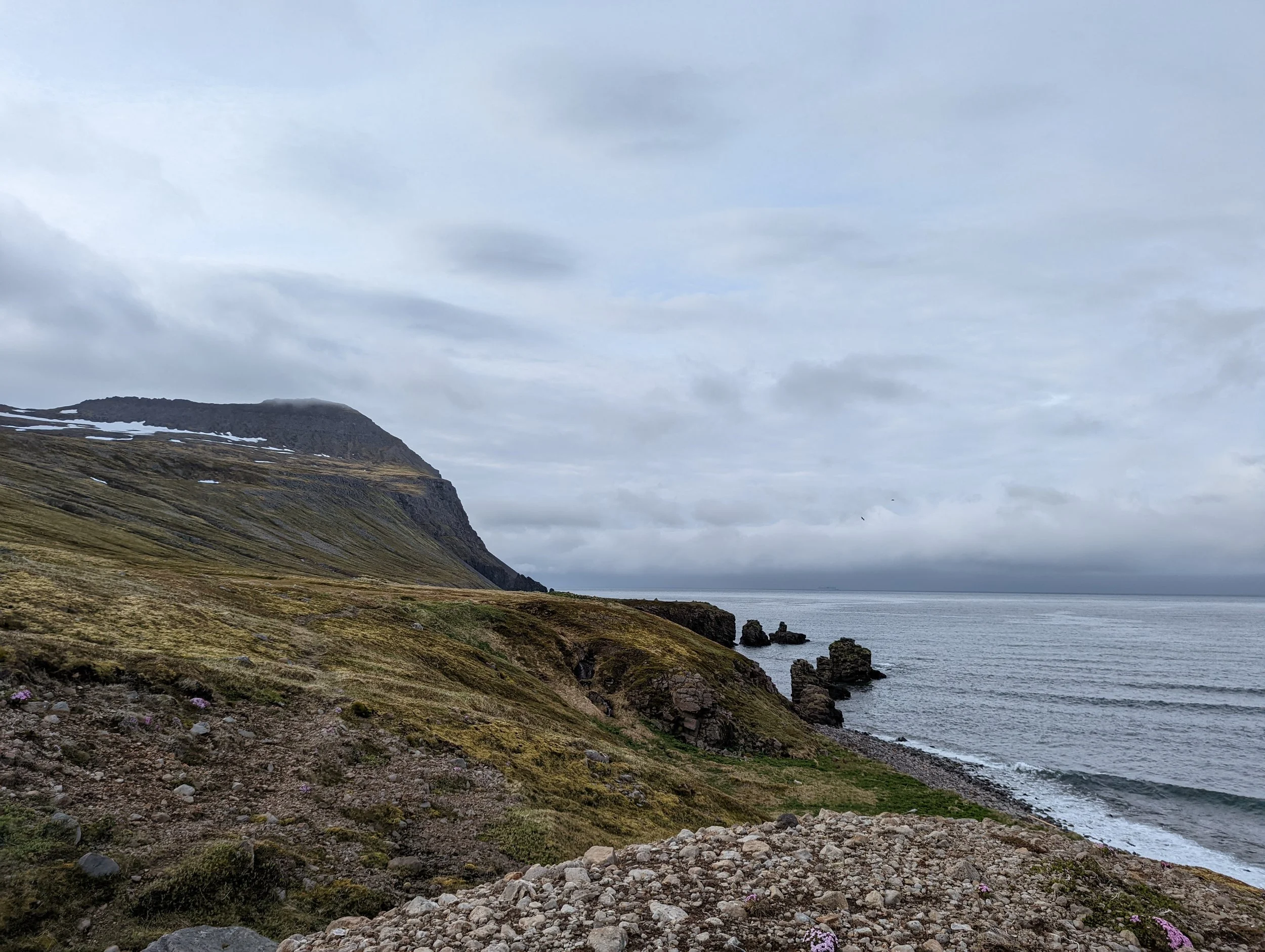
The trek toward Fljótavík / Kögur is a grueling 16-mile push that showcases both the beauty and the unpredictability of Hornstrandir. In this region, the map is often just a suggestion - the actual path is dictated by the tide and the snowmelt.
The Reality of June Trekking: Water crossings are the defining challenge of this leg. During our mid-June expedition (June 12), the combination of high water levels and cold water temperatures made the primary crossing to Fljótavík impassable. Safety comes first in the backcountry, so we opted for a detour to avoid the deep water.
Key Takeaways:
Flexible Planning: If you are trekking in early to mid-June, always have a backup route in mind. “Trails” in Hornstrandir are often just a shallow point in a freezing river that may not exist after a heavy melt.
Safety Check: Always scout for the widest, shallowest point of a river before crossing, and never hesitate to turn back or detour if the current feels too strong.
Day 4 - The Push Back to Civilization (16 mi)
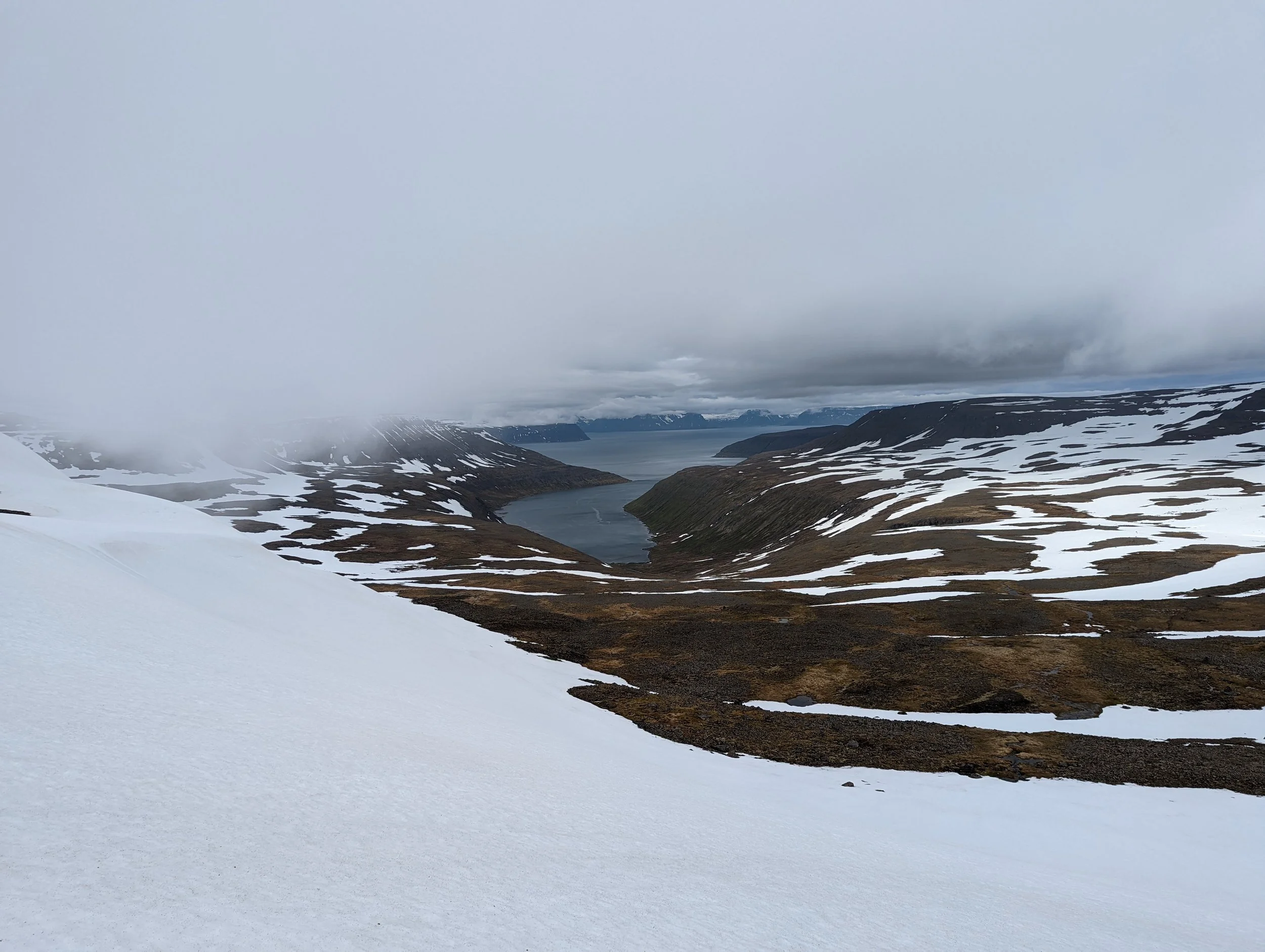
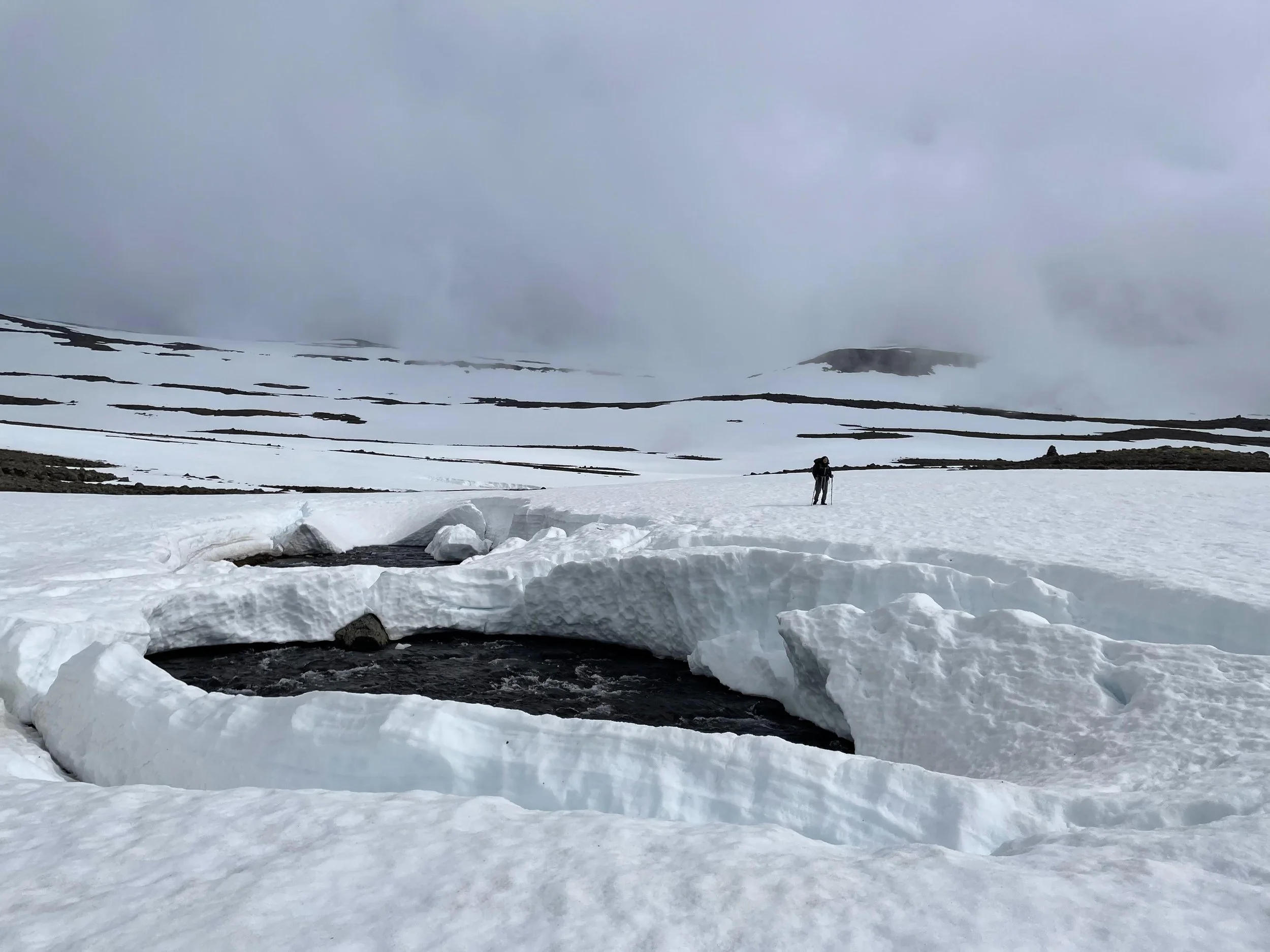
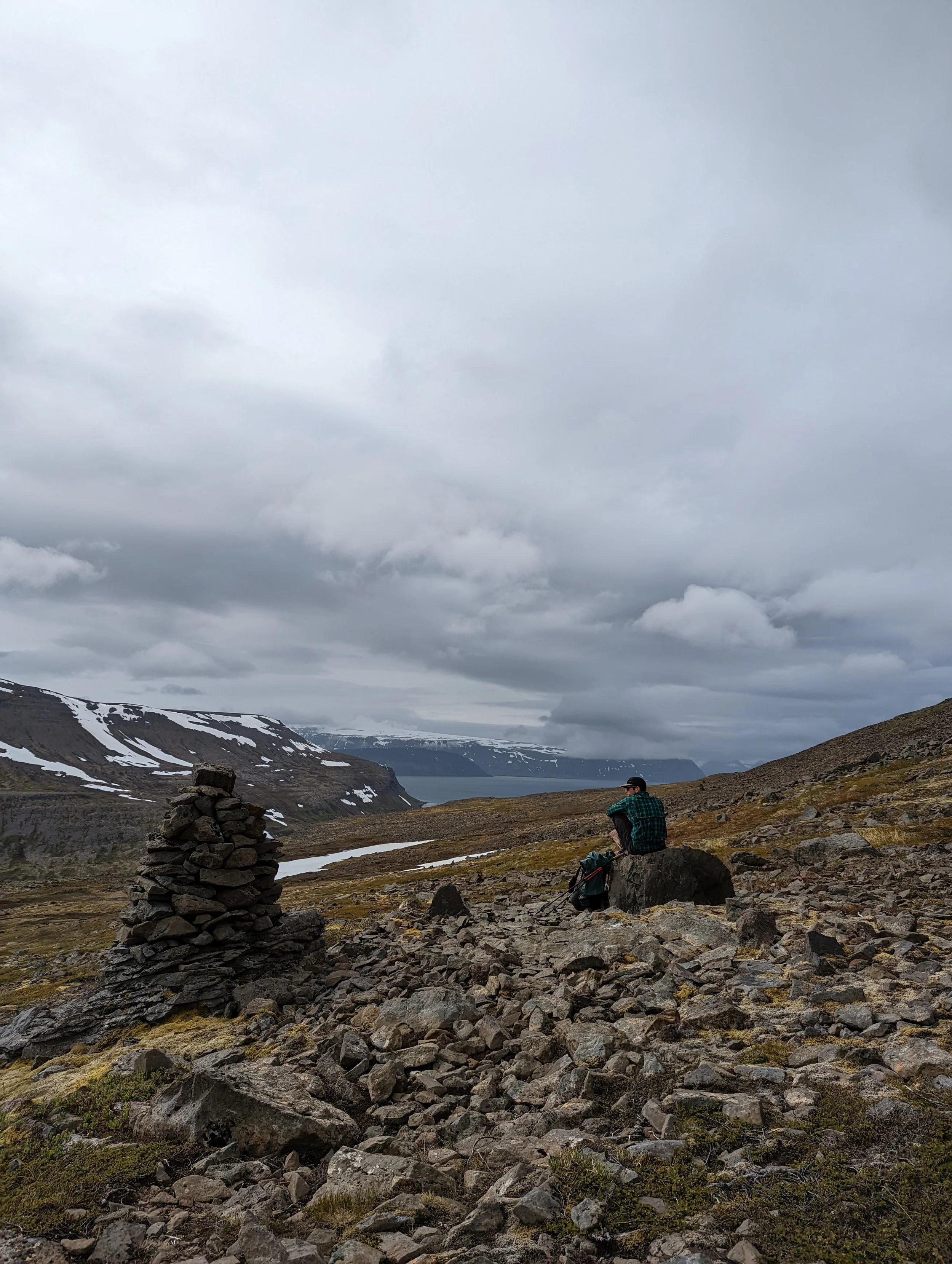
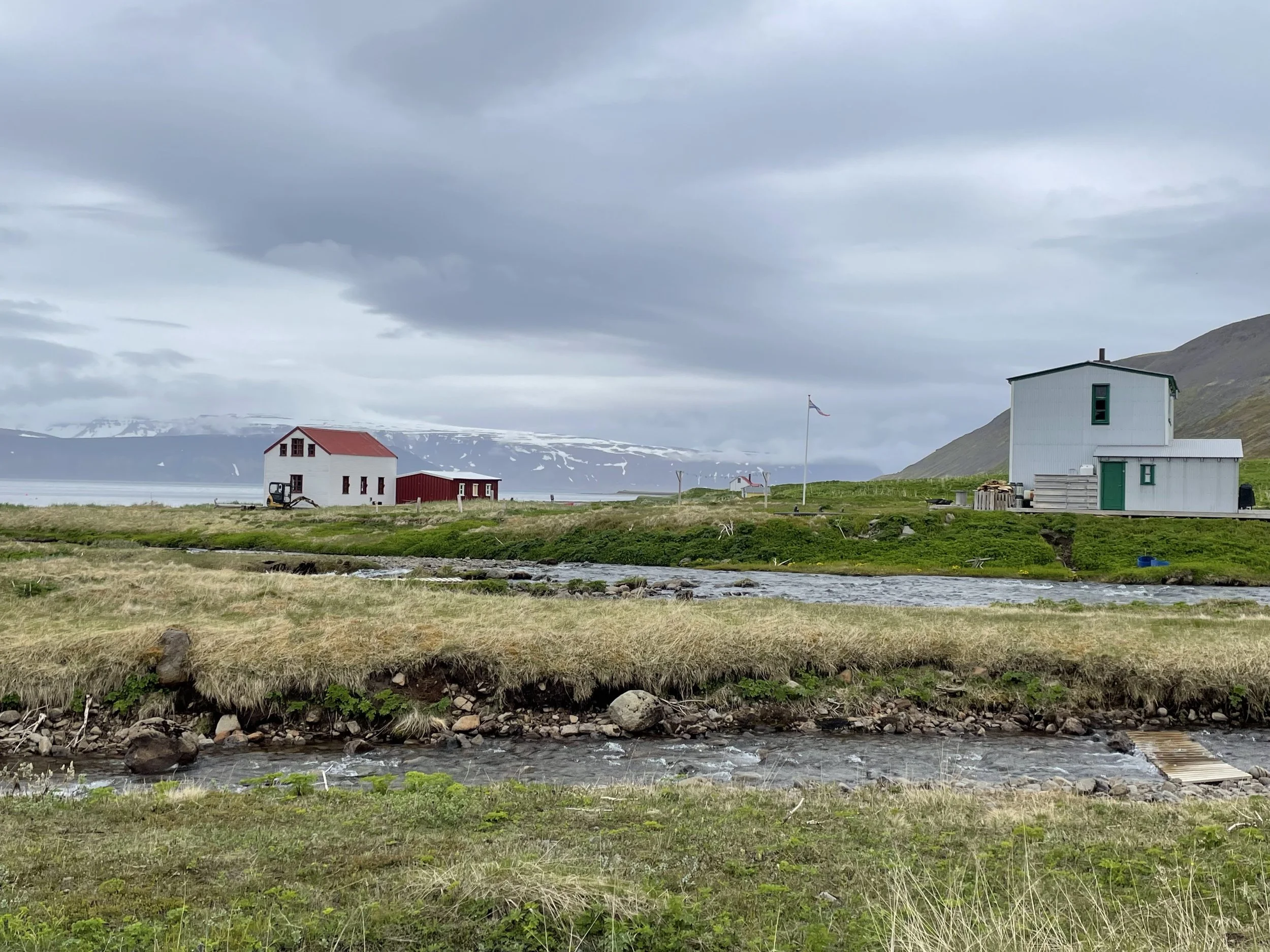
The final leg back to Hesteyri is a long 16-mile stretch. Because Hornstrandir is notorious for unpredictable conditions, it is vital to build a "buffer" into your schedule. Between the potential for river-related detours and the physical toll of the terrain, giving yourself extra time ensures you won't be racing against the ferry departure.
The Return to Hesteyri
Once you arrive back at the landing, head straight for The Old Doctor’s House. This small, family-run café is a sanctuary for hikers. After days of dehydrated meals, sitting down for home-cooked pancakes and coffee while waiting for your ferry is wonderful.
Back in Ísafjörður
After the ferry ride back, you’ll find yourself back in civilization.
Dining: Take the opportunity to grab a hot meal in town before heading back to the campsite. Just keep in mind that restaurant prices in Iceland are significantly higher than in the US - budget accordingly!
The Final Leg: It’s a familiar walk back to Tunguskógur Campground to rest up after the loop.
Day 5: Reykjavik
Catch an early domestic flight back to Reykjavik. Use the day to explore the city and rest at Reykjavik Eco Campsite.
Highlights of the Day:
Hallgrímskirkja: The city’s towering basalt-inspired church. Take the elevator to the top tower for the absolute best panoramic view of Reykjavík’s colorful rooftops.
Harpa Concert Hall: A striking architectural marvel right on the water. Walk inside to photograph the honeycomb-like geometric glass facade.
Details:
Catch an early Icelandair flight from Ísafjörður (IFJ) to Reykjavík Domestic Airport (RKV)
Pick up the extra luggage from the lockers
Spend the afternoon walking the downtown core (Laugavegur street, Harpa, Hallgrímskirkja)
Lodging: Reykjavík Eco Campsite
Day 6-8: The Golden Circle & Southern Highlands
The Golden Circle and its surrounding valleys offer a classic Icelandic road trip experience, blending tectonic rifts, erupting geysirs, and roaring glacial rivers with hidden geothermal gems.
Quick Facts:
Distance: ~250 km (155 miles) of driving from Reykjavík, plus local hiking tracks.
Recommended Duration: 2–3 days to fully explore beyond the main turnouts.
Terrain: Well-paved highways, gravel trailhead tracks, and maintained boardwalk paths.
Highlight: Exploring varied terrain and soaking in a natural thermal river.
Logistics: Requires a rental car picked up from Reykjavík (RKV).
Day 6: Þingvellir + Geysir + Gulfoss
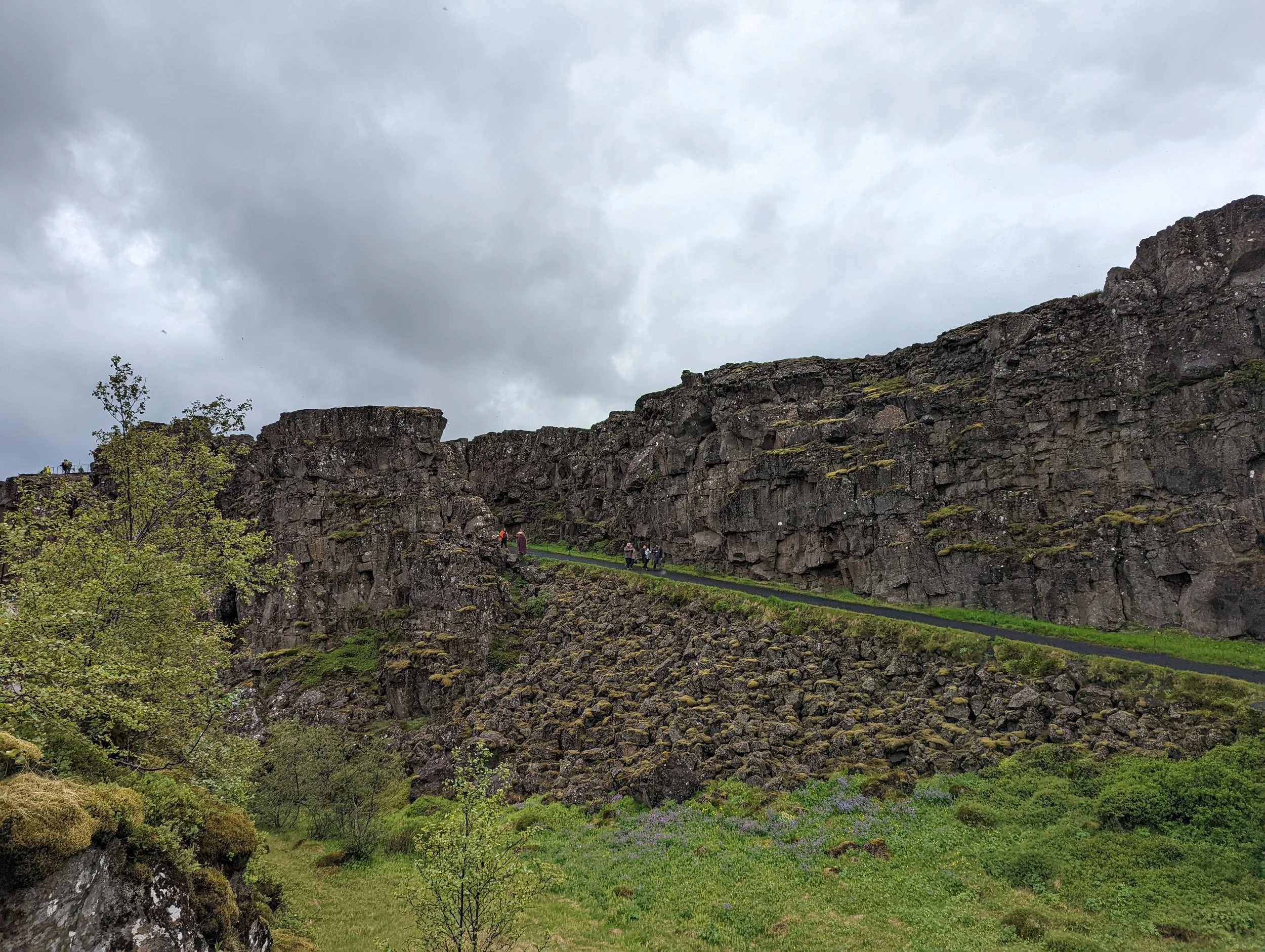
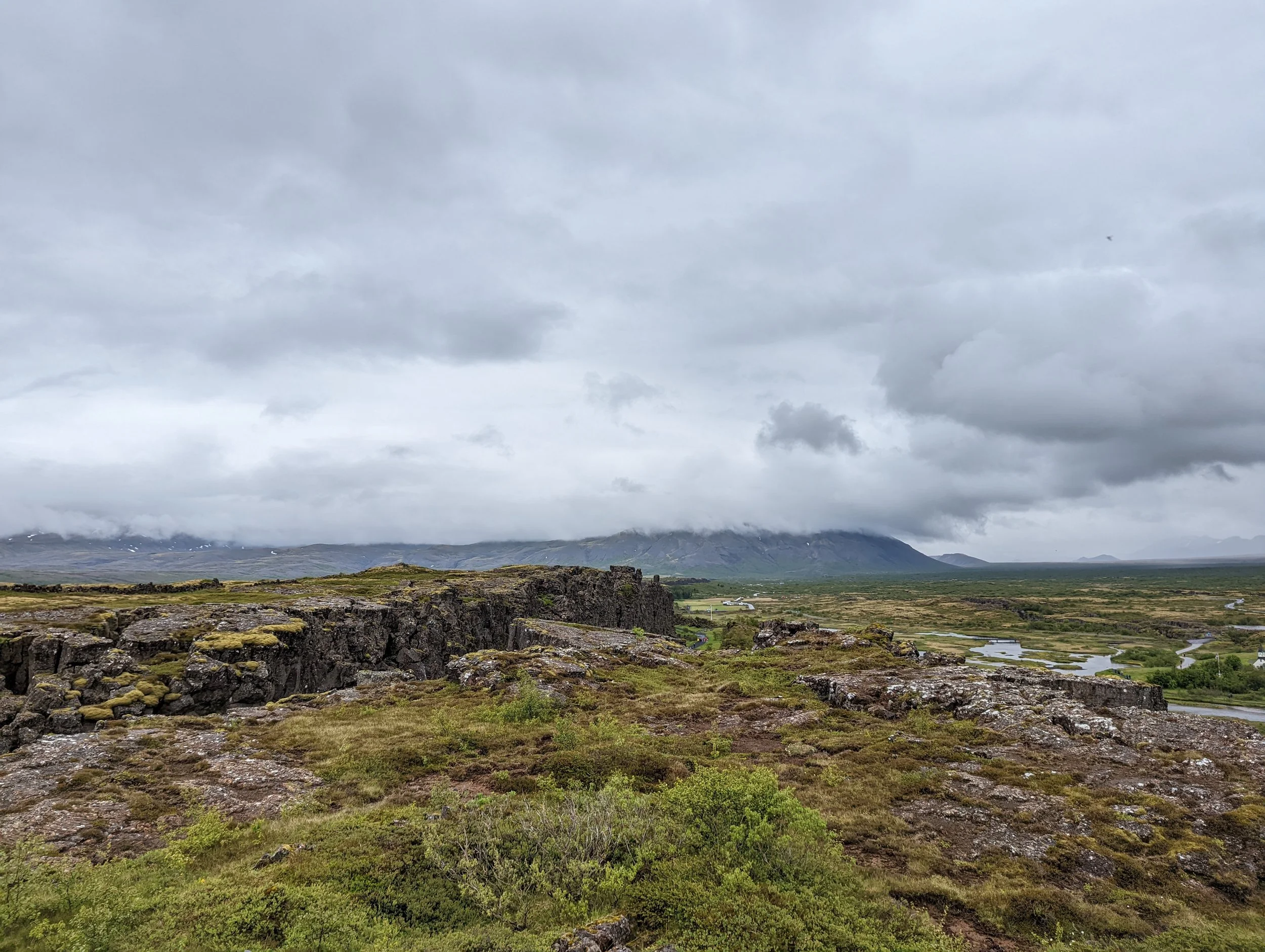
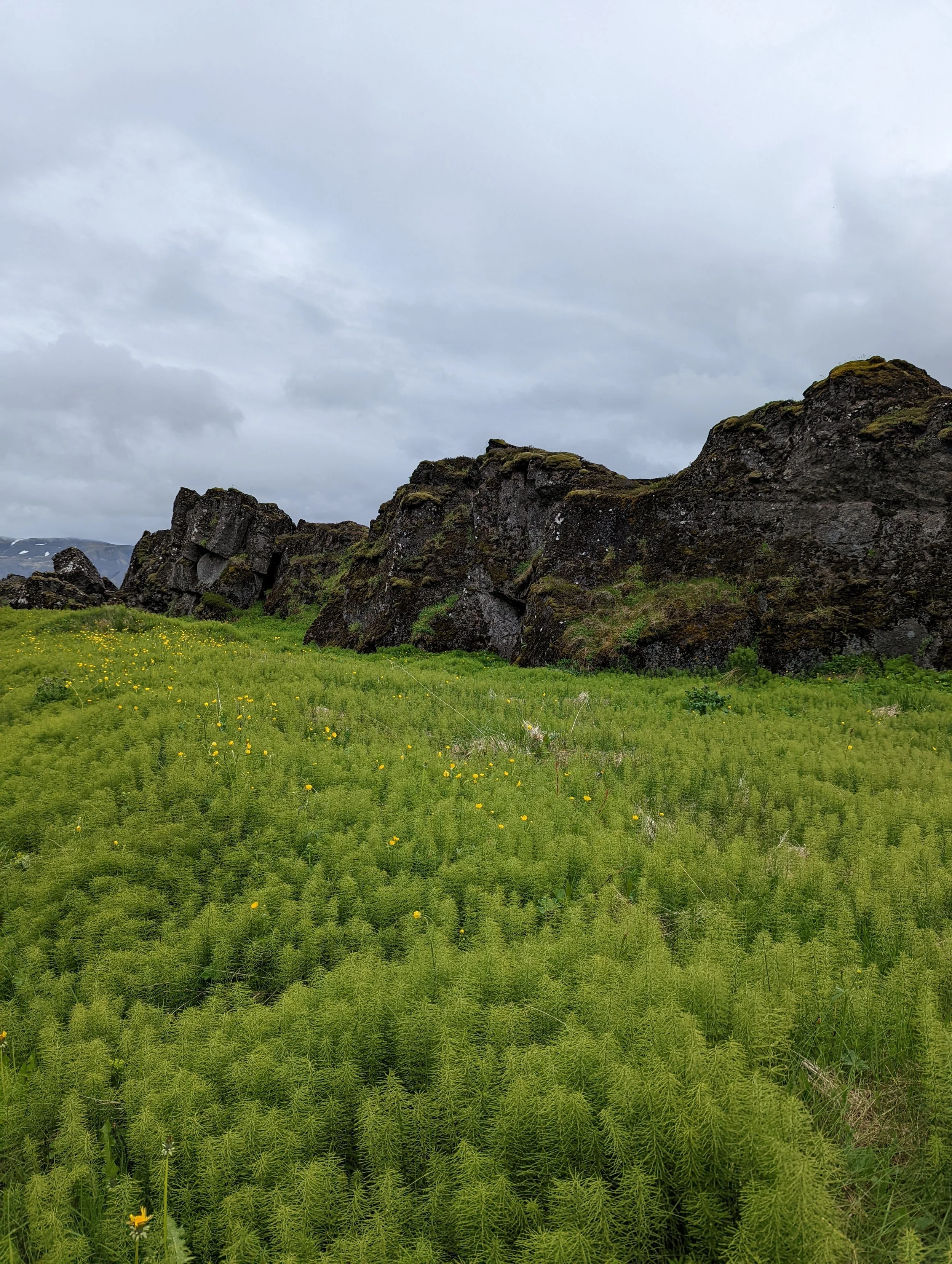
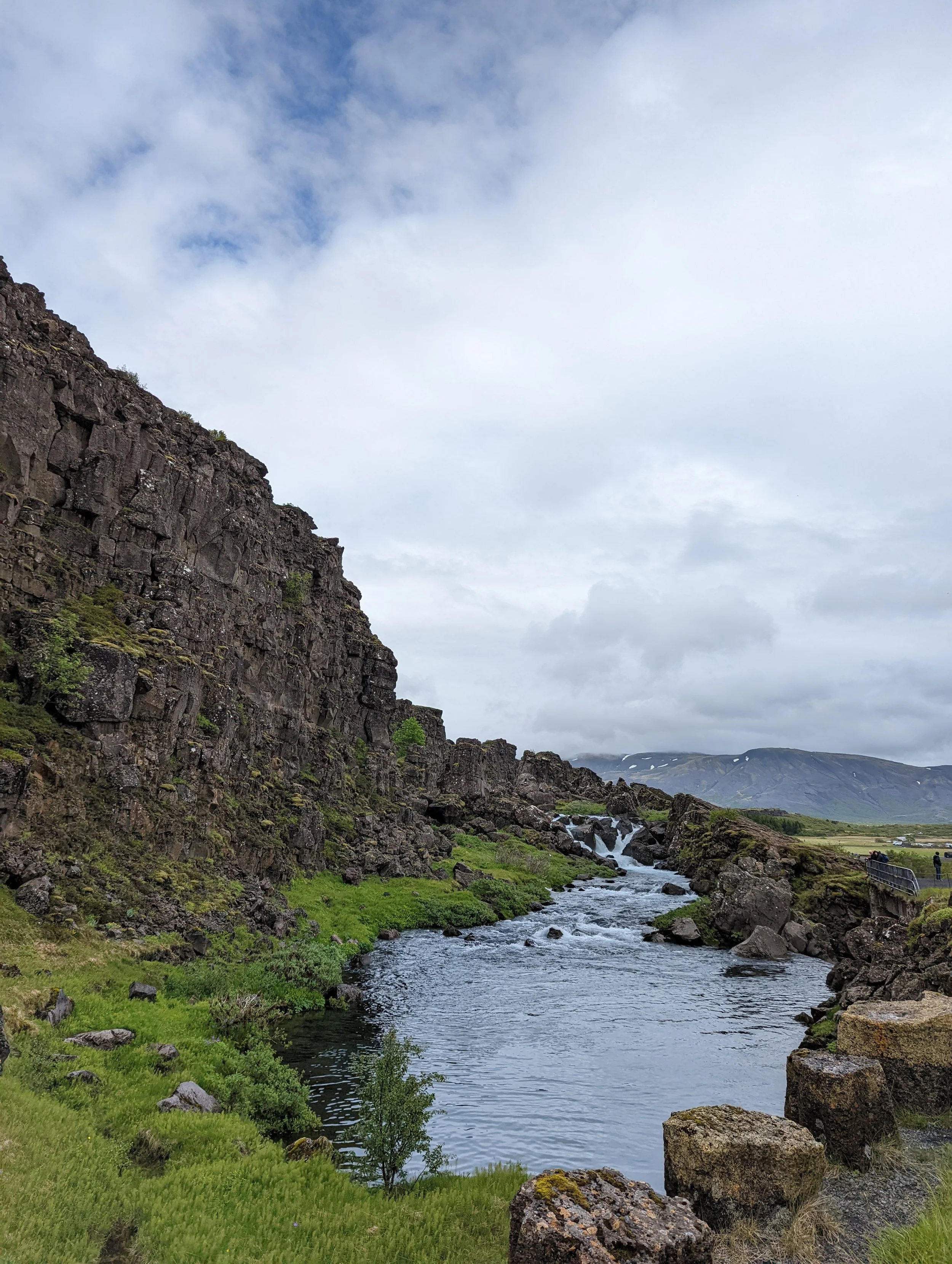
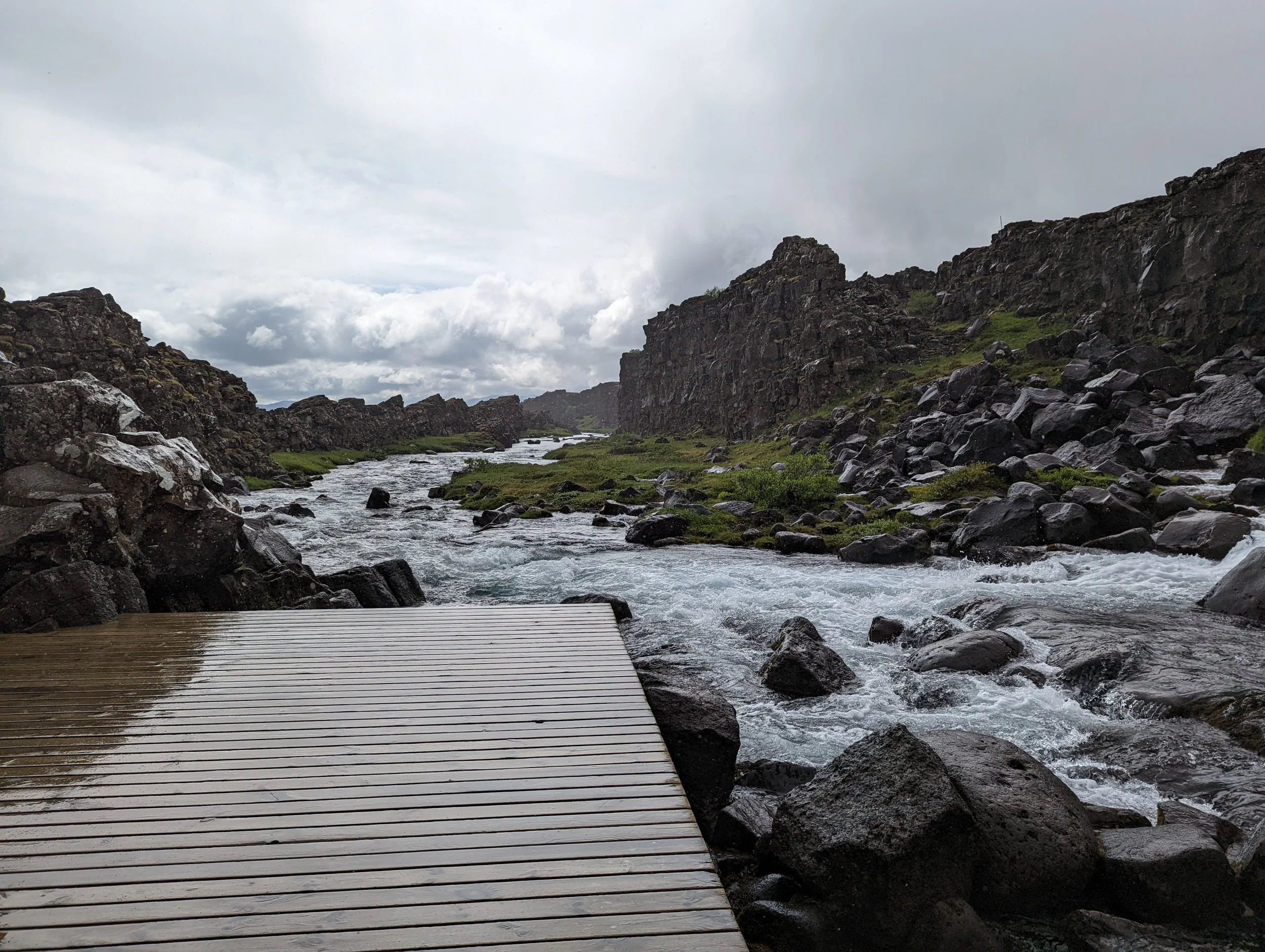
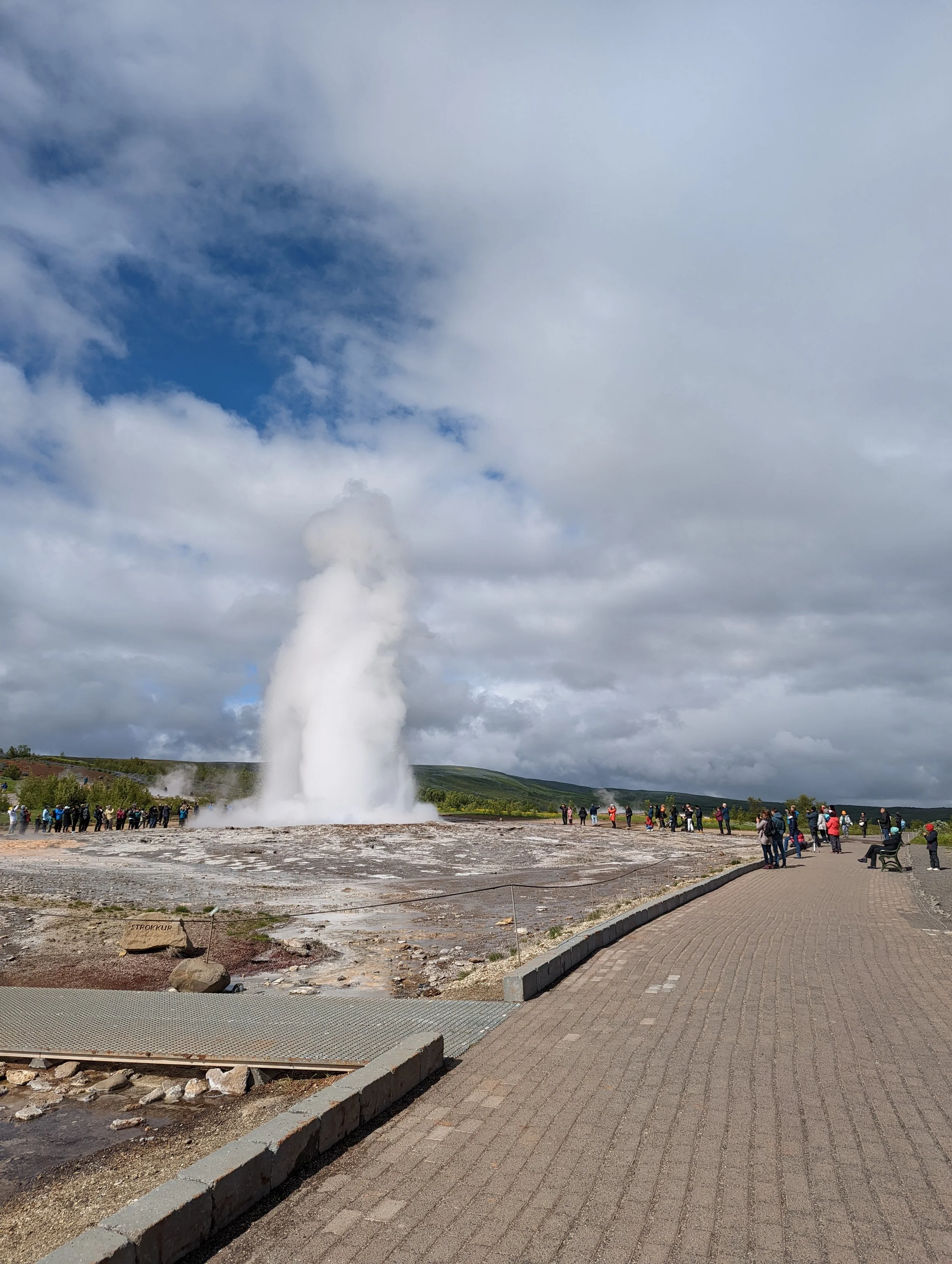
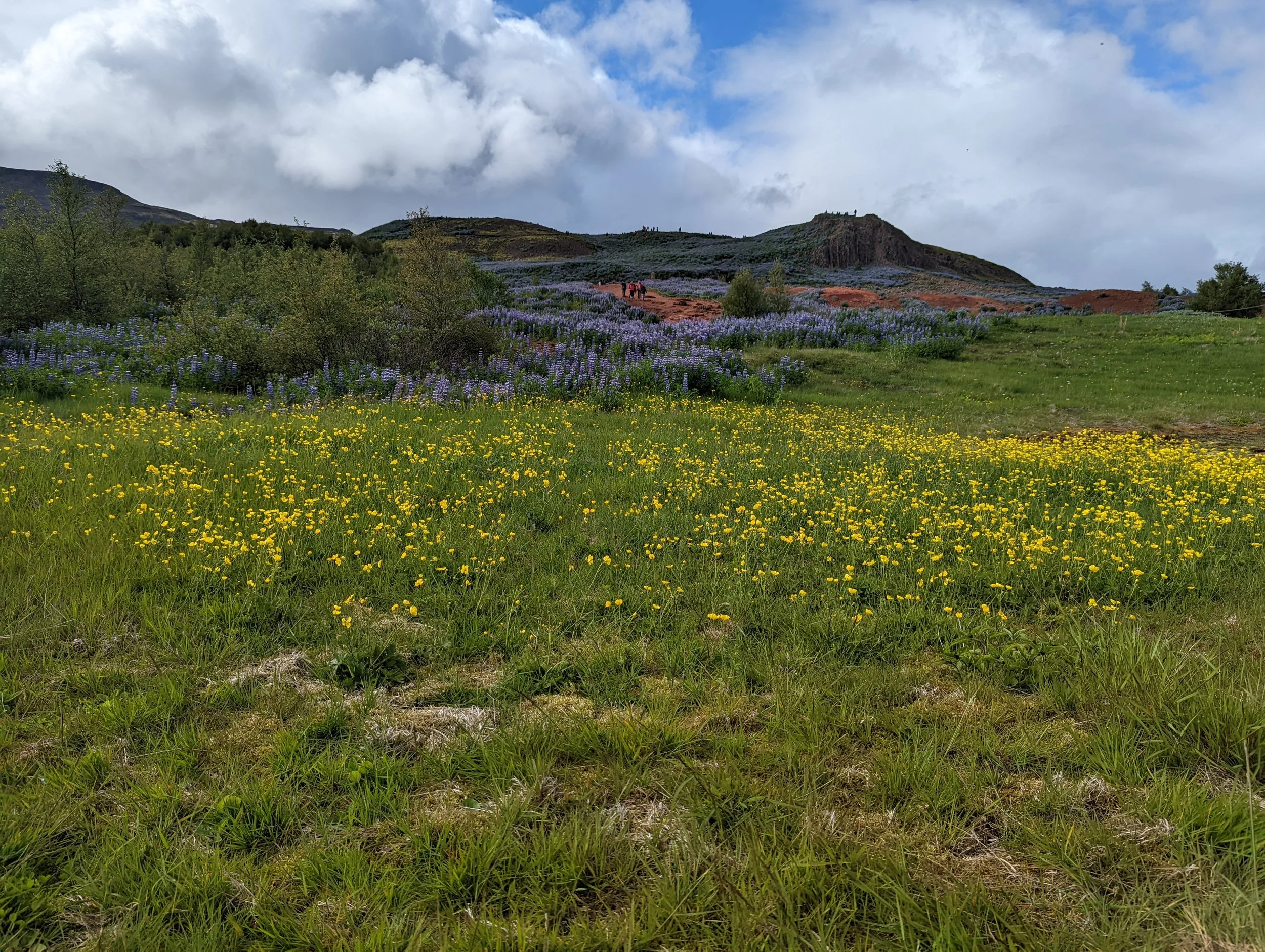
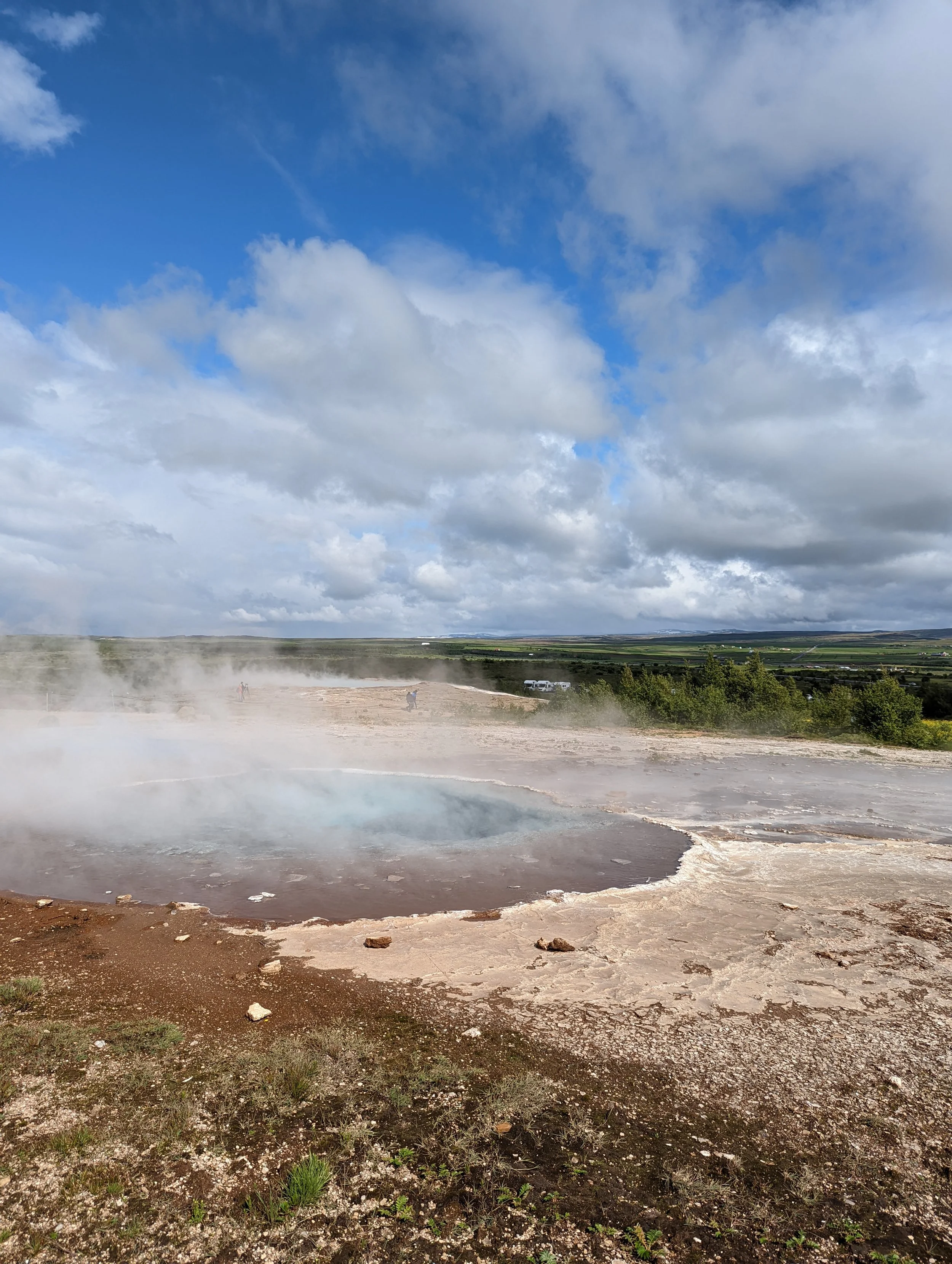
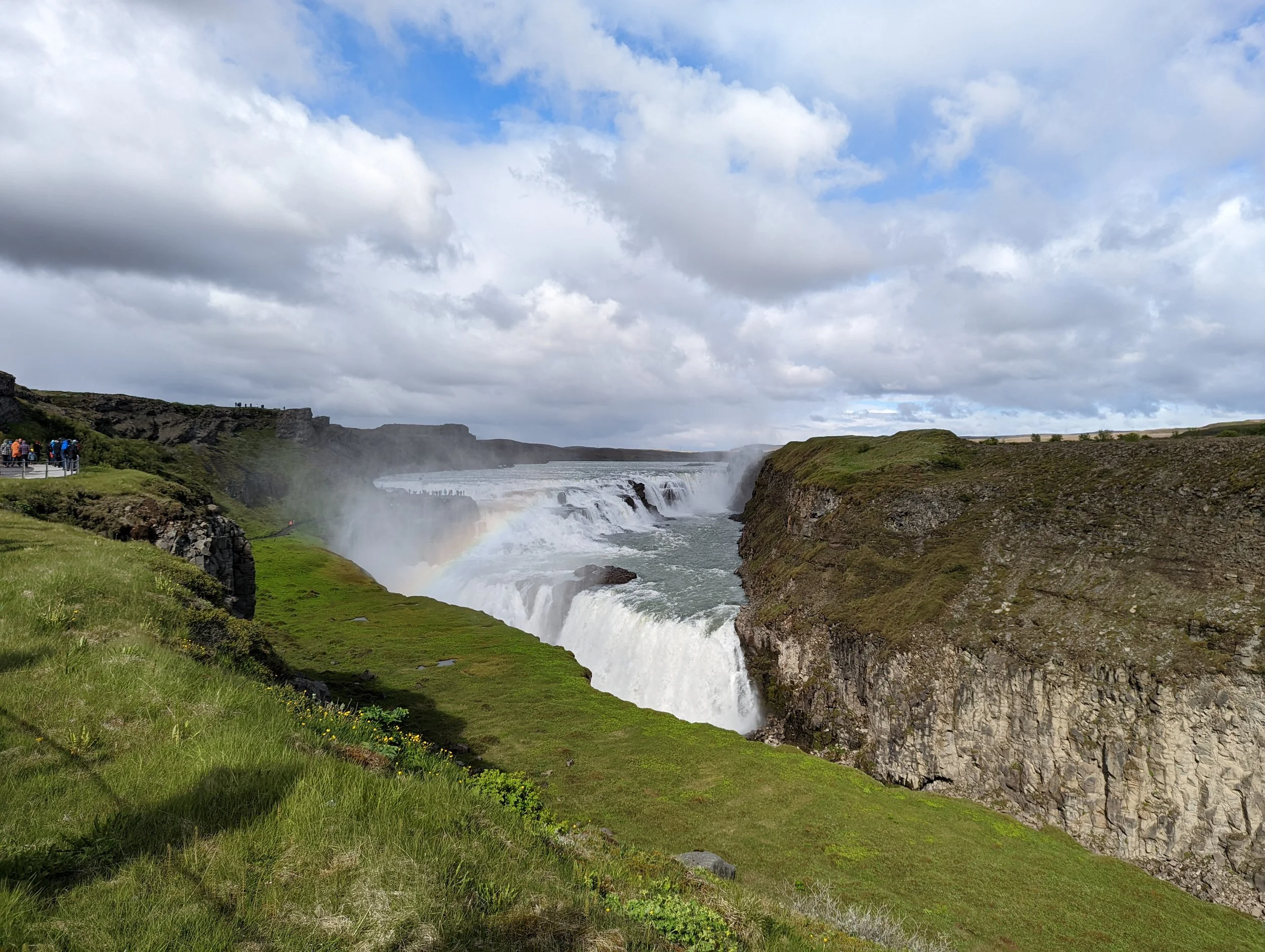
Adventure format shifts today from foot travel to wheels. Grab your rental car back at the domestic airport to launch into the Golden Circle.
Highlights of the Day:
Silfra Fissure Dive (optional): Build in an extra day in the area for the Silfra Fissure Dive between the American and Eurasian tectonic plates (dry suit certification required); Snorkel option available for those that are not certified
Glymur Waterfall (4.3 mi): Climb past caves and river crossings to reach one of the country’s tallest cascading waterfalls
Þingvellir (Thingvellir) National Park: Walk through the massive Almannagjá gorge, the literal edge of the North American continental plate and the site of Iceland's ancient parliament.
Öxarárfoss (3 mi): Walk to a waterfall dropping over the park’s tectonic cliffs
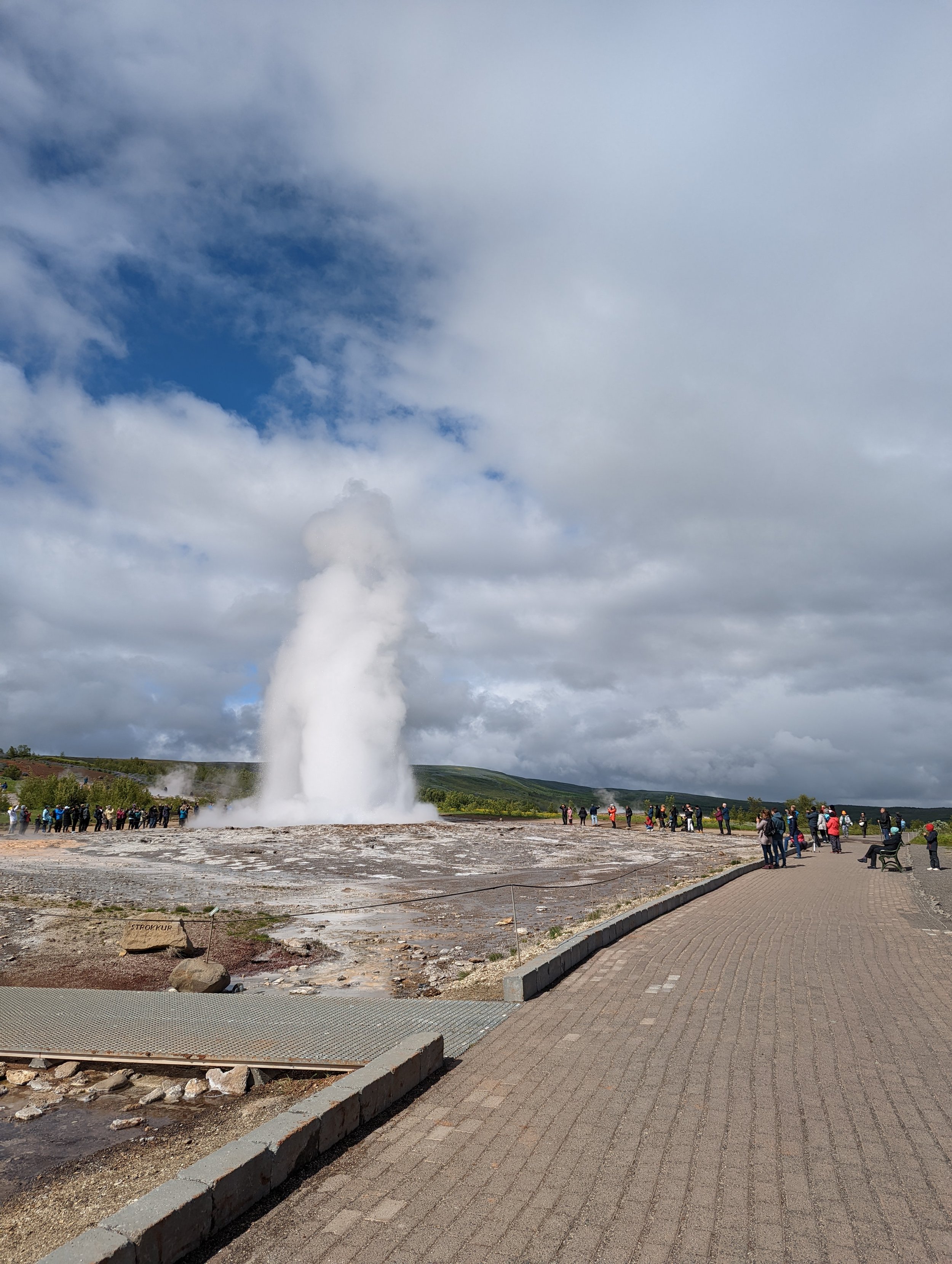
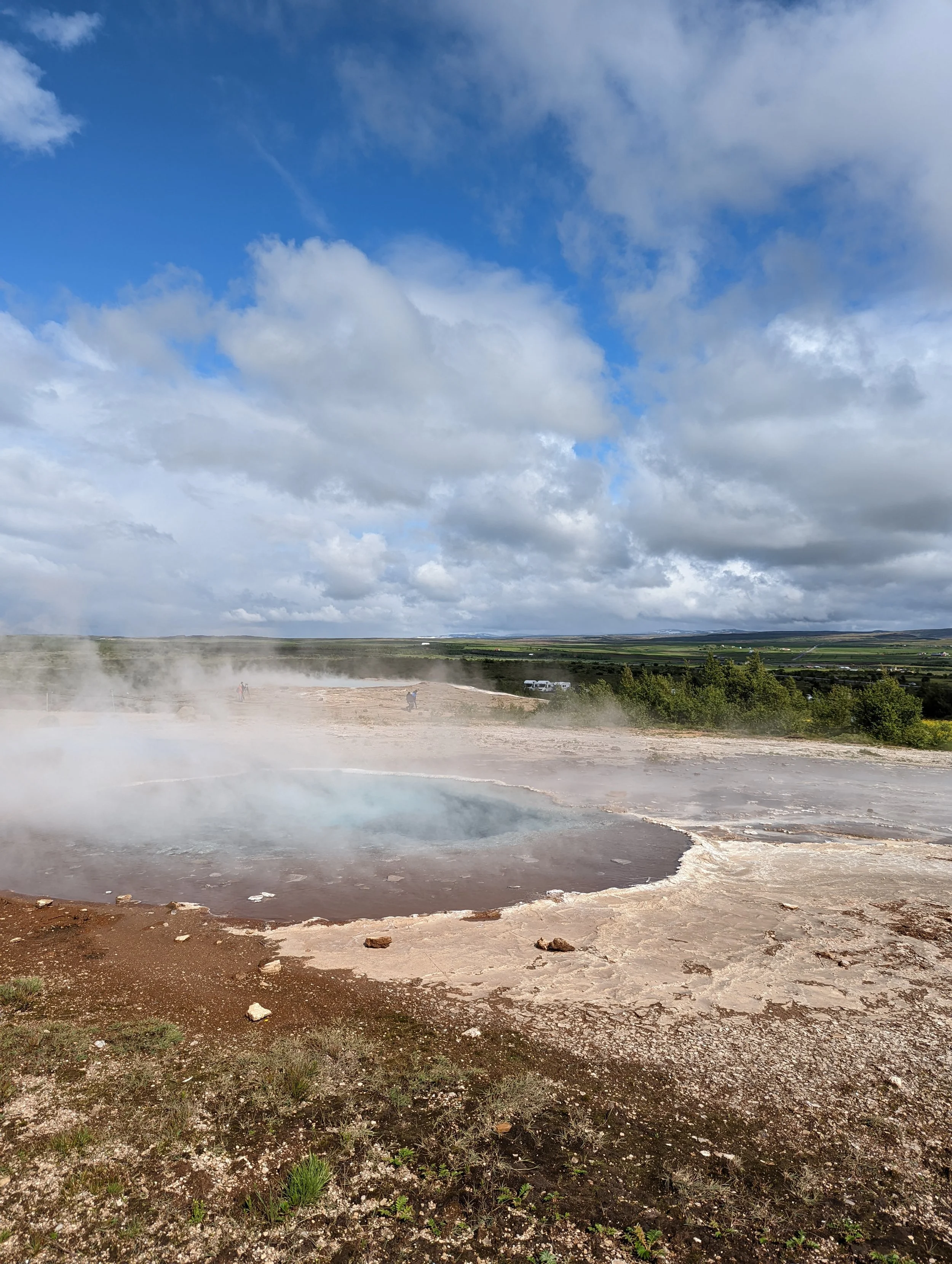
Geysir Geothermal Area: Explore a landscape of bubbling mud pots and steaming vents to watch the highly active Strokkur geyser send a massive blast of boiling water 60–100 feet into the air every few minutes.
Geysir - Strokkur - Blesi (1.7 mi): Explore the geysirs in the area
Gullfoss Falls (1.3 mi): Experience the sheer power of this iconic multi-step cascade as the Hvítá River plunges dramatically down a deep 90-degree volcanic canyon.
Details:
Total Trail Mileage: 10.3 miles
Store any additional luggage at Eco Campsite for a fee
Build in an additional day in Reykjavik for Silfra Fissure excursion (transport from Reykjavik included)
9:00 AM / Midday: Pick up your rental car at the Reykjavík Domestic Airport (RKV)
Explore the highlights
Lodging: Skjól Camping
Day 7: The South Coast Giants
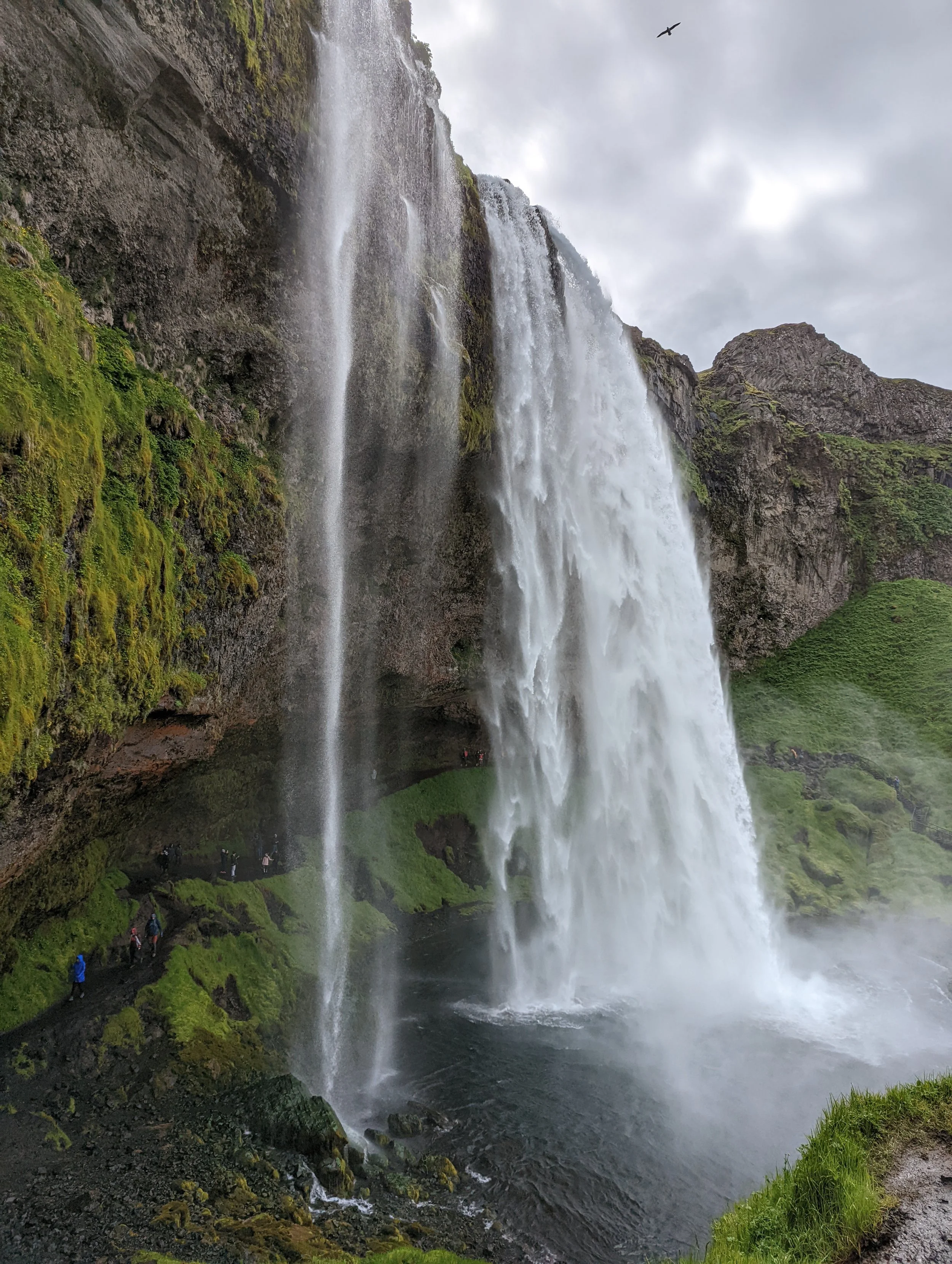
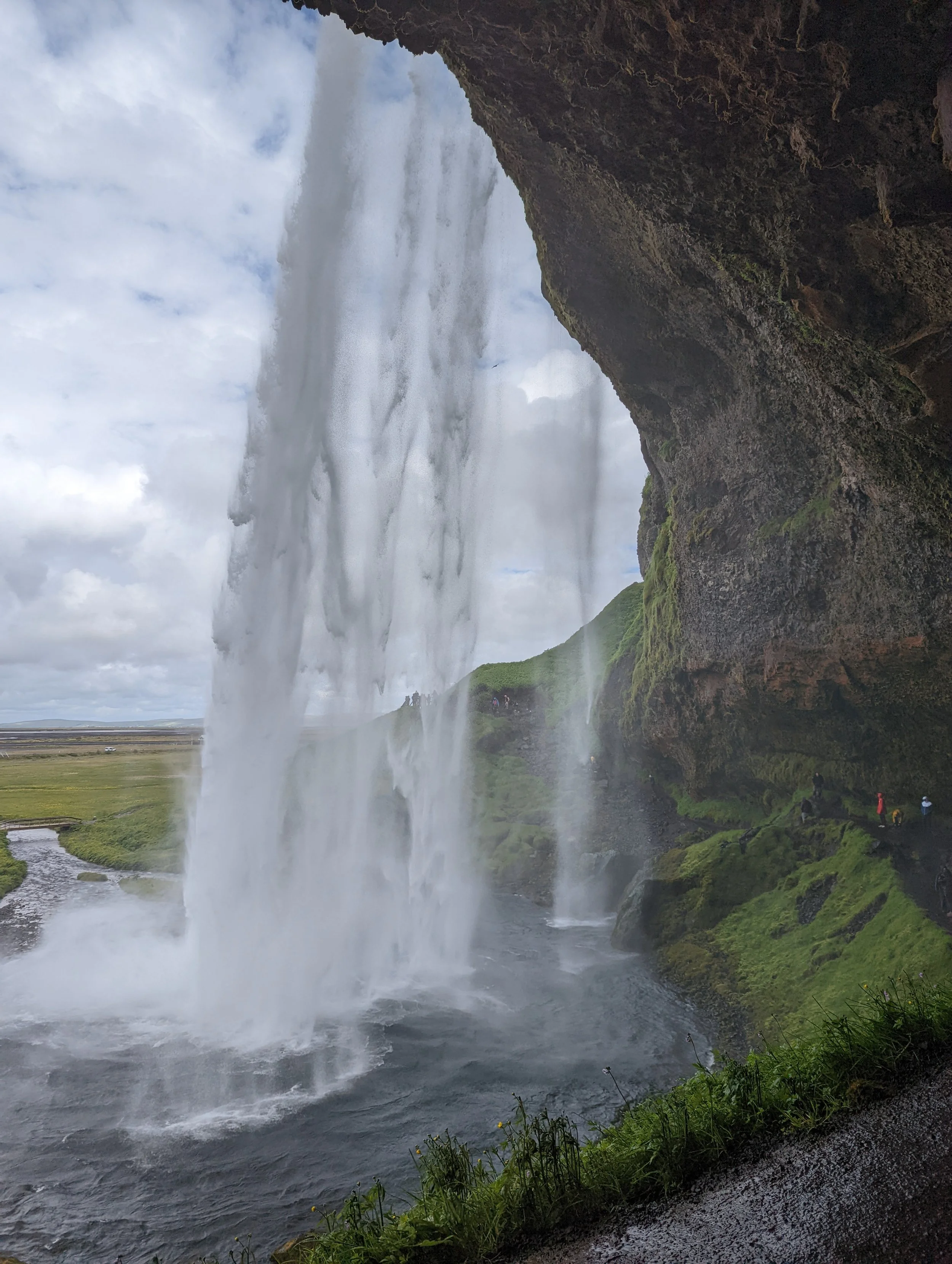
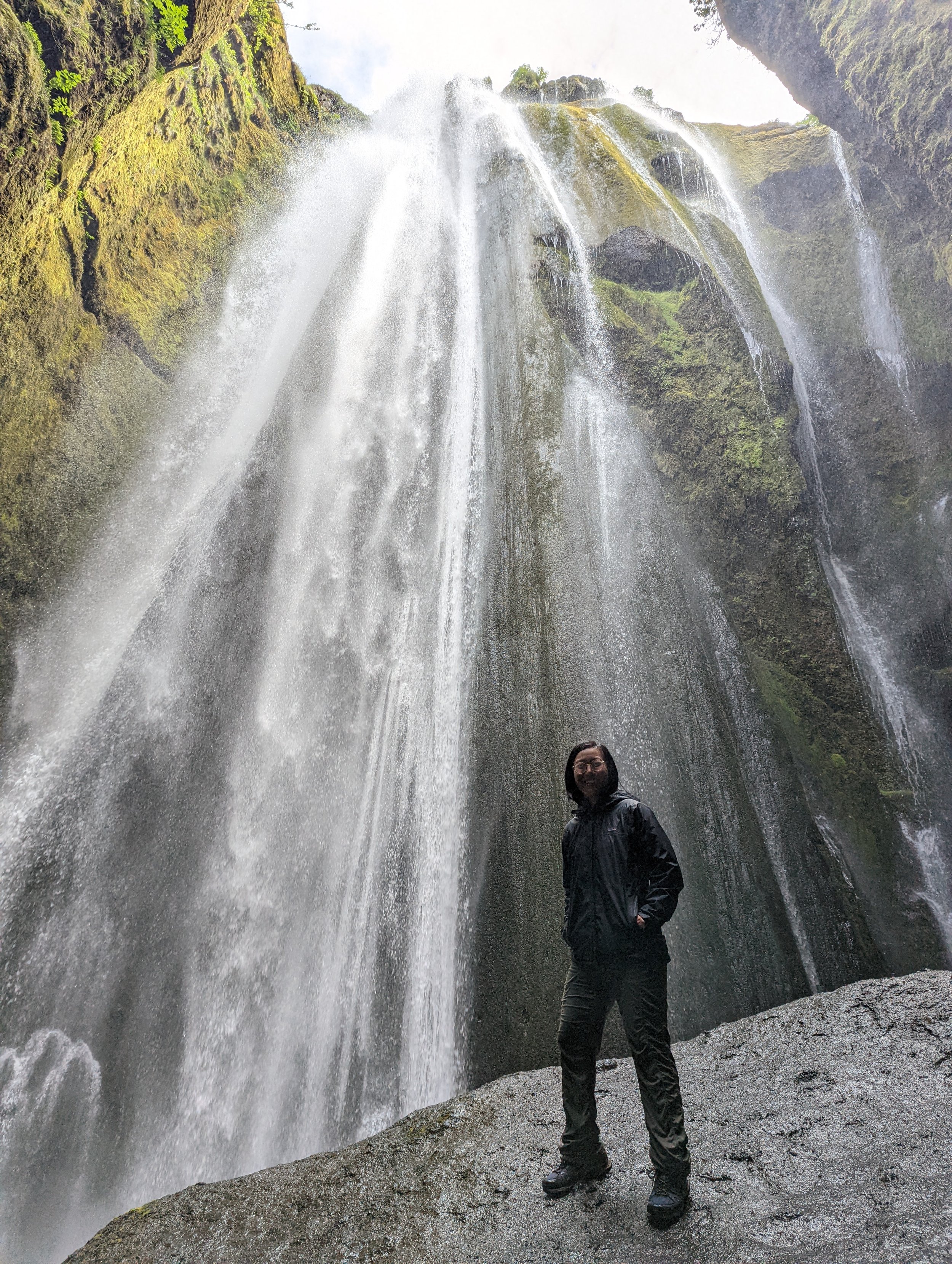
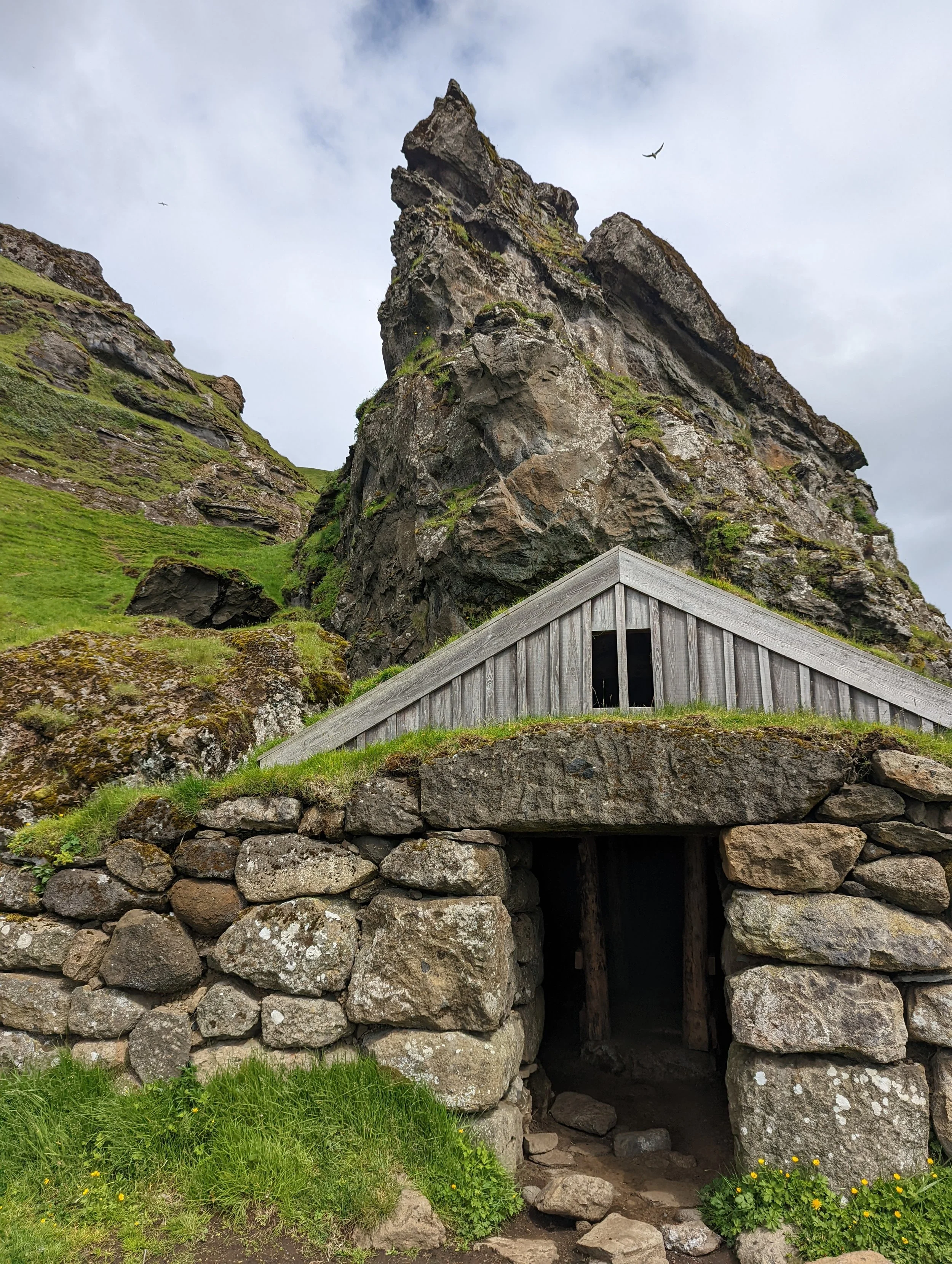
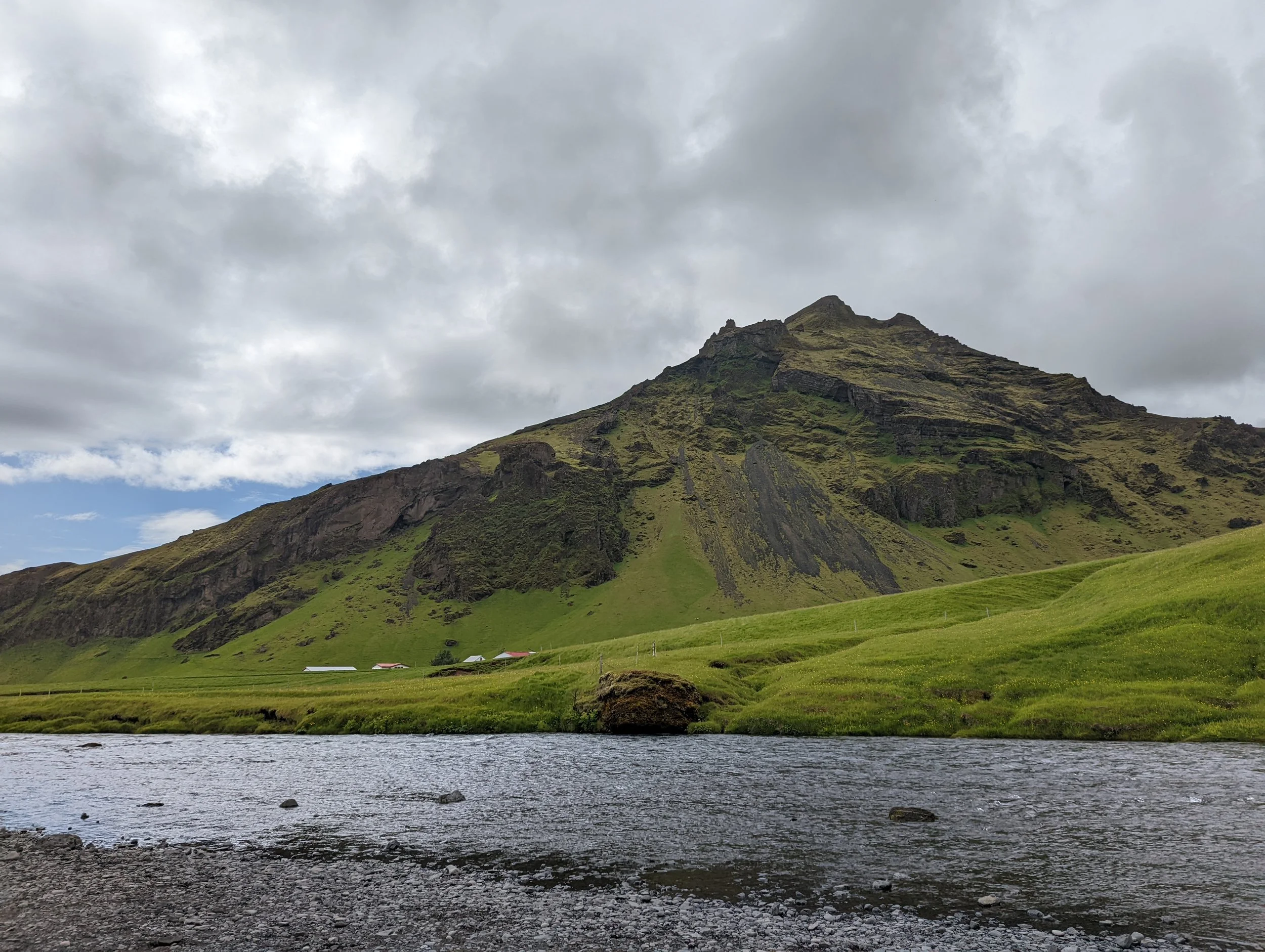
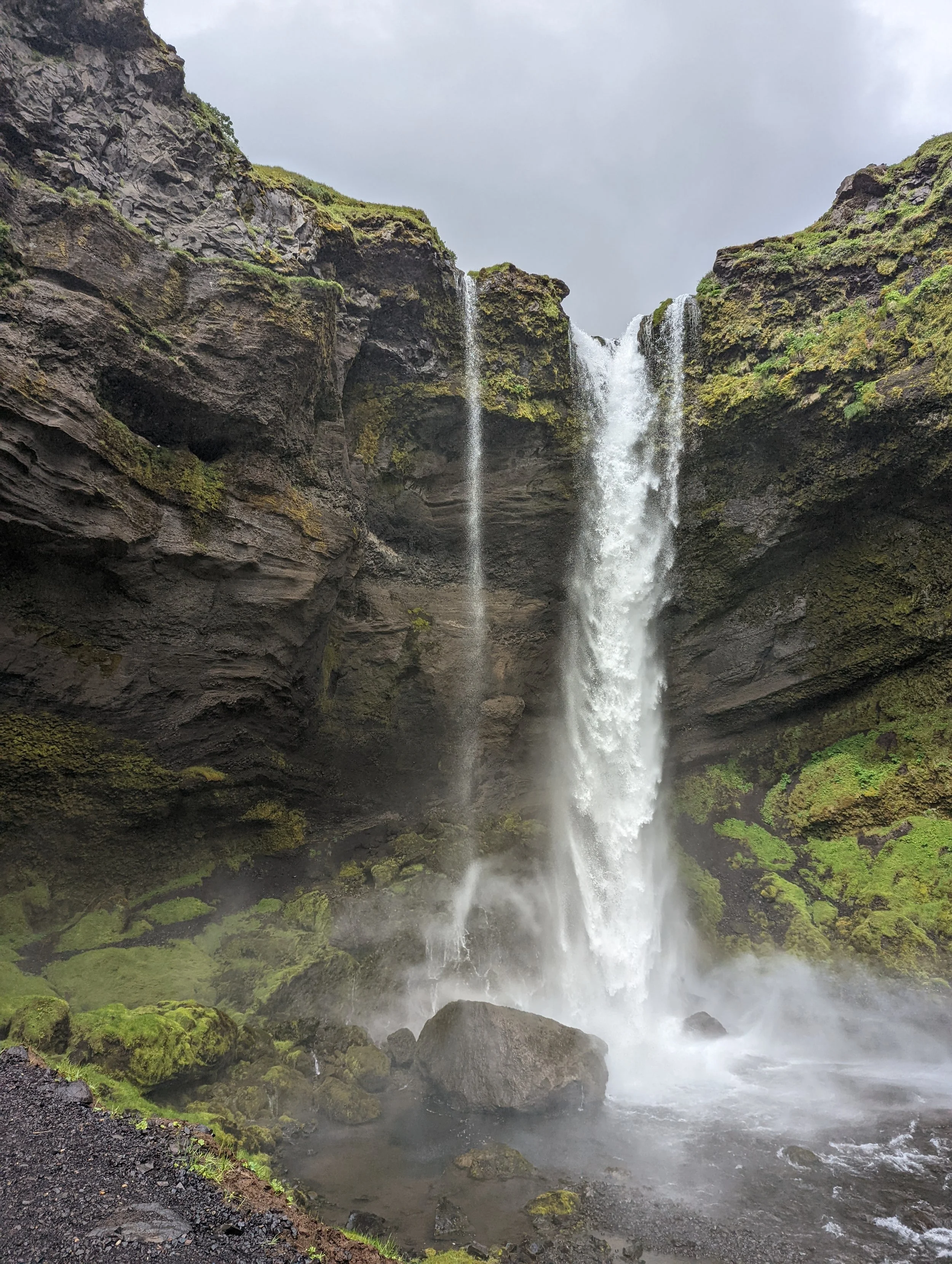
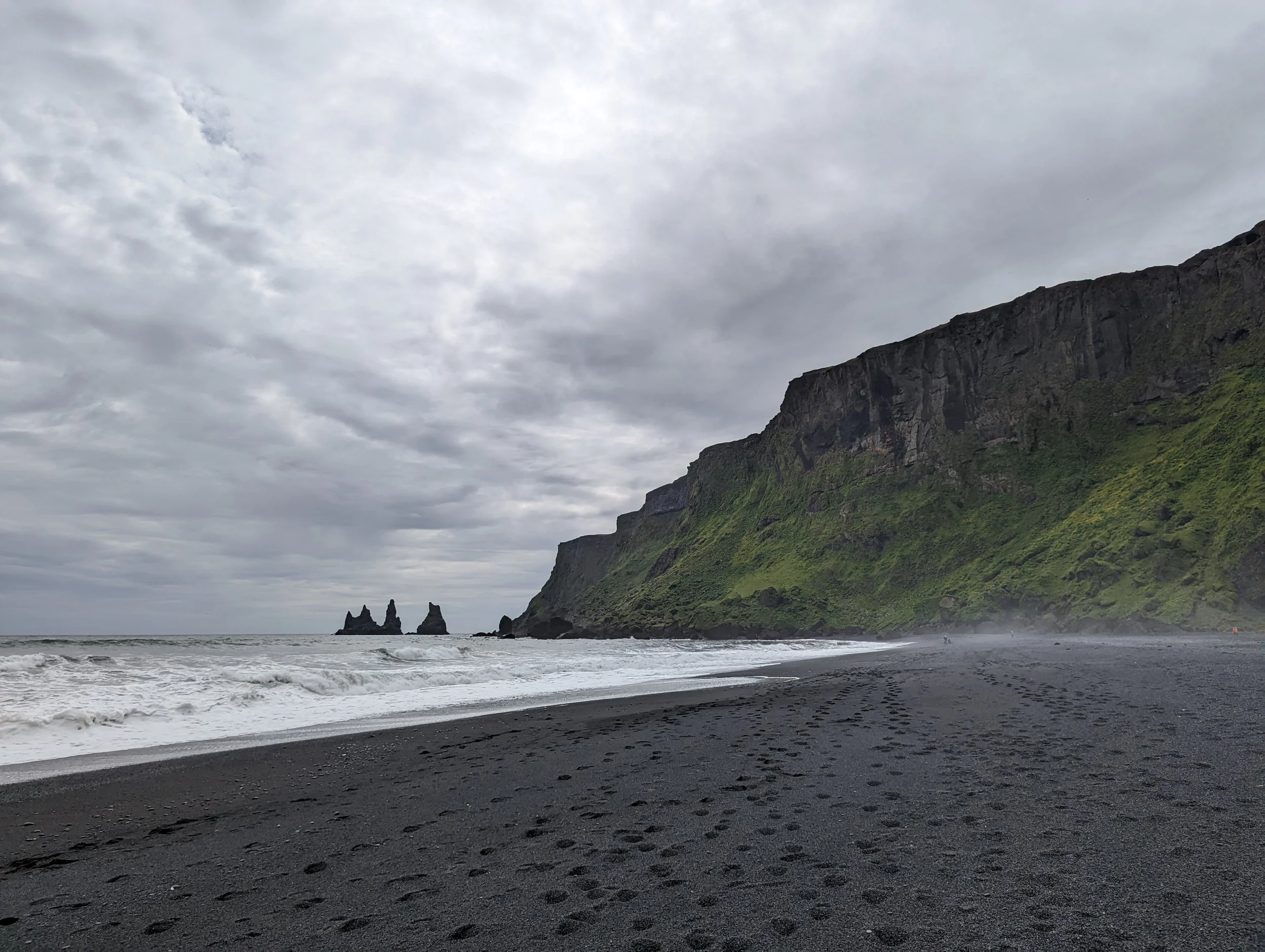
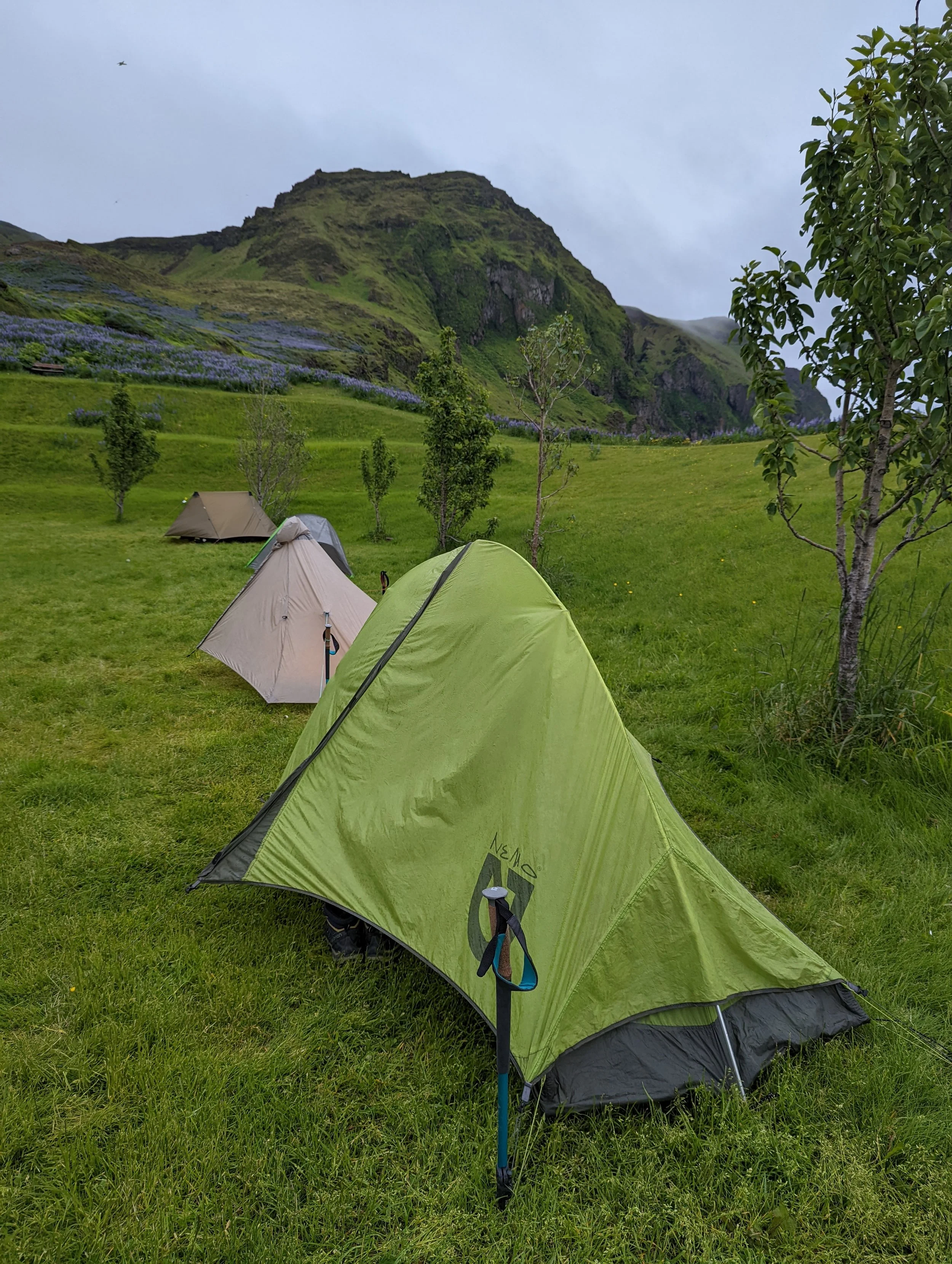
Pack up camp and point your wheels east down Route 1. Today is an absolute powerhouse road-trip stretch along Iceland's famous South Coast, totaling roughly 7.1 miles of trail travel across black sand beaches, secret cavern slits, and massive cliffside cascades.
Highlights of the Day:
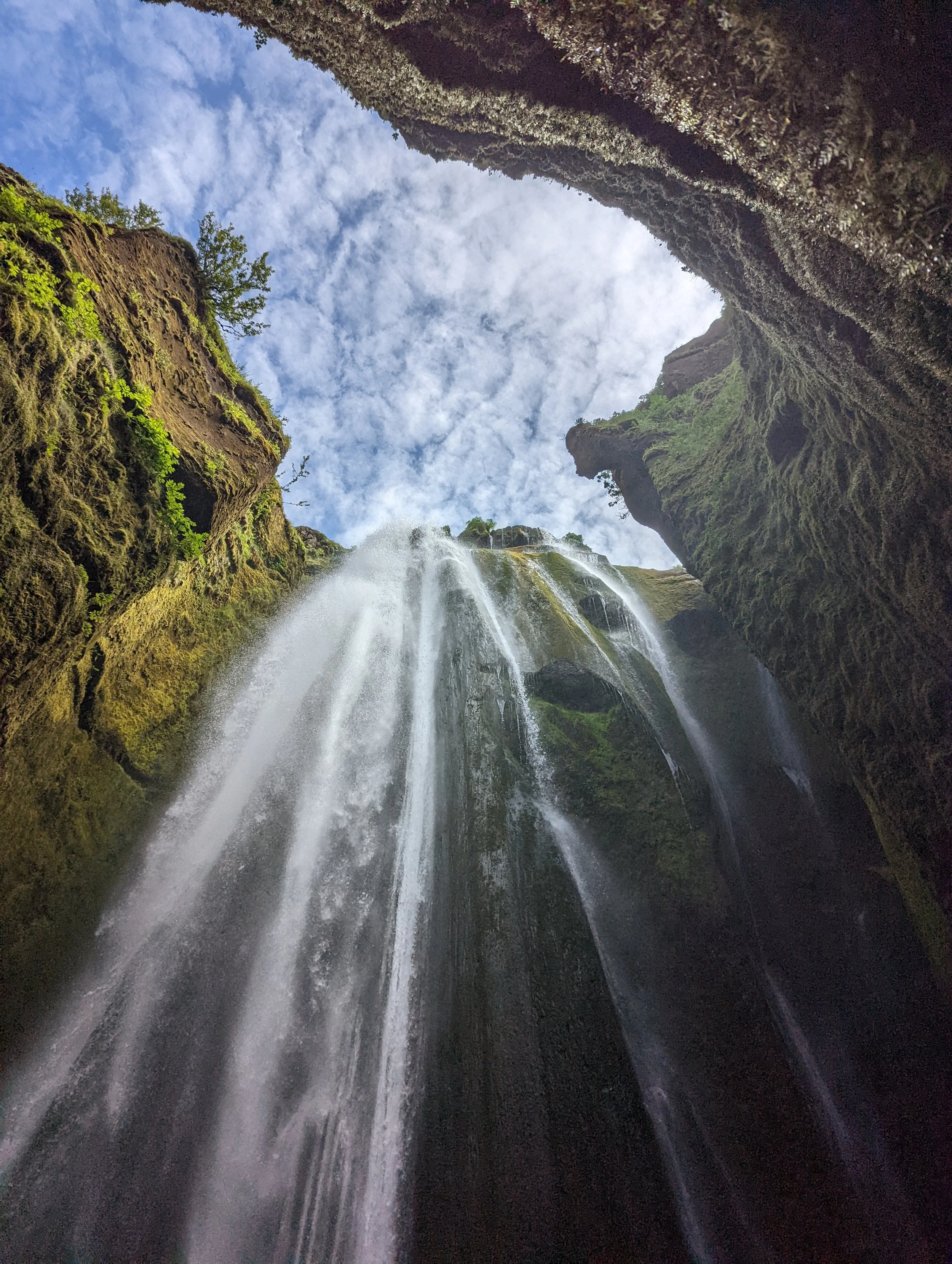
Seljalandsfoss - Gljúfrabúi (1.2 mi): Two distinct waterfall experiences. Walk entirely behind the roaring sheet of water at Seljalandsfoss, then follow a narrow stream into a hidden canyon slot to stand right at the base of the secret Gljúfrabúi fall.
Skógafoss (4.2 km): Climb the steep wooden staircase to the top platform to trace the dramatic canyon ridge track carved out above this towering, thunderous wall of water.
Kvernufoss (0.9 mi): A short, hidden gem of a trek leading into a peaceful gorge to discover a beautiful waterfall tucked away behind a local museum that most tourists miss.
Reynisfjara Black Sand Beach (0.8 mi): Walk along the volcanic dark sands to marvel at the massive geometric basalt column walls, gaping caves, and towering offshore sea stacks.
Details:
Total Trail Mileage: 7.1 miles
Depart Skjól Camping early to beat the daytime tour bus rush to the South Coast waterfalls
Drive to the Seljalandsfoss and Gljúfrabúi parking turnouts to complete the first loop
Head further east along Route 1 to hit the Skógafoss trail and the neighboring hidden Kvernufoss gorge
Spend the late afternoon walking the volcanic coastline of Reynisfjara (stay well back from the dangerous sneaker waves)
Drive into the town of Vík to check into your campsite
Lodging:Vík tjaldsvæði
Day 8: Thermal River Soaking
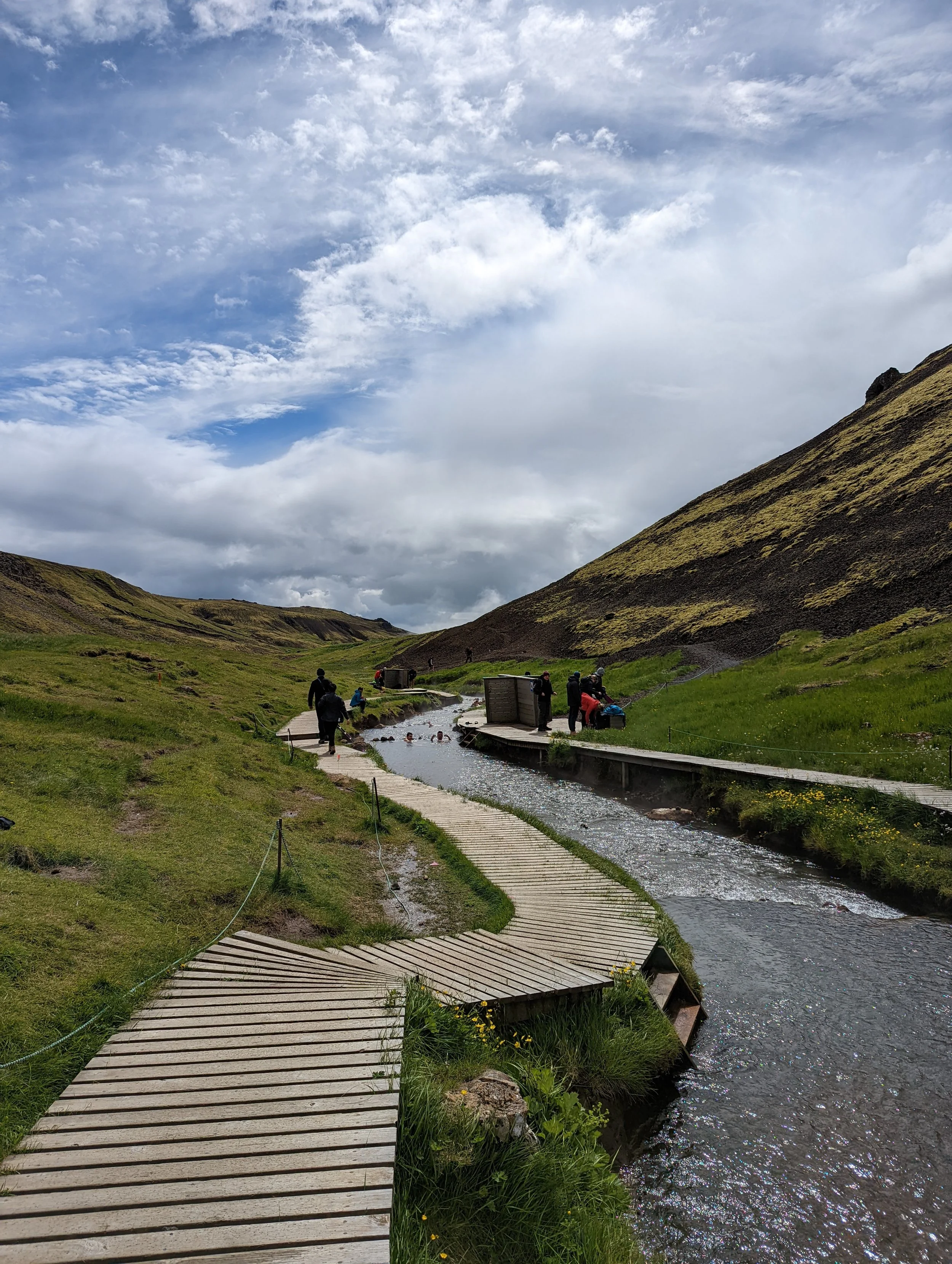
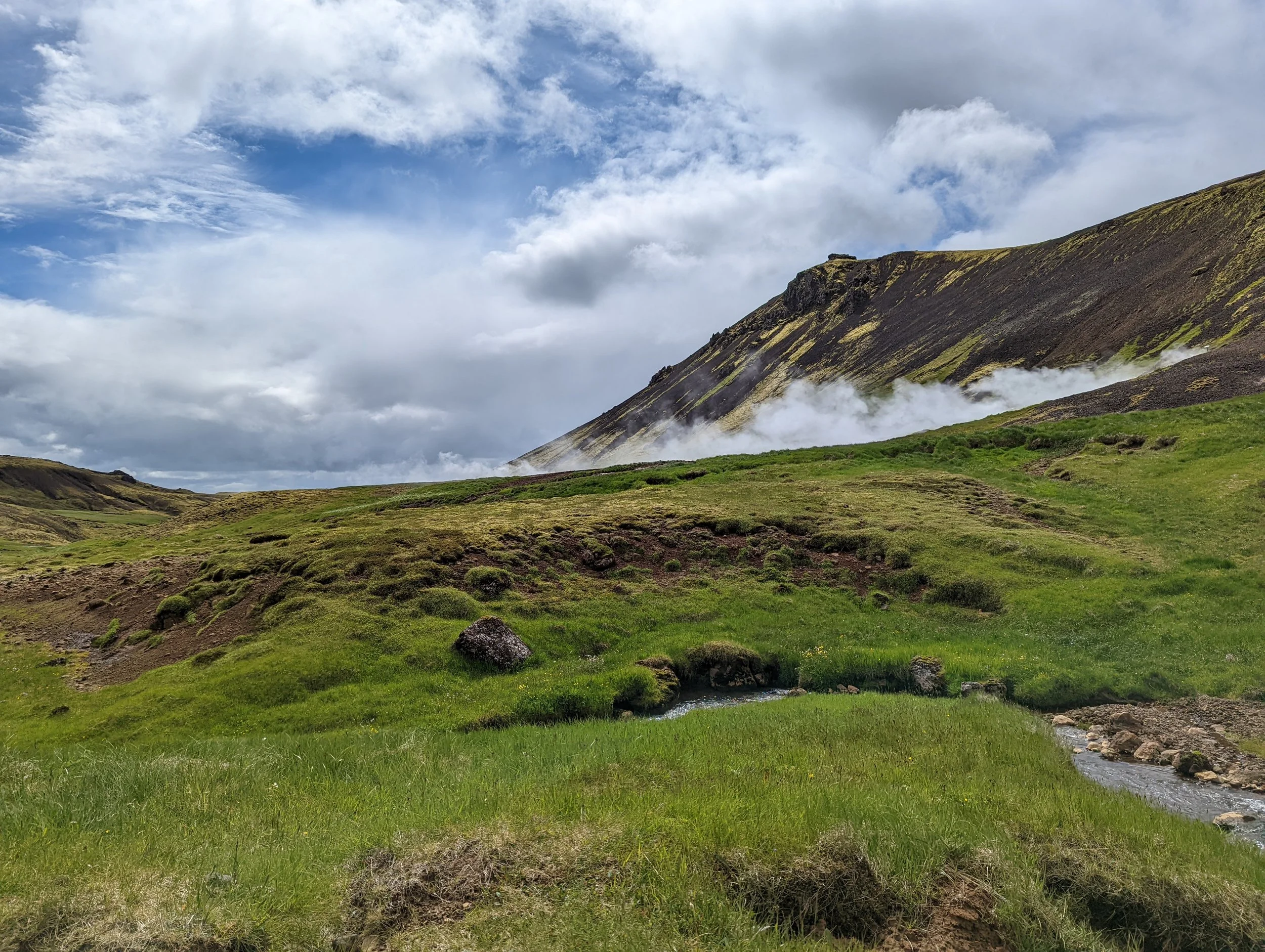
Time to give your hiking legs a completely different reward. Today's target is a trek into the volcanic hills of Hveragerði, where a natural hot river snakes through a lush green valley, before heading back to the capital to wrap up your road trip logistics.
Highlights of the Day:
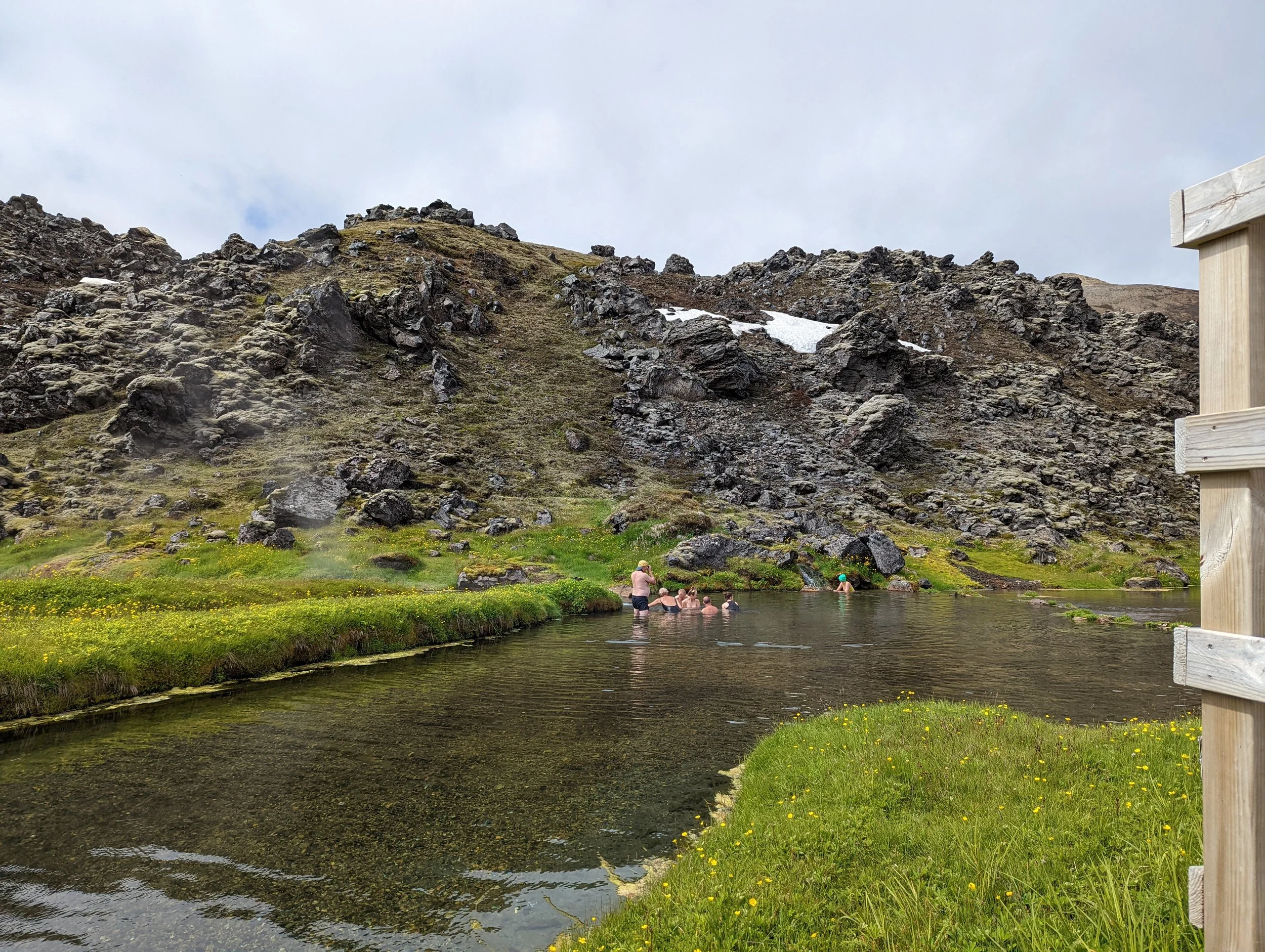
Reykjadalur Hot Spring Thermal River (5.7 mi): A scenic round-trip valley trek that snakes past boiling geothermal mud pots and steaming vents before opening up to a literal hot river where you can climb in and soak. Boardwalks track along the water, allowing you to pick your perfect bathing spot (the further upstream you walk, the hotter the current gets).
Details:
Total Trail Mileage: 5.7 miles
Break camp at Vík and make the 2-hour drive back west toward the town of Hveragerði
Park at the Reykjadalur Café trailhead (small parking fee required) and hike 45–60 minutes up into the valley to reach the boardwalk bathing area
Spend time relaxing and soaking in the thermal river (pro-tip: bring a quick-dry towel and sandals to stand on while changing behind the wooden privacy screens)
Drive back to the capital - complete your rental car return to Avis at the RKV airport by the drop-off deadline
Lodging:Reykjavík Eco Campsite
Day 9 - 11: The Laugavegur Trail Highland Backpack
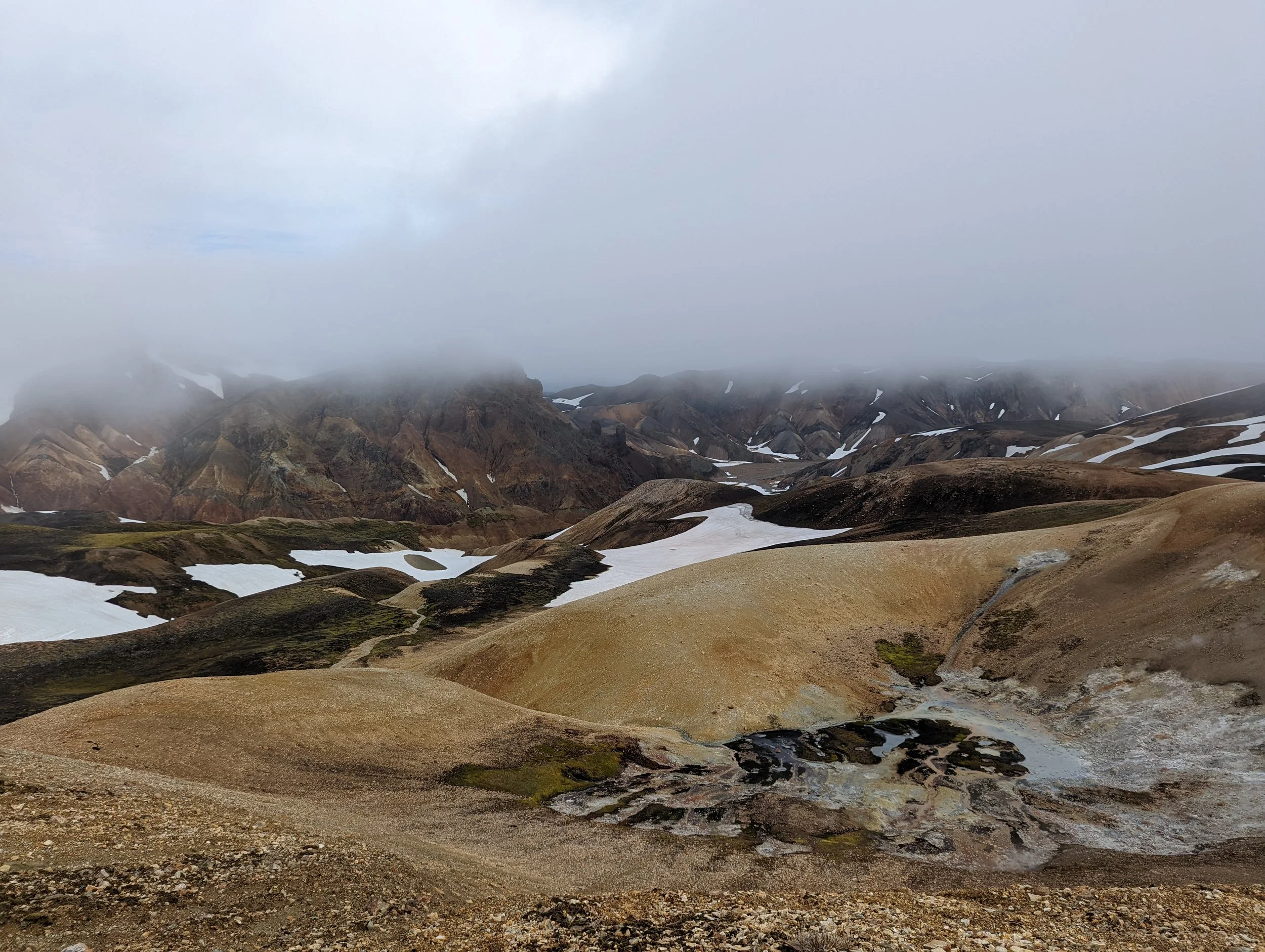
Widely rated by National Geographic as one of the world's most beautiful multi-day treks, the Laugavegur Trail carries you through an otherworldly landscape of painted rhyolite mountains, neon-green moss fields, and vast black volcanic deserts.
Quick Facts:
Distance: ~55 km (34 miles) from Landmannalaugar to Þórsmörk
Terrain: Geothermal steam fields, high mountain snowpasses, volcanic ash plains, and deep glacial river crossings.
Logistics: Accessed strictly via rugged highland 4x4 buses (shuttles) - available based on conditions (check schedules / communications)
There are huts available for stay along the trail if you prefer
Day 9: The Volcanic Highlands to Hrafntinnusker (12 km / 7.5 mi)
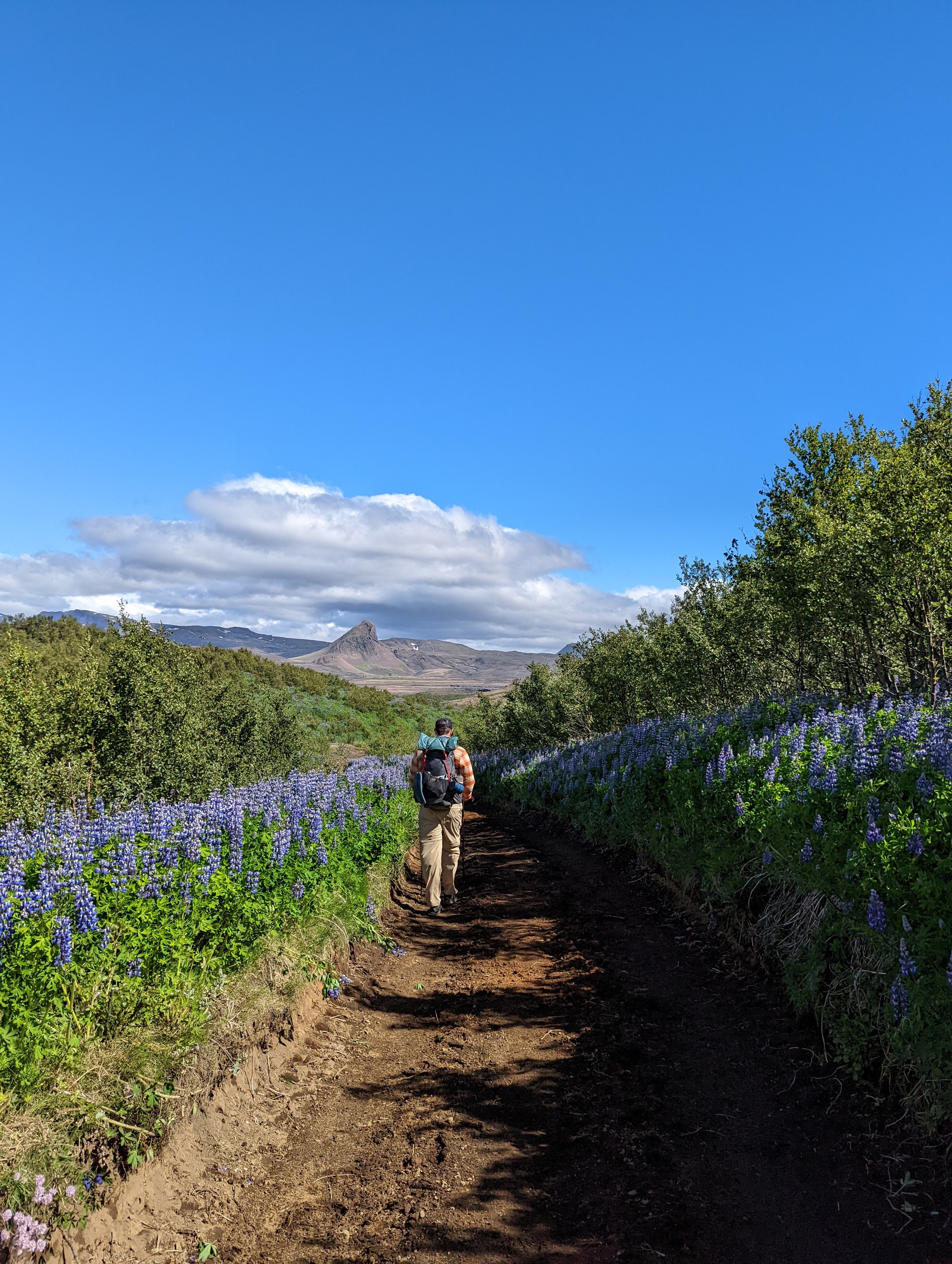
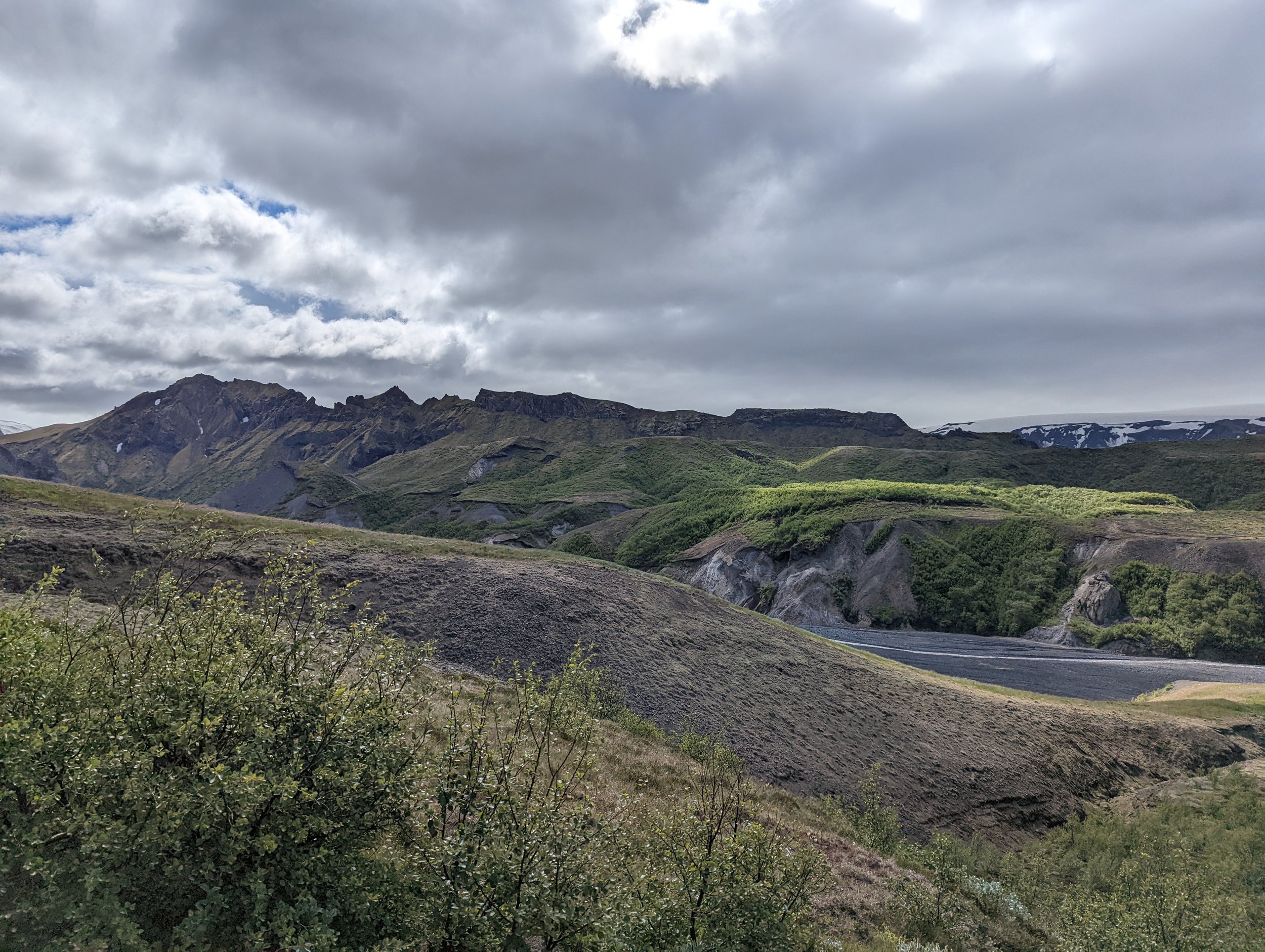
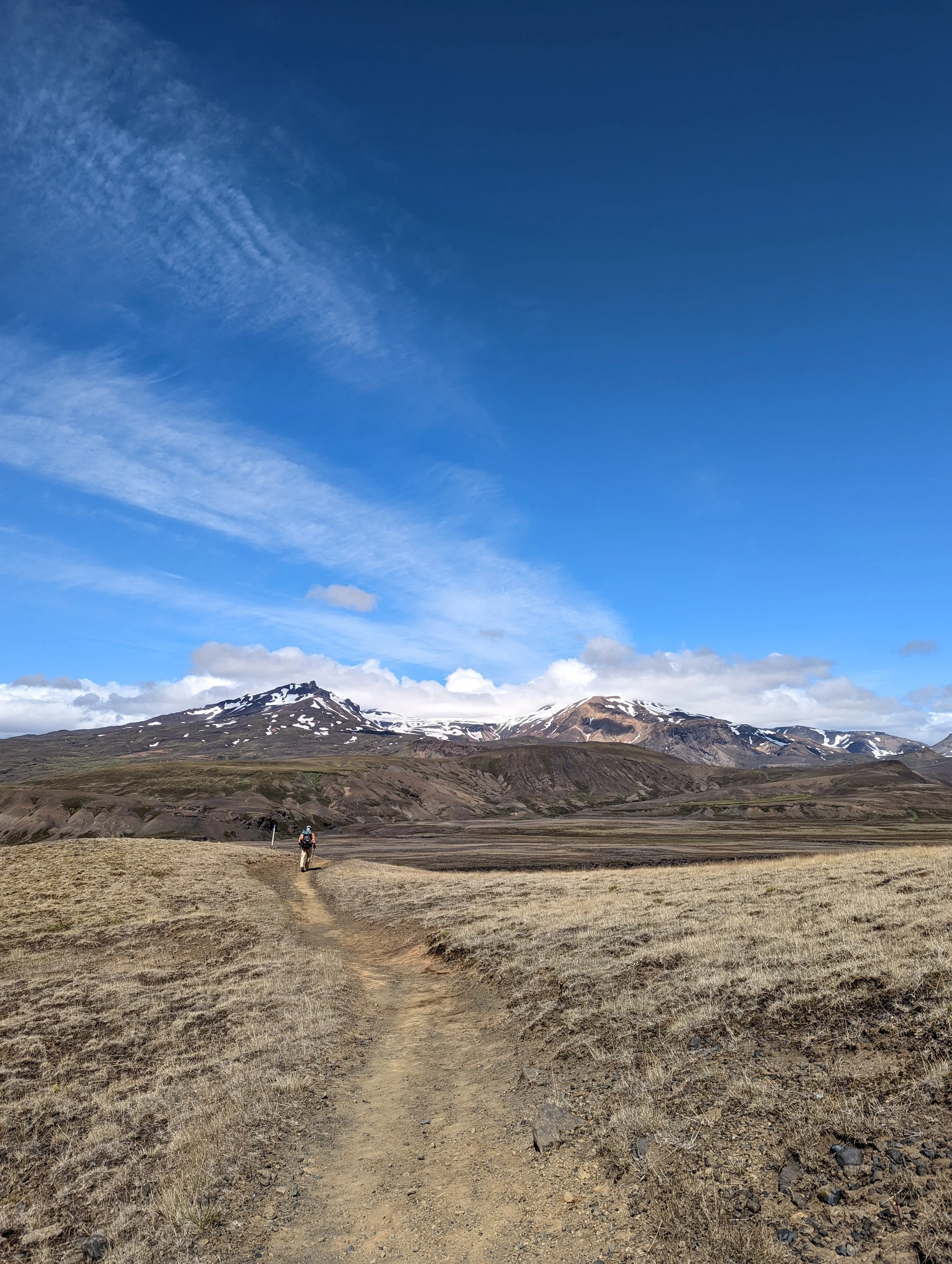
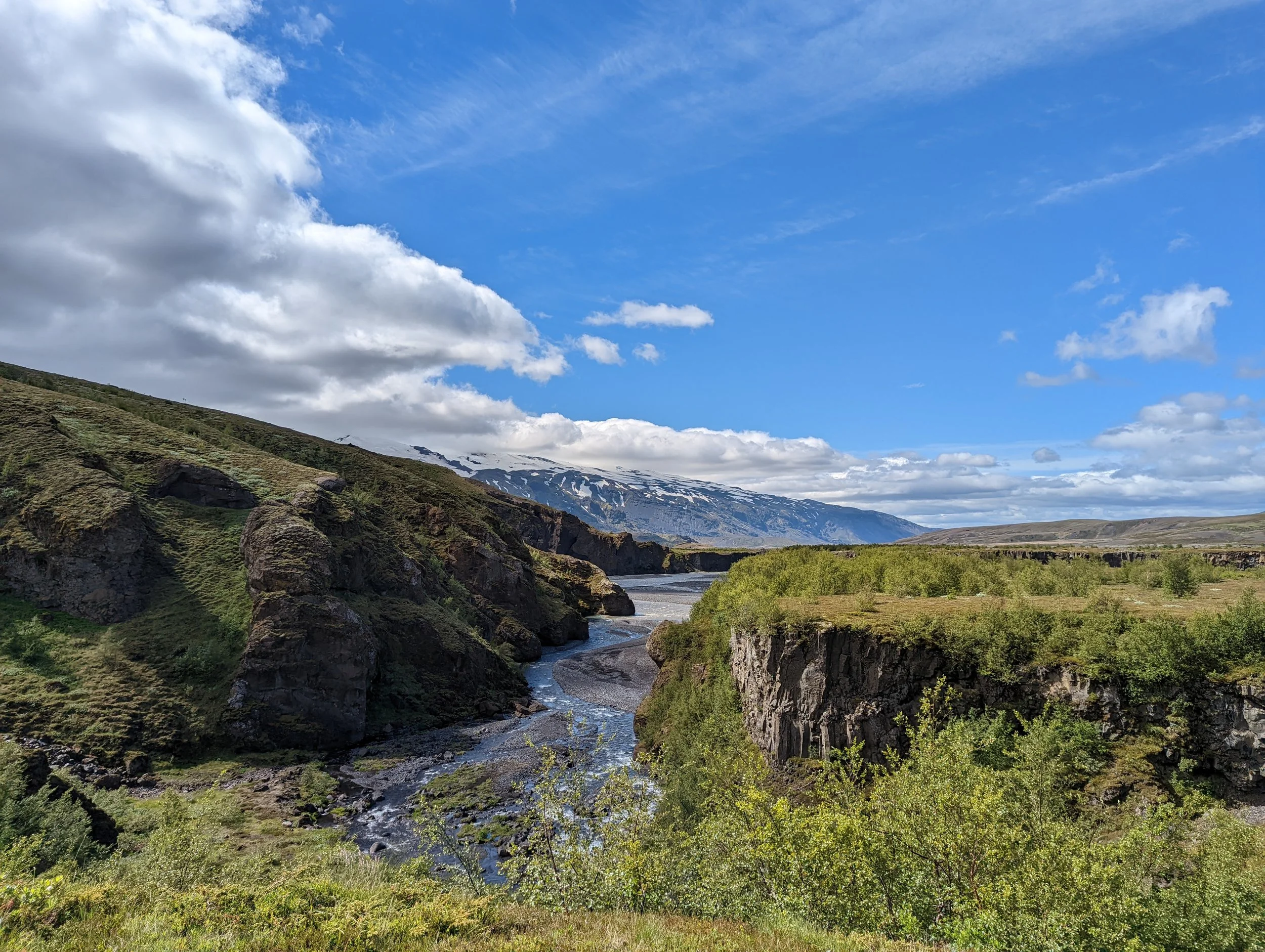
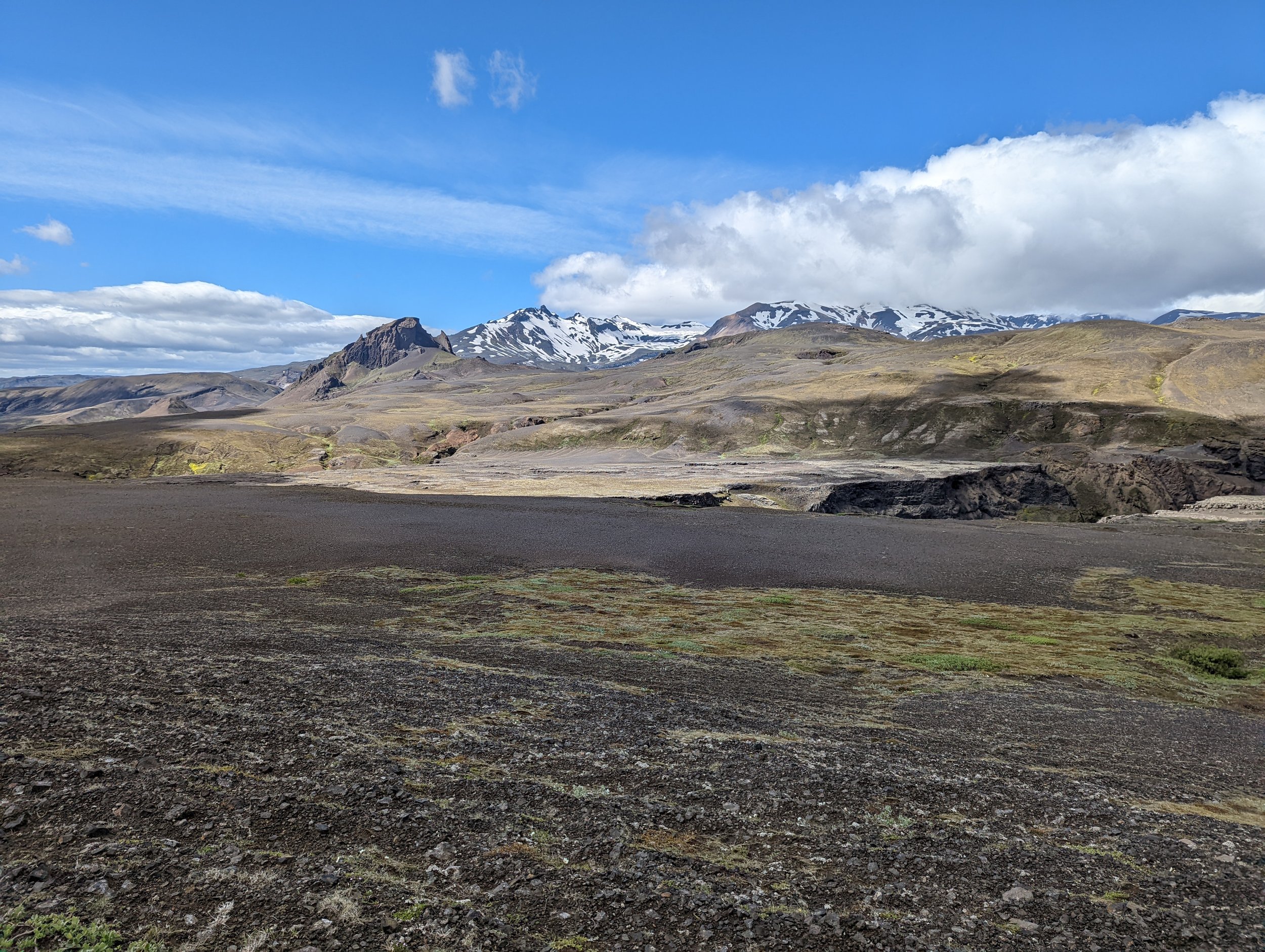
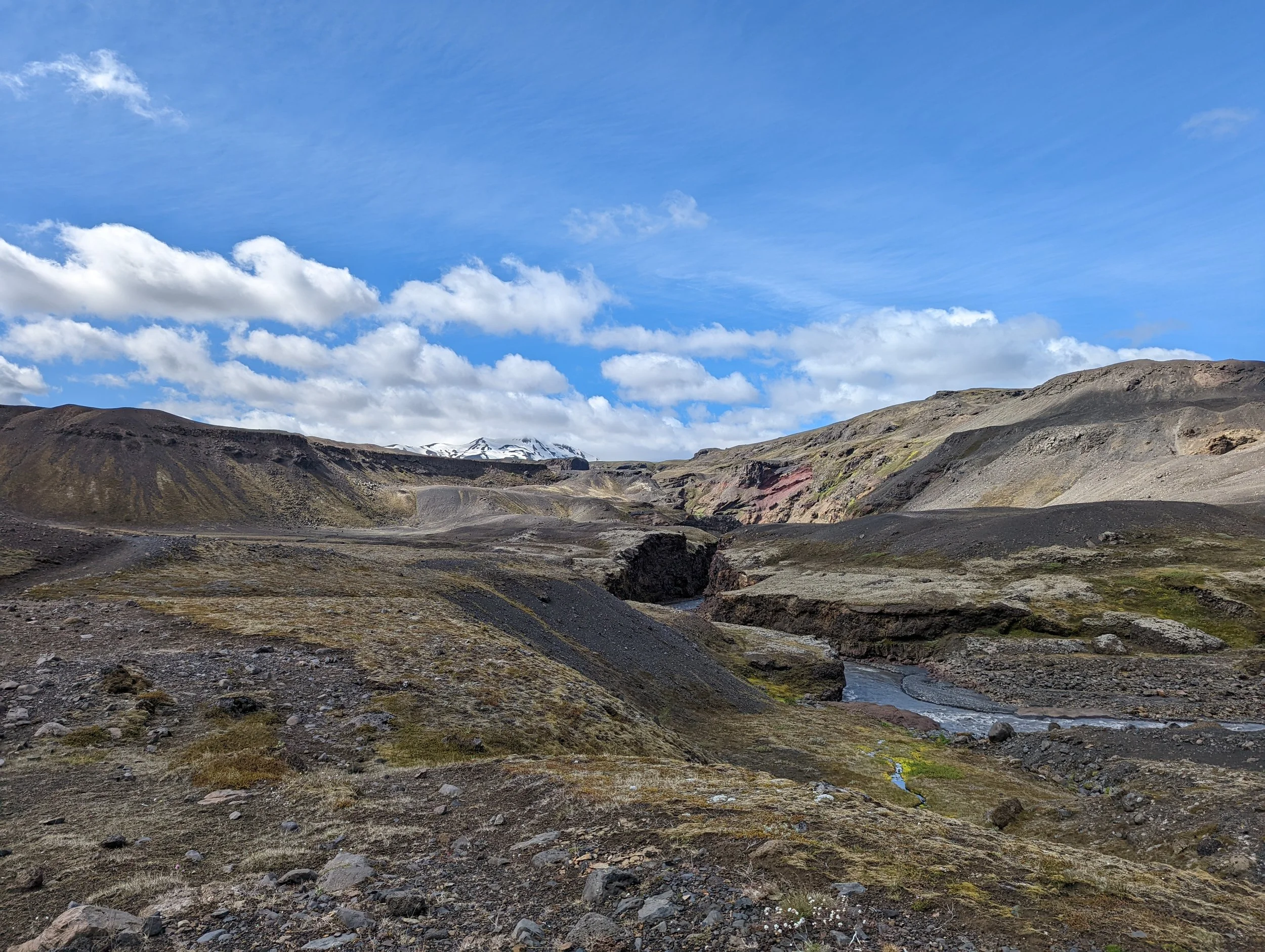
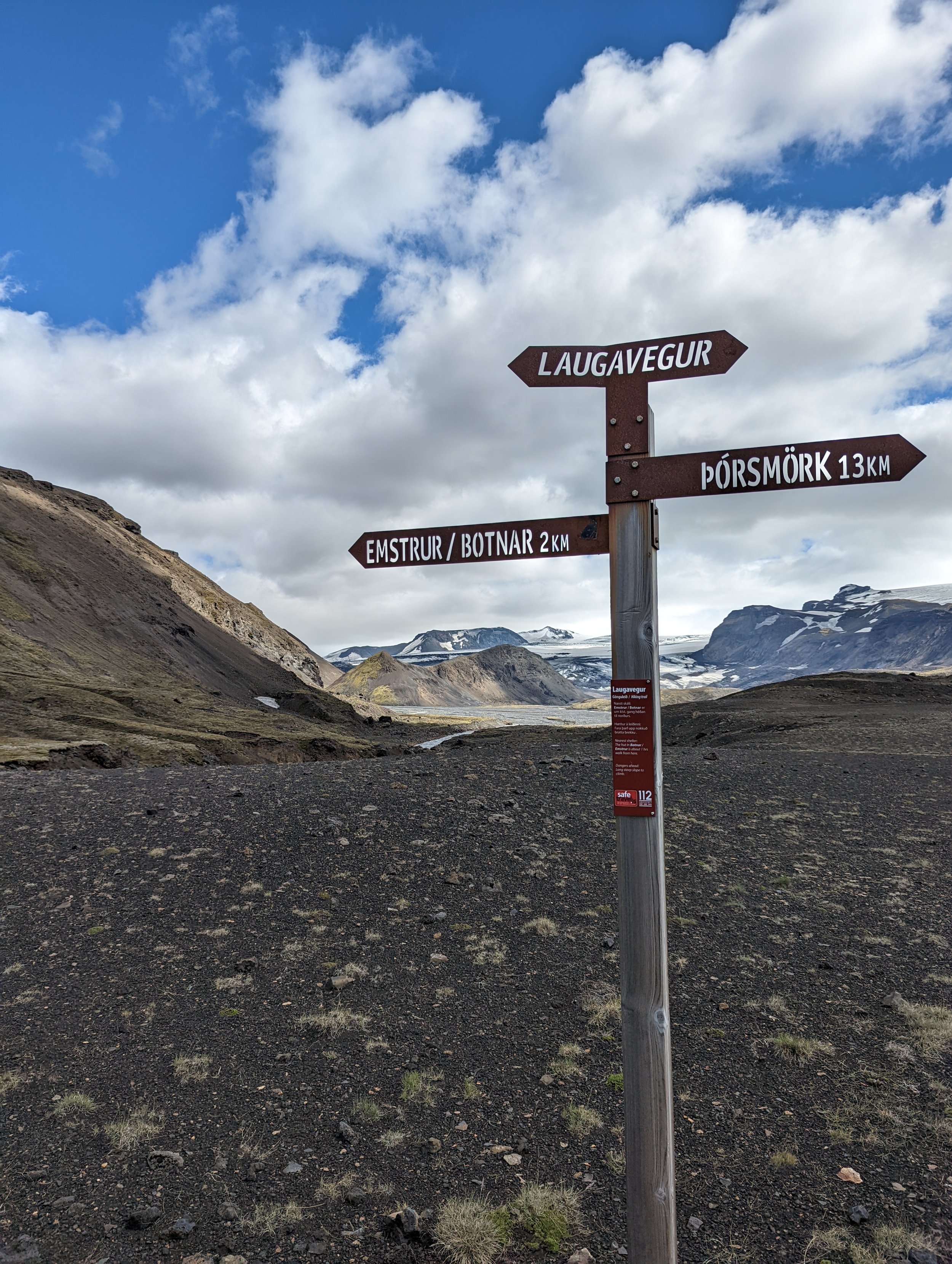
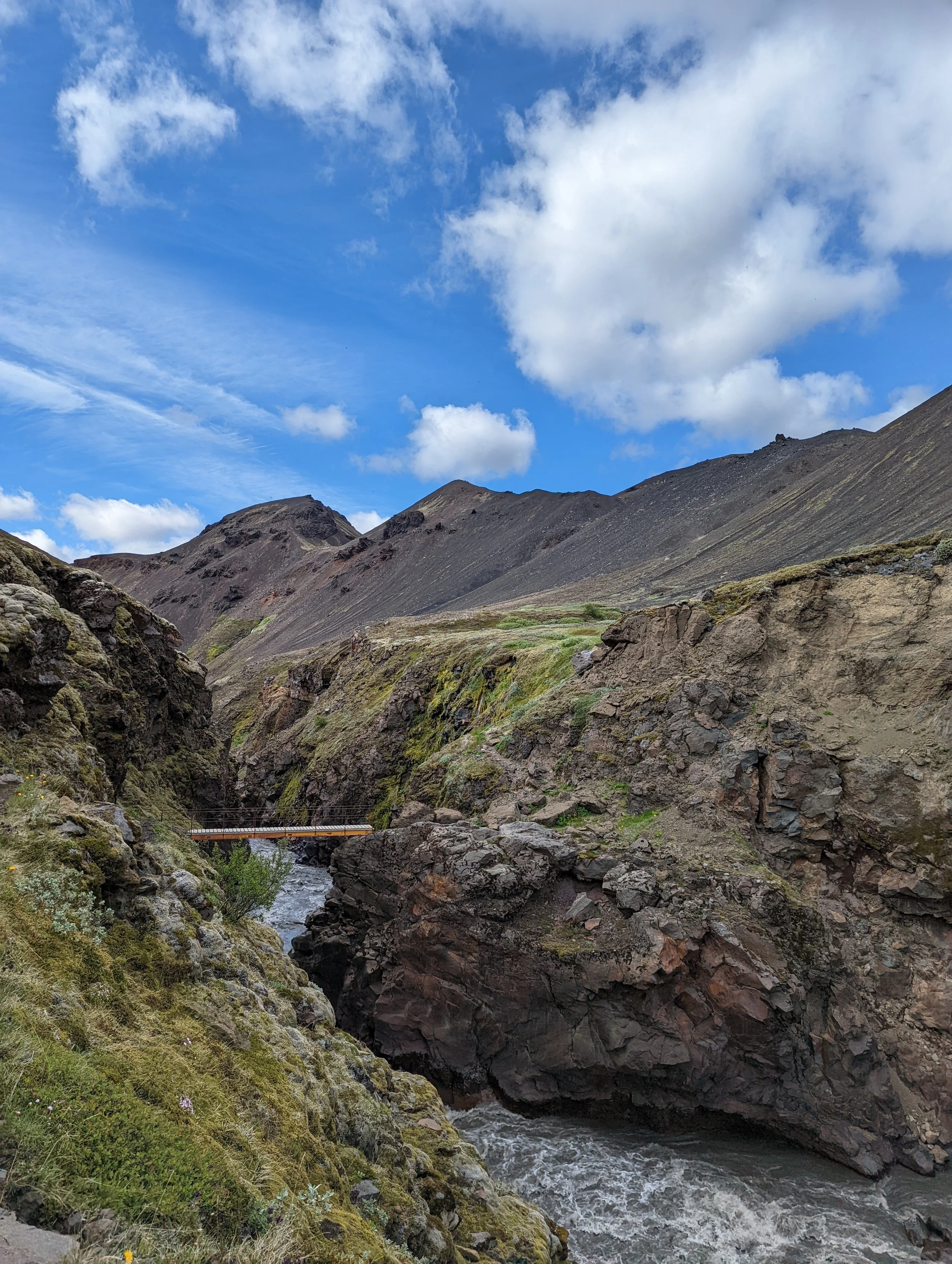
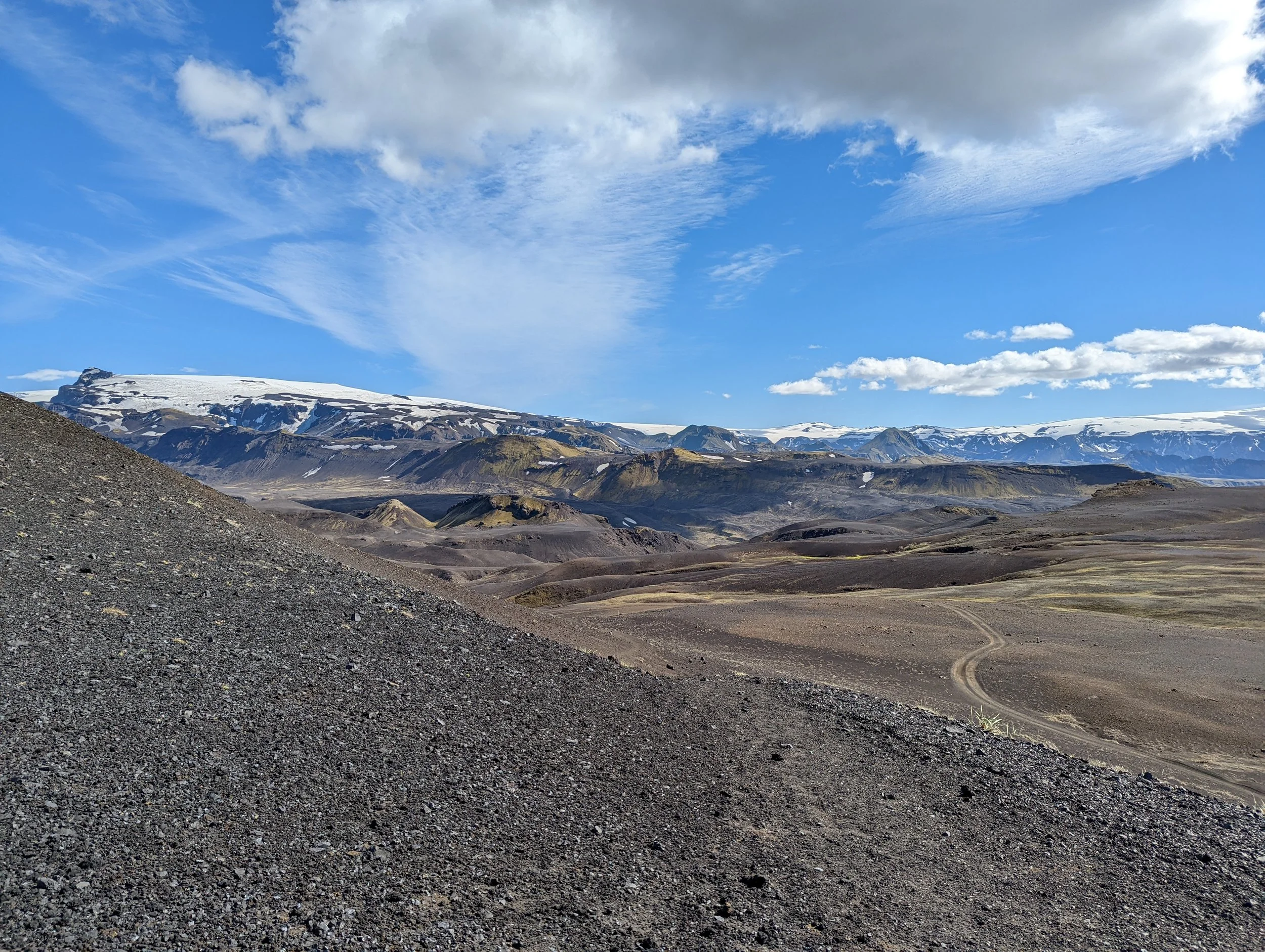
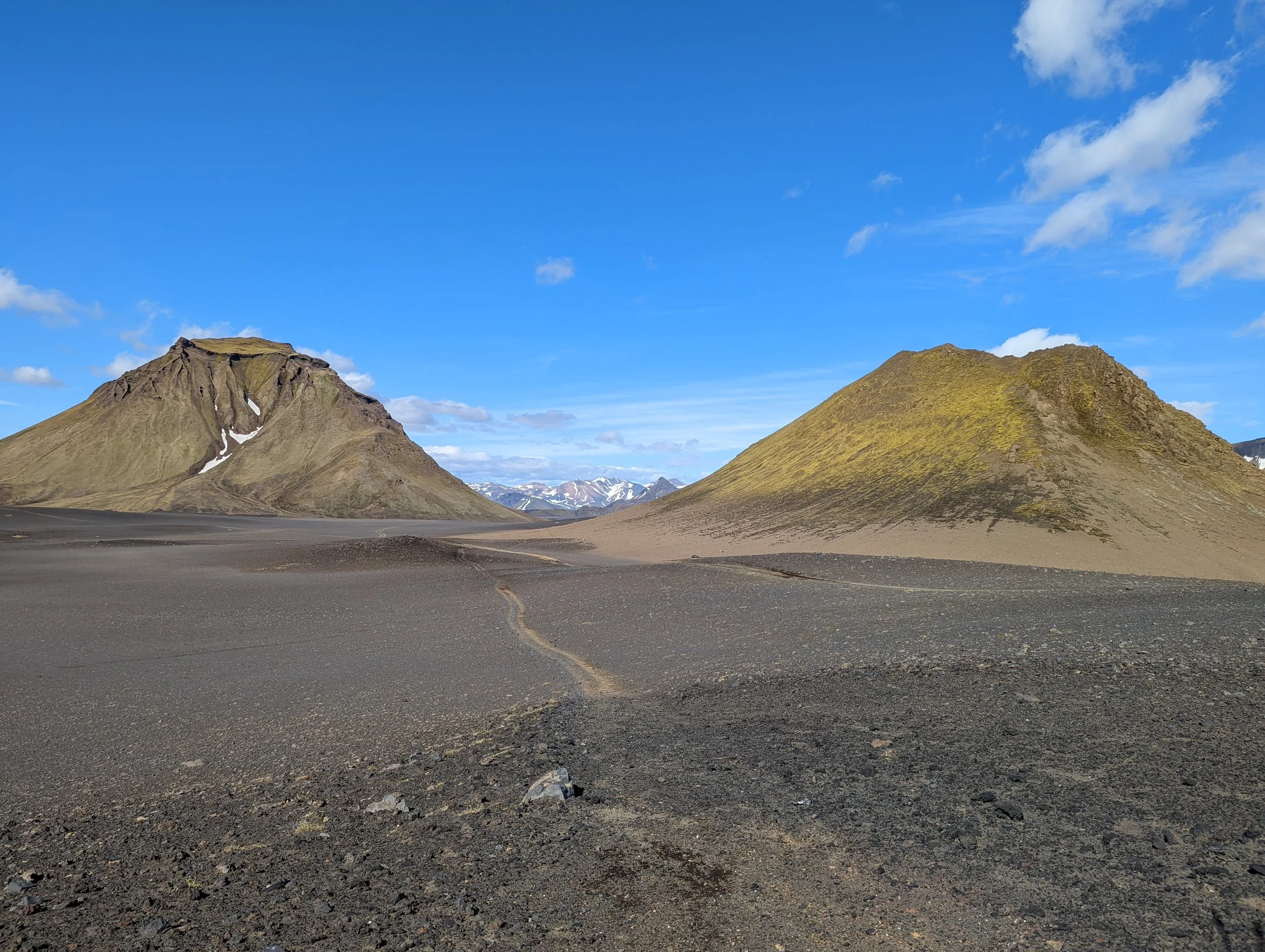
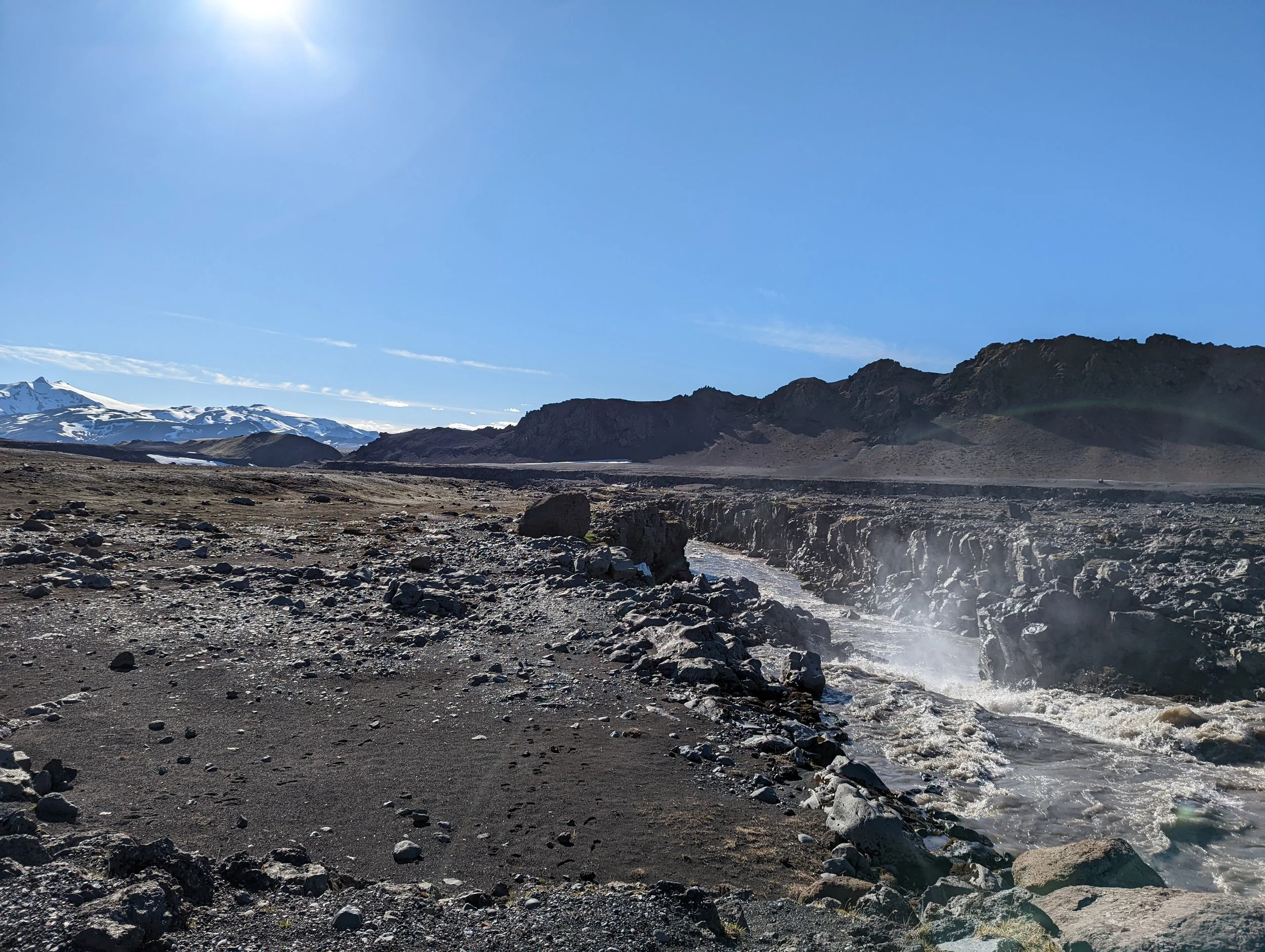
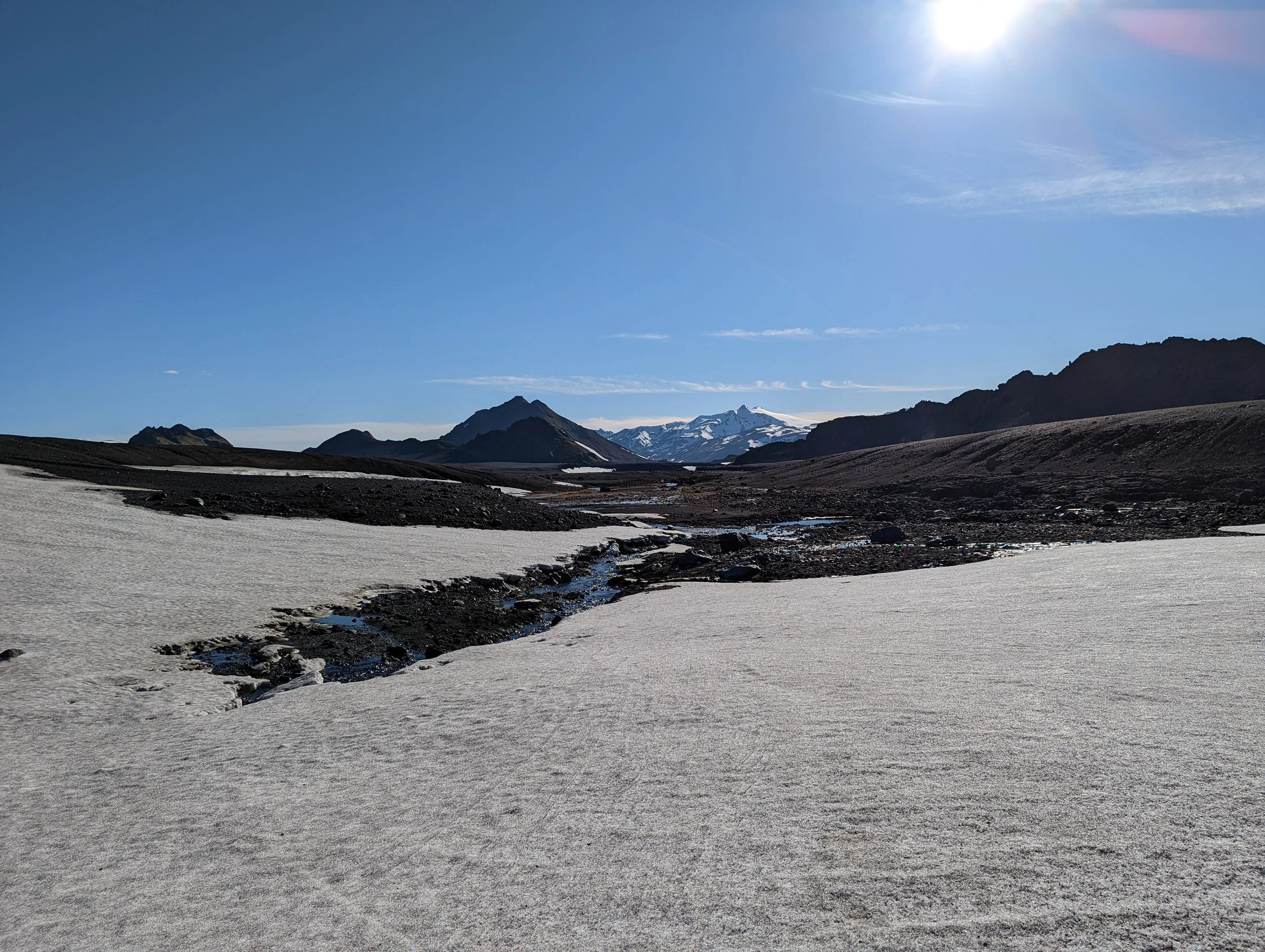
Your highland adventure begins early at 7:30 AM as you board your pre-booked highland bus from Reykjavík into the interior. The bus rattles over rugged F-roads before dropping you at Landmannalaugar, a valley completely surrounded by steaming, multicolored hills.
Terrain: Steaming sulfur vents, crisp obsidian lava fields, and a steady climb into the snow-covered high country.
Highlight: Reaching the high-altitude Hrafntinnusker plateau, an incredibly stark, icy landscape that feels like the edge of the world.
Note: I would recommend visiting Iceland after late June / early July to ensure you do not run into issues where the shuttles are cancelled due to higher water levels - the shuttle we scheduled was cancelled briefly
Details:
Arrive at Landmannalaugar trailhead
Trek from Landmannalaugar to the Hrafntinnusker high point
Pitch your tent on the rocky campsite near the mountain hut
Day 10: Descending Past Lakes to Hvanngil (24 km / 15 mi)
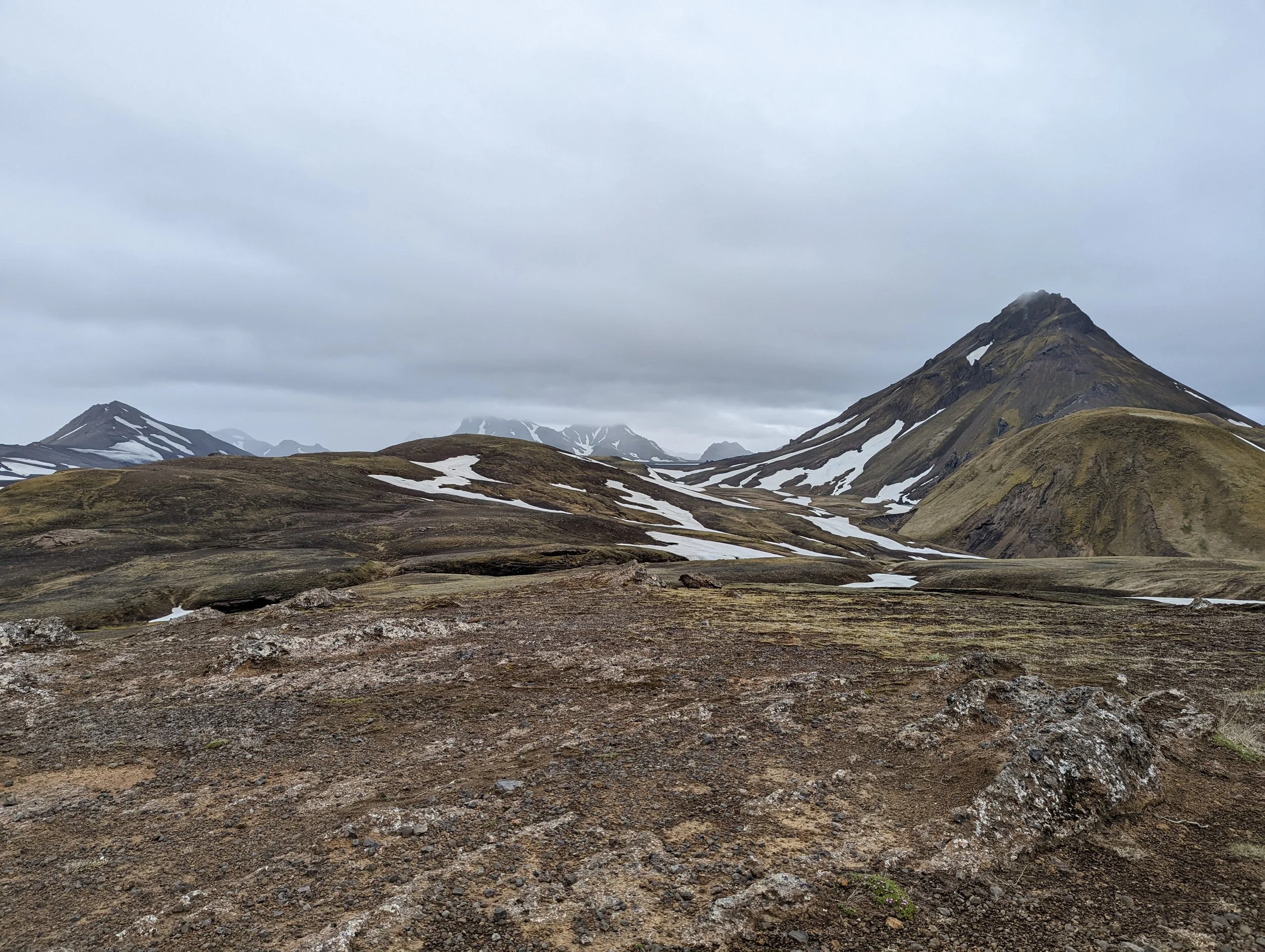
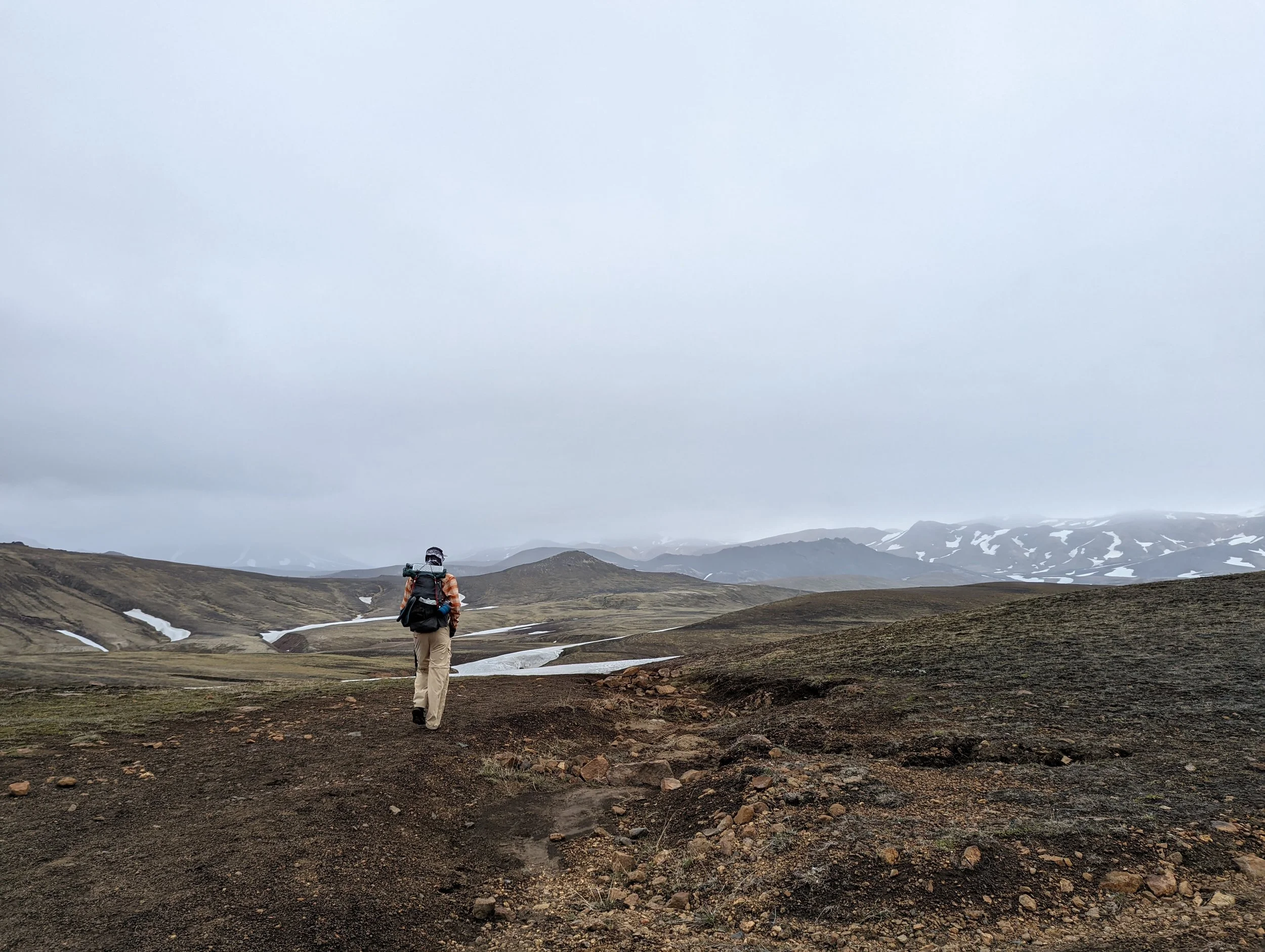
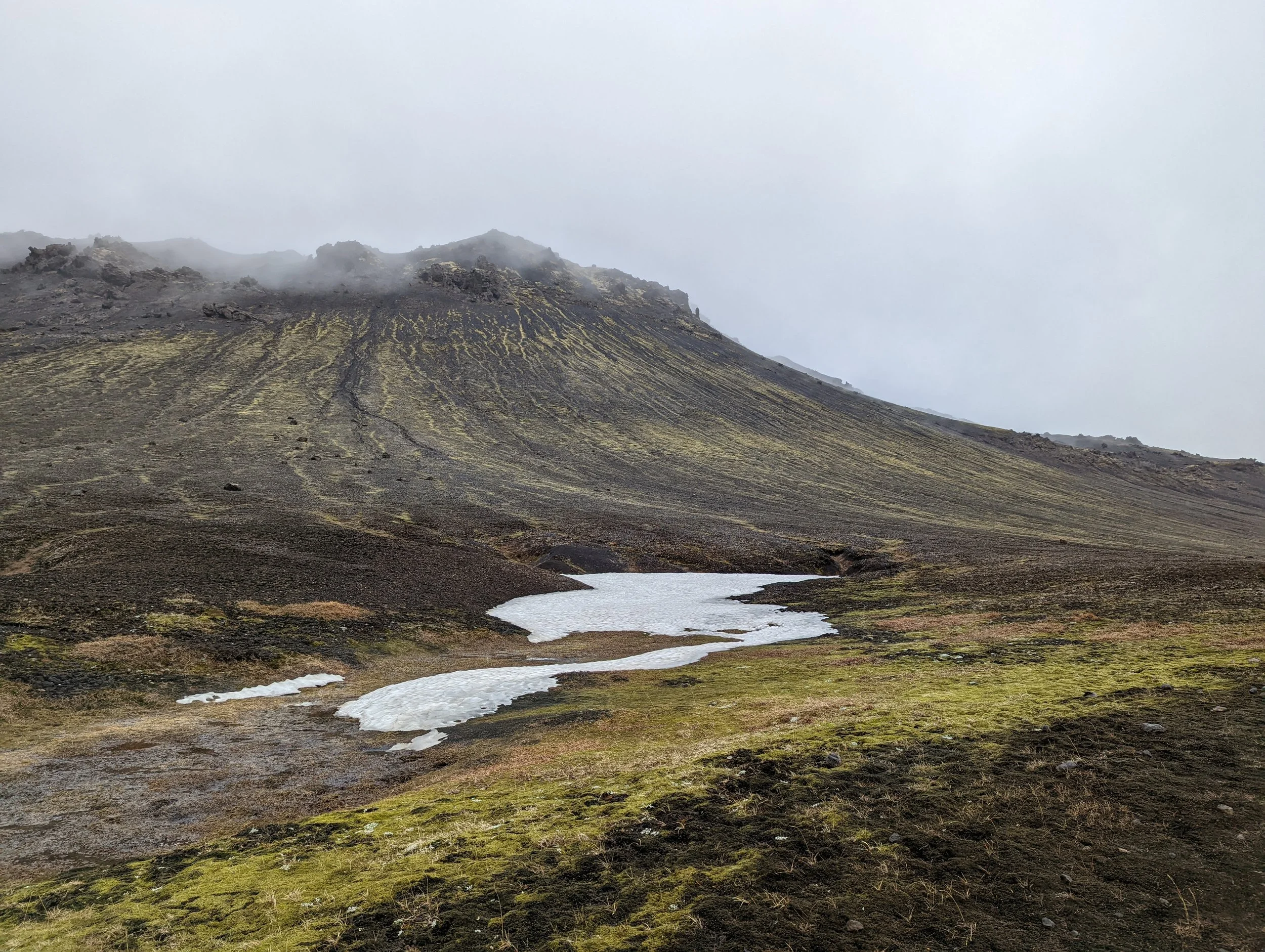
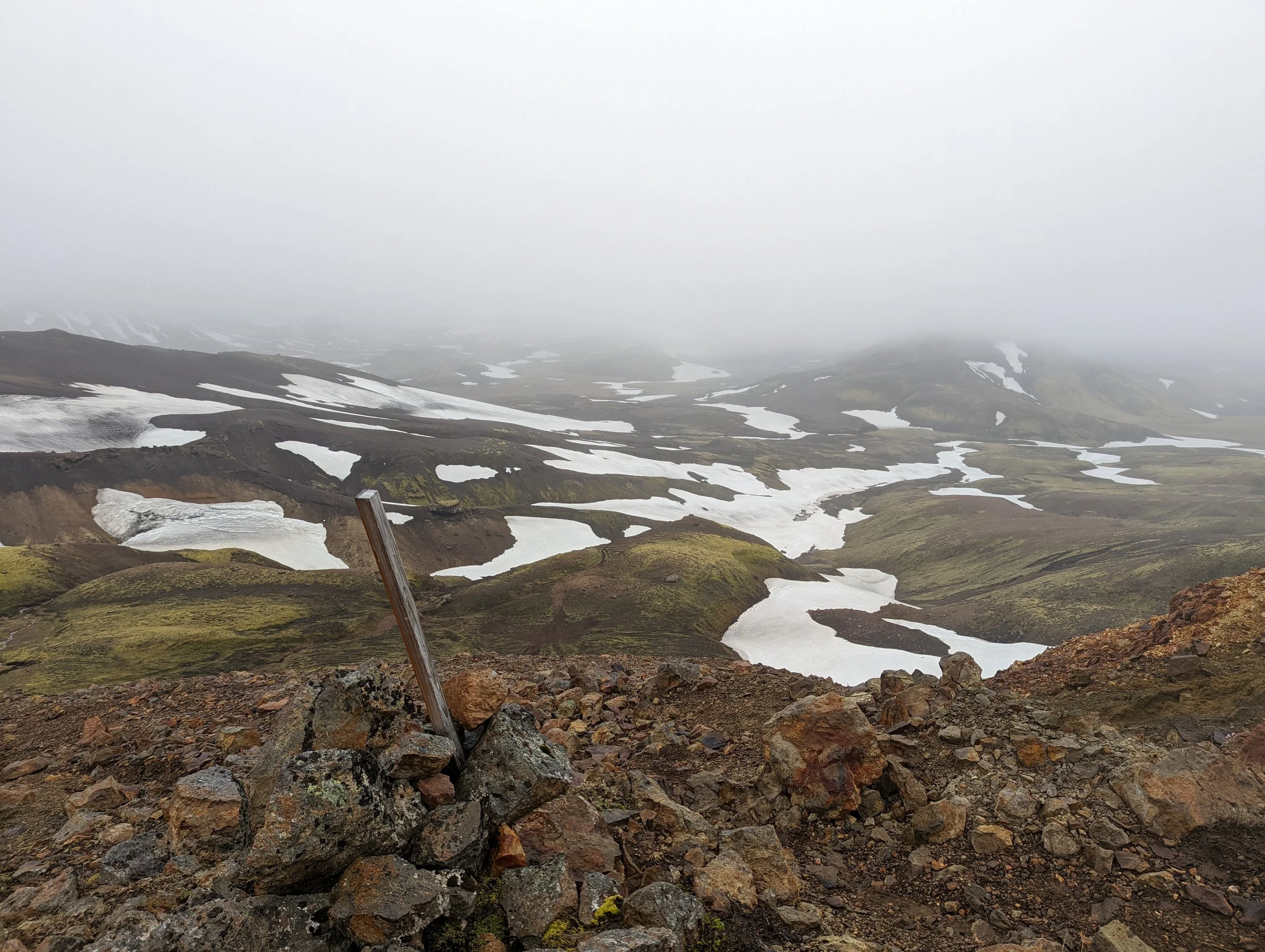
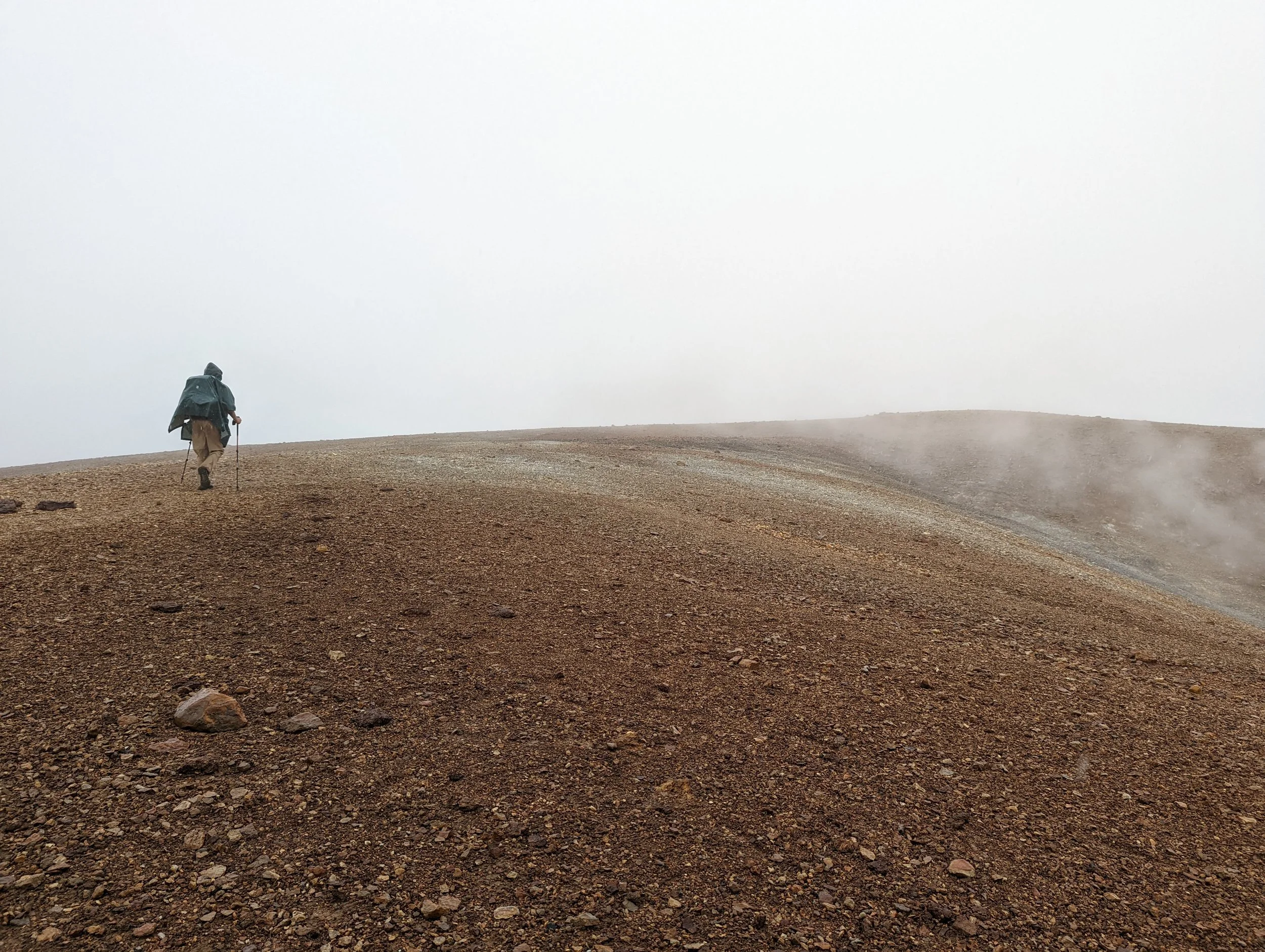
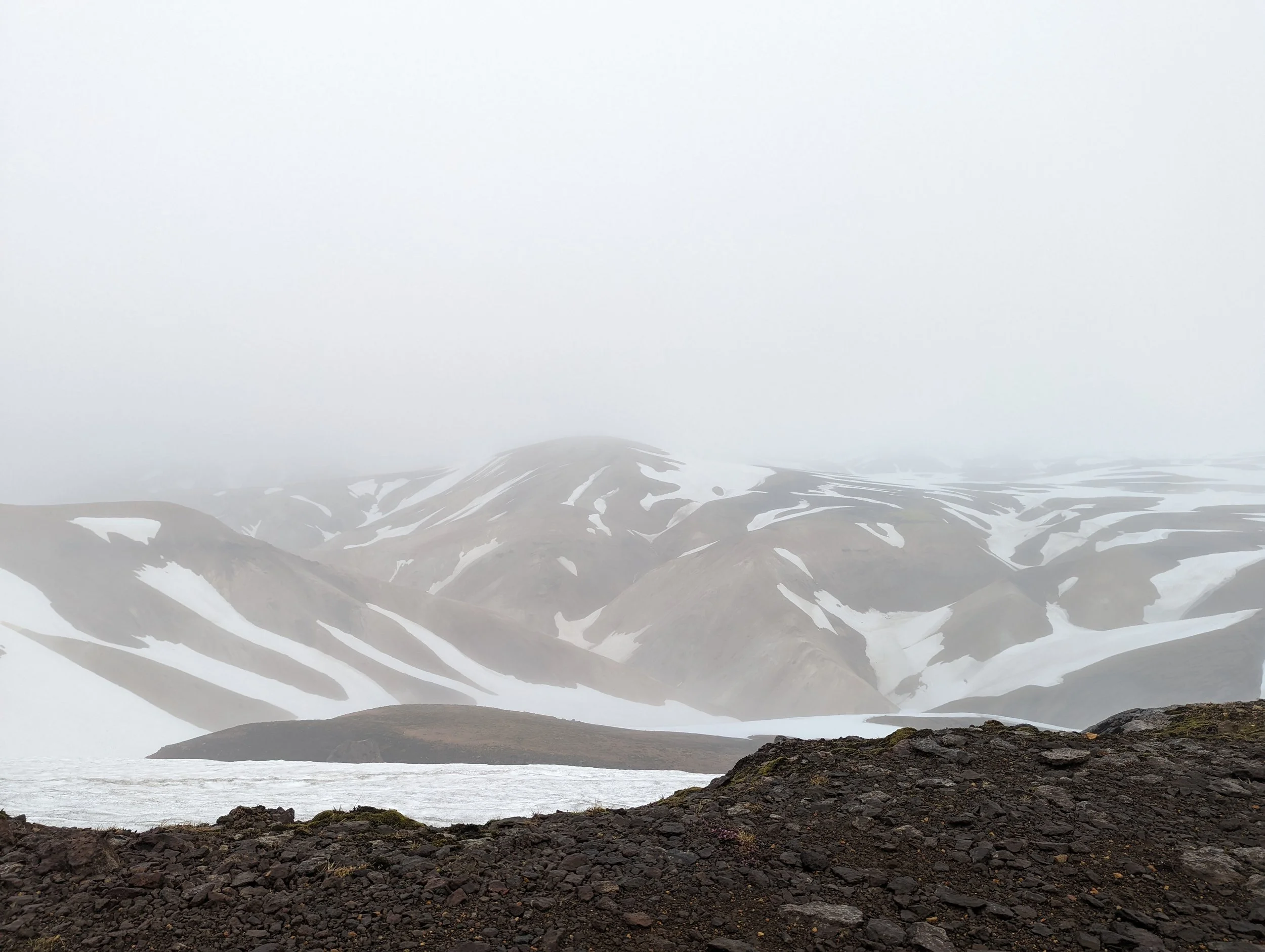
Wake up in the cool high country and begin a spectacular descent. Today's trail leaves the dark ice fields behind as you clear the pass and catch a jaw-dropping panoramic view of the green valley and pristine Lake Álftavatn below. Instead of stopping at the lake, you will push onward to the more sheltered volcanic pastures of Hvanngil.
Terrain: A steep, rocky descent down the mountain spine followed by grassy flats and volcanic lava fields.
Challenge: This section introduces your first mandatory glacial river crossings - unwrap your trekking poles and switch to your Crocs to wade through the icy, knee-deep currents.
Details:
Break camp at Hrafntinnusker
Hike down the steep ridges toward the lowlands past Lake Álftavatn
Complete your first true wading river crossings en route
Set up camp at the more peaceful and less windy Hvanngil Hut area
Day 11: Through the Black Desert to the Valley of Thor (19 km / 11.8 mi)
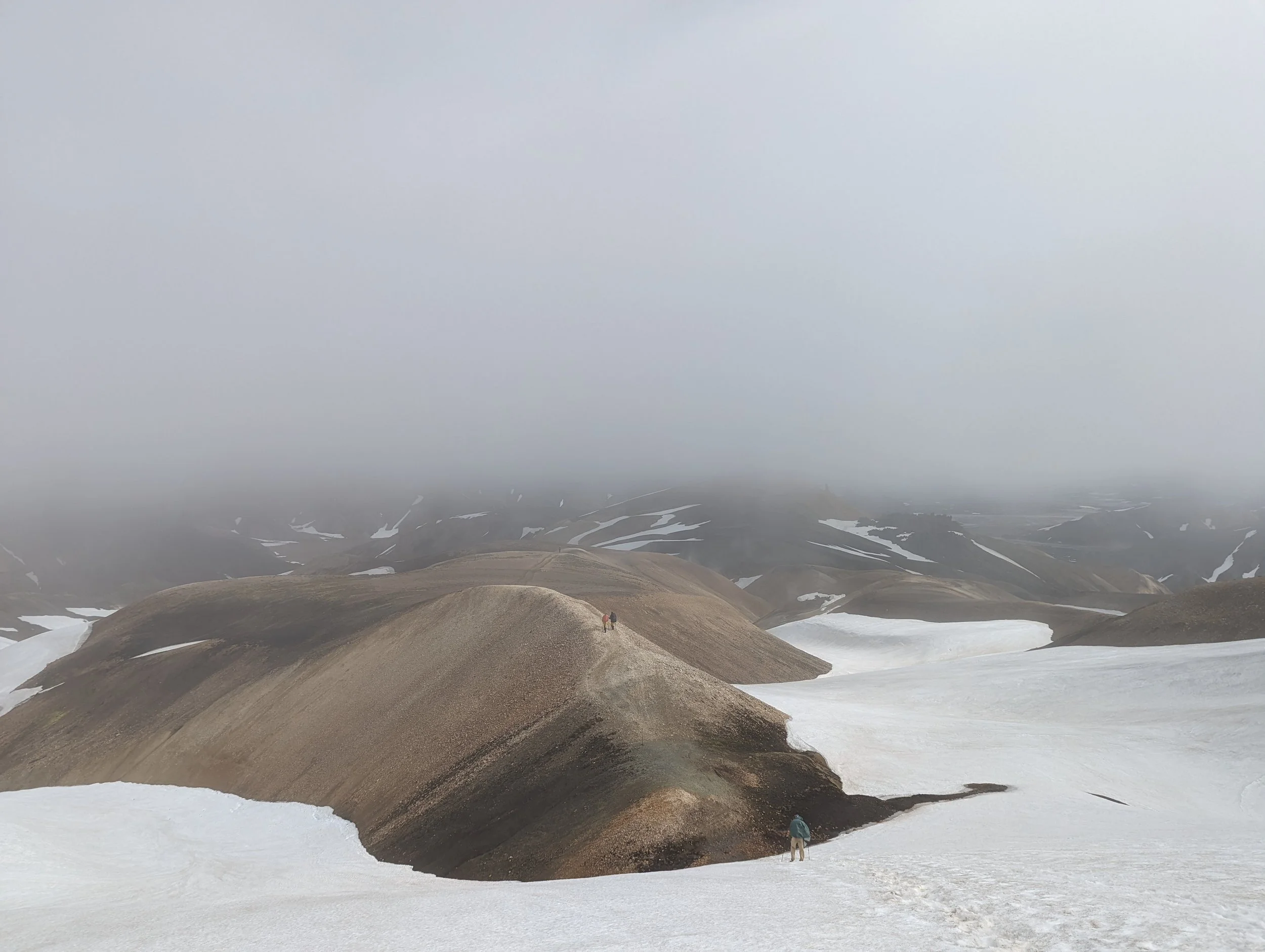
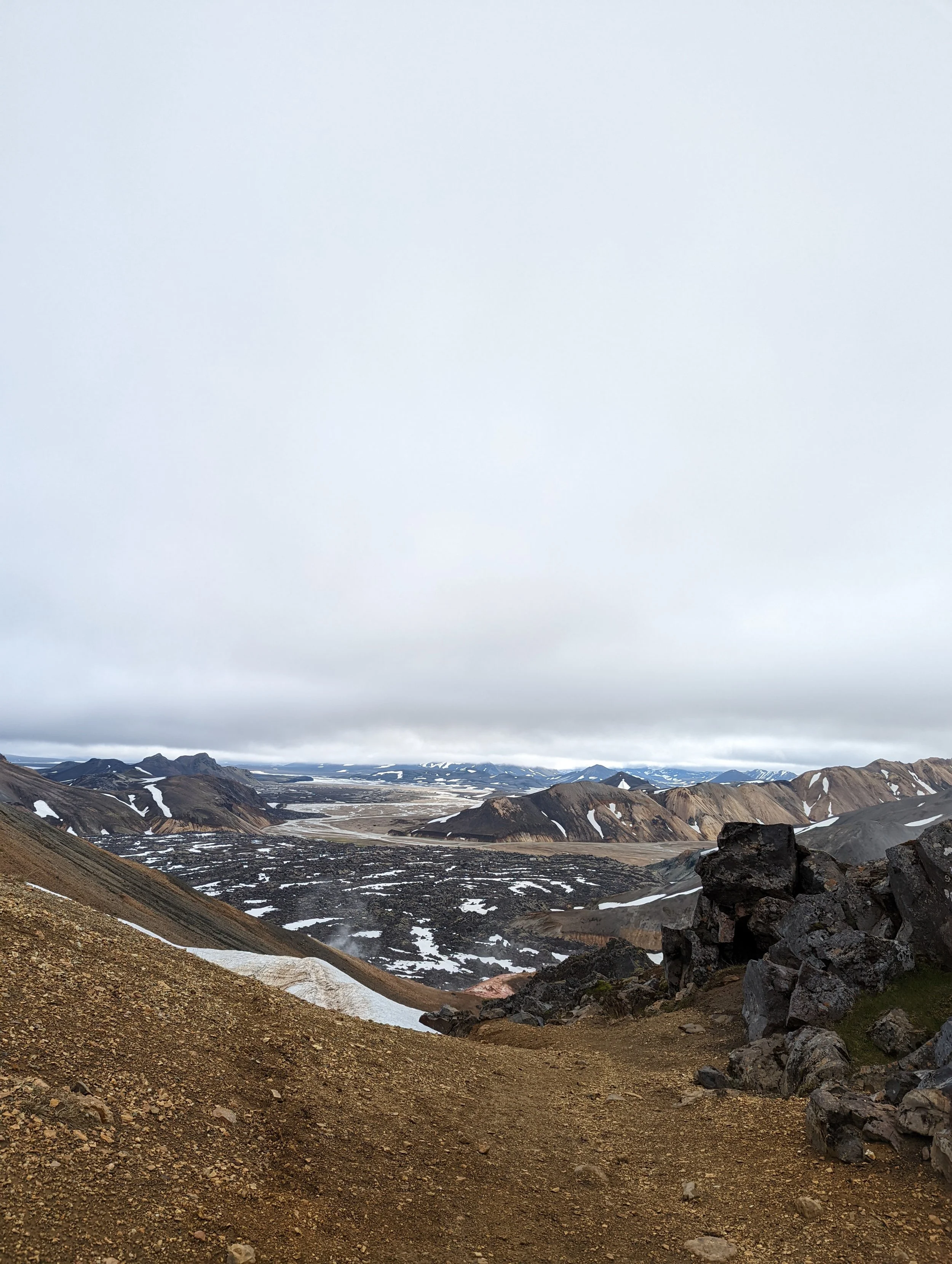
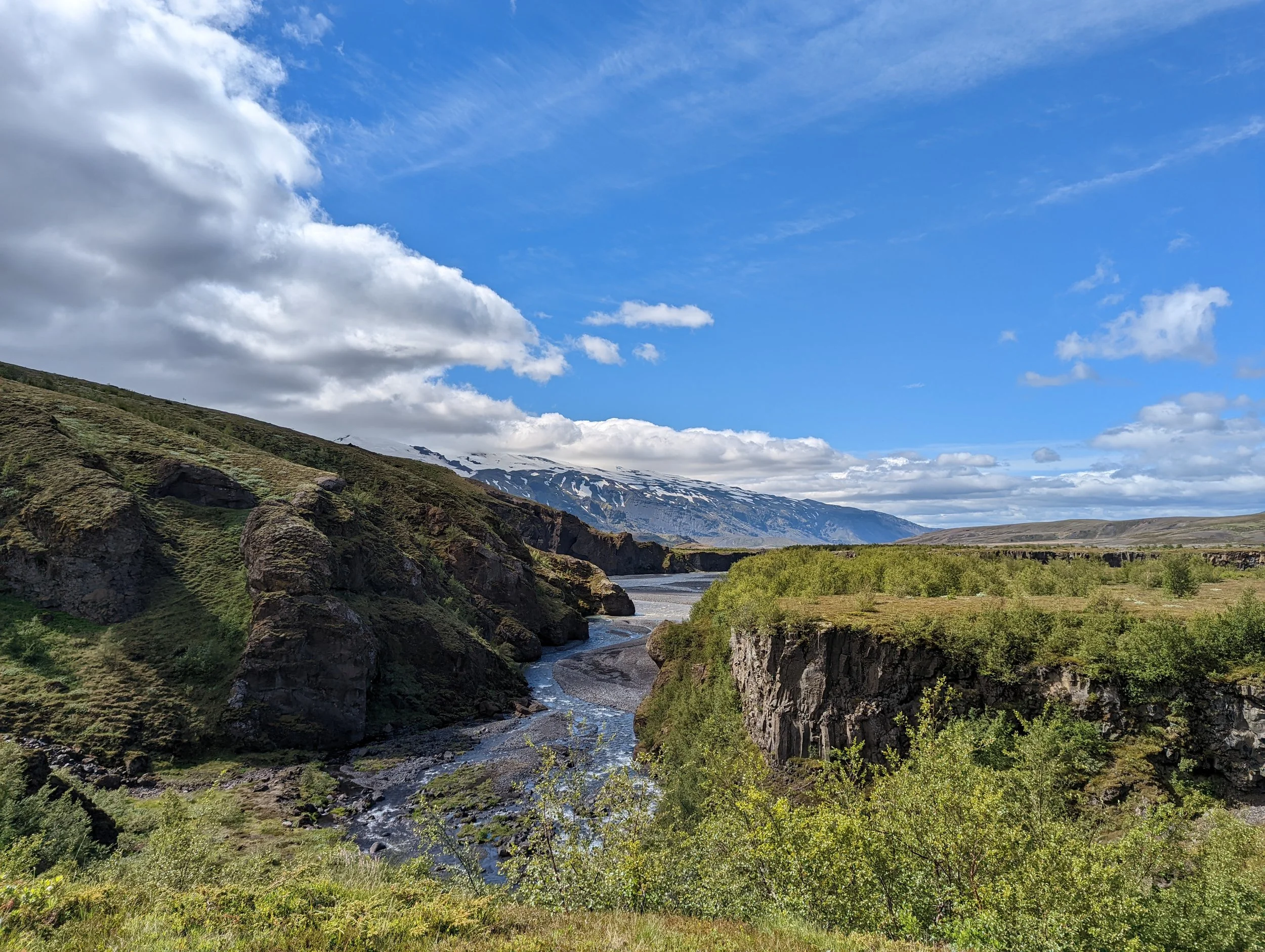
Your final push is a massive, high-reward day that showcases the dramatic transition of Iceland's landscapes. Moving out from Hvanngil, you will march across a vast, flat, jet-black volcanic ash desert that looks completely prehistoric before crossing a final deep river to enter the lush birch forests of Þórsmörk (The Valley of Thor).
Terrain: Flat, echoing volcanic plains followed by deep canyon tracks and dense green woods.
The Reward: The feeling of walking into trees and thick vegetation after days of stark stone and ice is unforgettable. Best of all, once you arrive at the Volcano Huts in Þórsmörk, you can soothe your aching trail muscles in their warm, natural geothermal pool.
Details:
Hike out from Hvanngil and cross the black volcanic sands of Mælifellssandur
Cross the wide, fast-flowing Þröngá river (ensure your pack's hip belt is unbuckled for safety)
Arrive at the lush oasis of Þórsmörk (Langidalur / Volcano Hut)
Drop your packs and celebrate the finish line with a well-deserved soak in the Þórsmörk thermal pool nearby
Catch your pre-booked afternoon return shuttle bus out of the highlands
Lodging: Reykjavík Eco Campsite
Pick up your luggage from storage
Day 12: Farewell Iceland
Pack up your camp one final time, take a Flybus transfer back out to Keflavík International Airport (KEF), and catch your flight back home.
